Trump's Shocking Midterm Proposal: Is Insurrection Act Next? You Won't Believe the Consequences!

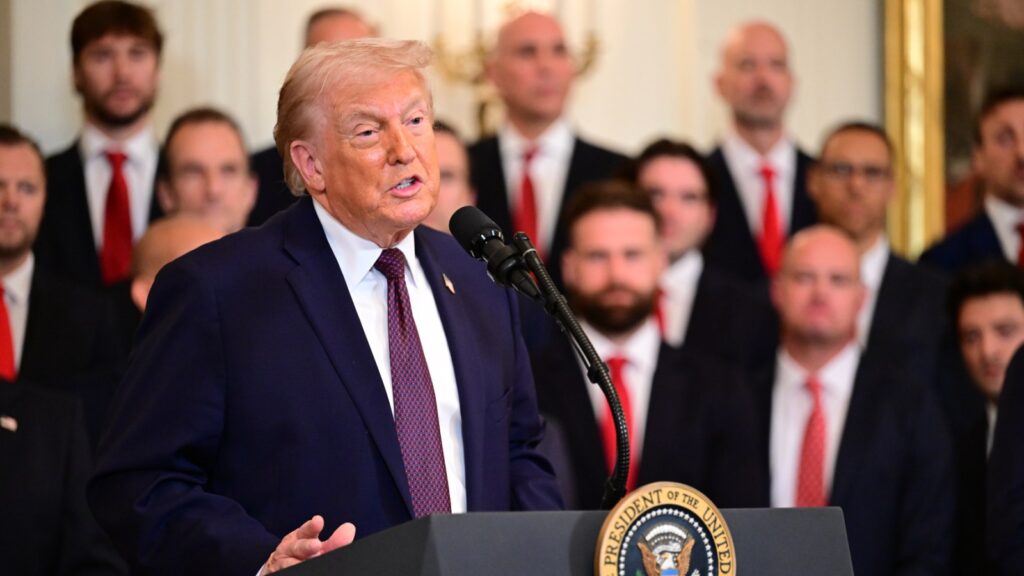
As the political landscape shifts, former President Donald Trump has raised eyebrows with his recent comments regarding the upcoming 2026 midterm elections. Amidst dwindling approval ratings for Republicans and increasing voter discontent, Trump suggested that perhaps elections should not take place at all. “It’s some deep psychological thing, but when you win the presidency, you don’t win the midterms,” he stated in an interview with Reuters. His bold assertion that “we shouldn’t even have an election” signifies a troubling trend in political discourse, particularly from a figure whose influence remains significant within the Republican Party.
The former president’s remarks come just after an interview with The New York Times, where he ambiguously navigated the issue of respecting electoral outcomes. While he claimed he “always respects the results of elections,” he simultaneously voiced his belief that “the elections in our country are rigged.” This sentiment is not new for Trump, who has consistently cast doubt on electoral integrity since his own 2016 campaign.
In a recent address to Republican members at a congressional retreat held at the Kennedy Center, Trump further expressed frustrations about the political climate. “I won’t say ‘cancel the election; they should cancel the election’ because the fake news will say he wants the elections canceled,” he remarked, seemingly aware of the potential backlash his statements could provoke. “They always call me a dictator,” he added, suggesting a defensive stance against criticism of his authoritarian tendencies.
White House Press Secretary Karoline Leavitt was quick to downplay Trump’s words, labeling them as "facetious" and “simply joking.” When pressed by a reporter whether Trump finds the idea of canceling elections humorous, Leavitt responded sharply, “Were you in the room? I was in the room... only someone like you would take that so seriously.” Yet, the implications of Trump’s statements should not be brushed aside as mere jokes, especially considering his history of challenging democratic norms.
The ongoing unrest in Minnesota, where protests erupted following the death of 37-year-old American citizen Renee Good by ICE agents, has further complicated the political narrative. Trump took to Truth Social, threatening to invoke the Insurrection Act to quell protests, stating, “If the corrupt politicians of Minnesota don’t obey the law and stop the professional agitators and insurrectionists from attacking the Patriots of I.C.E., I will institute the INSURRECTION ACT.” His comments reflect a willingness to use extreme measures in response to civil unrest, which some may argue undermines the rights to peaceful assembly and protest.
The Insurrection Act would allow Trump to federalize members of the state’s National Guard to suppress the protests, raising alarms about potential overreach of federal authority. Although many of the protests have remained peaceful, incidents of escalating violence from federal agents have been reported, adding layers to an already charged atmosphere.
Public sentiment regarding ICE is changing, as evidenced by recent polling data. A CNN poll indicated that 51% of Americans believe ICE enforcement actions are making cities less safe, versus 31% who think otherwise. Additionally, a separate YouGov poll found that 52% disapprove of how ICE is handling its job, highlighting a significant shift in public opinion regarding immigration enforcement.
As Trump’s administration grapples with declining support amid economic challenges and controversial enforcement tactics, his inclination to sidestep the electoral process raises critical questions about the future of American democracy. The prospect of a former president suggesting the cancellation of elections is alarming; it can be viewed as a precursor to a broader push against established democratic norms. As the 2026 midterms approach, the stakes are high, not just for Trump and the Republican Party, but for the integrity of the electoral process itself.
This PS4 Exclusive Just Dropped to Under $10—Find Out Why Gamers Are RUSHING to Buy It!
Iran's Shocking $7.8 Billion Crypto Surge: Protests Spark Bitcoin Boom—Are You Missing Out?
Supreme Court Justices Secretly Debate Shockingly High Real Estate Fees—Is Your Home at Risk?
Sam Darnold’s Shocking Injury Update: Will He Risk It All Against the Seahawks? You Won’t Believe What’s at Stake!

8 Shocking Plant-Based Habits That Keep Alarm Clocks Silent—Discover the Secret to Waking Refreshed!
Joel Klatt's Bold Claim: Is College Football's Top QB Secretly Tampering with His Future?
You might also like: