
Trump's Shocking Endorsement of Brutal Dictators: What This Means for America and You!

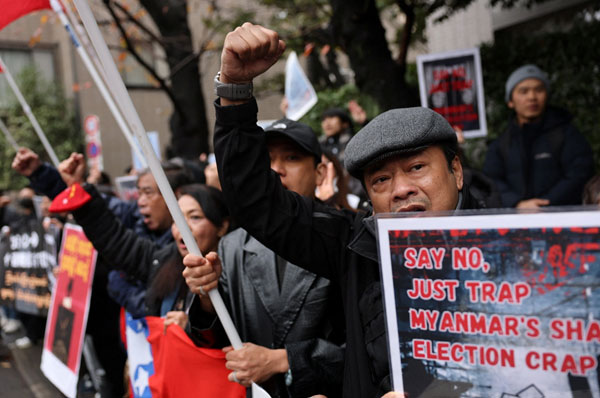
As Myanmar approaches its upcoming election on December 28, 2025, the international community watches closely, though the exercise appears more staged than genuine. Nearly five years after the military coup in February 2021, which ousted a democratically elected government, the junta is maneuvering to reinforce its grip on power under the guise of democratic process.
The military regime, struggling to control approximately a fifth of the country's territory, has recognized that voting will be impossible in many regions. The leading pro-democracy parties—the National League for Democracy (NLD) and the Shan Nationalities League for Democracy—are banned from participating. Instead, the election will feature the Union Solidarity and Development Party, a military-affiliated entity, alongside minor parties that failed to secure any seats in the 2020 elections.
This election, which lacks fundamental democratic characteristics, signifies a calculated attempt to legitimize military rule. In the lead-up to this vote, the violence perpetrated by the junta against civilians has escalated alarmingly. For instance, weeks before the election announcement, Myanmar's air force bombed a school in Oe Htein Kwin village, tragically claiming the lives of two teachers and 22 children, the youngest of whom was just seven years old.
The Assistance Association for Political Prisoners reports that since the coup, over 6,231 civilians have been killed by military forces, with estimates suggesting the true number could be significantly higher. Alarmingly, nearly half of these civilian deaths are attributed to airstrikes, highlighting not just collateral damage, but an alarming trend towards deliberate targeting of civilians. Many airstrikes have struck locations protected under international law, including camps for displaced people, schools, and clinics, often devoid of any armed presence.
The junta's international support bolsters its position. China continues to provide billions in aid and advanced weaponry, while Russia supplies the fighter jets responsible for bombarding civilian targets. India quietly engages in arms sales, consolidating a network of diplomatic backing that shields the junta from international accountability. Meanwhile, the Association of Southeast Asian Nations (ASEAN) remains locked into its ineffective Five-Point Consensus established in April 2021, despite the regime's consistent violations of each commitment. Diplomatic efforts have largely excluded the National Unity Government—the government in exile formed by democratically elected lawmakers—effectively granting the military regime a facade of legitimacy.
Compounding the situation, recent policy shifts under the Trump administration threaten to tilt the international balance further in favor of legitimizing the junta. Trump has lifted sanctions, reduced funding for independent media, and revoked protections previously afforded to Myanmar's refugees in the United States. His administration's transactional approach prioritizes access to Myanmar's rare earth minerals over the preservation of democratic principles.
There is growing concern that ASEAN member states may follow suit, using the sham election as a pretext to normalize relations with the military regime. Some nations have already begun this process, extending invitations to the junta leader for regional meetings.
Despite these daunting circumstances, Myanmar's pro-democracy forces remain resilient. The People’s Defence Forces and various ethnic armed groups continue to conduct coordinated operations against the junta across much of the country. Civil society organizations persist in documenting human rights violations, providing aid to displaced persons, and advocating for international intervention. These brave individuals deserve more than to witness global powers legitimizing their oppressors.
The junta’s hold on ground continues to waver, yet its diplomatic standing is steadily improving. The trajectory of this consolidation will depend significantly on how the international community chooses to respond to the upcoming election. Treating this electoral process as legitimate would signal to authoritarian regimes worldwide that they can dismantle democratic institutions with impunity, that war crimes might carry no repercussions, and that regimes which bomb schools and imprison elected representatives can gain international acceptance.
Inés M. Pousadela, Head of Research and Analysis at CIVICUS and Professor of Comparative Politics at Universidad ORT Uruguay, underscores the urgent need for the global community to act decisively against the military junta in Myanmar. The stakes are high, not just for Myanmar but for the global democratic order itself.
Disable Windows Fast Startup NOW or Risk These 5 Shocking Problems! You Won't Believe #3!

You Won't Believe These SHOCKING NFL Week 17 Odds—One Bet Could Change Everything!

Tech Startups Are Rushing to IPOs—Find Out Why AR Ventures' New Service Could Change Everything!
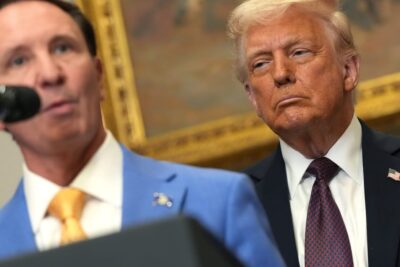
Trump's Shocking Move: Louisiana Governor Named Greenland Envoy – Denmark's Furious Reaction Revealed!

Hyderabad Psychologist Reveals 7 Shocking Ways to Combat 'Hangxiety' Before It Ruins Your Next Party!

GrabAGun Just Went Crypto—What This Shocking Move Means for Your Gun Purchases!
You might also like: