
Trump's Bold Claim About White House Ballroom Renovations Will Shock You—Find Out Why!

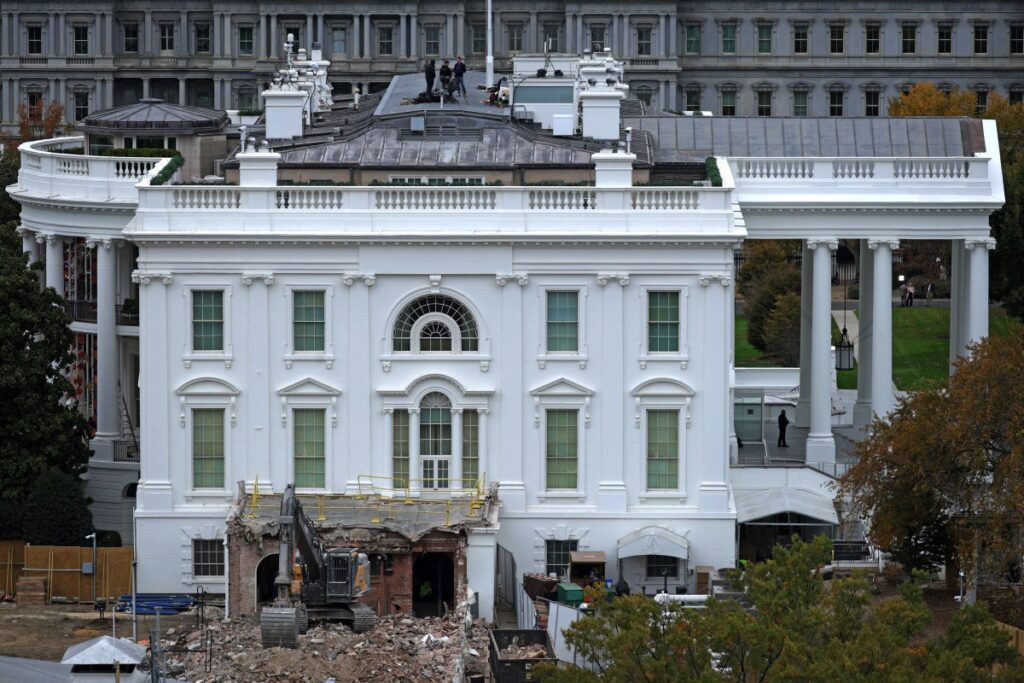
President Donald Trump recently provided an update on the renovation of the White House ballroom, announcing to reporters on Monday that the project is currently "under budget and ahead of schedule." He emphasized that the ballroom will be "bigger than I told you," increasing from an initial estimate of 650 to a capacity of 900 people, which is nearly 40 percent larger than previously described.
The new ballroom, set to be located in the East Wing of the White House, has been met with a mixture of excitement and skepticism. Originally projected to cost $200 million, the estimated expense has now doubled to approximately $400 million. However, the Trump administration insists that no taxpayer funds will be used, claiming that private donations—reportedly including contributions from Trump himself—will cover the entire cost.
During his remarks, Trump expressed pride in the project, asserting, "I'm doing a magnificent, big, beautiful ballroom that the country has wanted, the White House has wanted for 150 years." He further noted that the building will feature "bulletproof glass" and a "drone-free roof," ensuring enhanced security as the venue is expected to host significant events, including future inaugurations.
While the White House has framed the renovation as part of a longstanding tradition of presidential enhancements to the executive mansion, critics are raising concerns about the implications of this substantial alteration to a national landmark. Representative Jamie Raskin, a Maryland Democrat, voiced his opposition on social media, stating, "The White House is not private property. It does not belong to Donald Trump. It belongs to the people." He has pledged to introduce legislation aimed at safeguarding the historic character of the building against what he described as Trump's "bulldozer and Marie Antoinette ballroom."
This debate taps into broader discussions about the stewardship of federally protected sites, the balance between tradition and modernization, and the extent of presidential authority over such iconic structures. The projected $400 million price tag has ignited scrutiny from various lawmakers, preservationists, and members of the public, prompting questions about legacy, funding transparency, and the long-term impact of such renovations on the historical fabric of the White House.
As construction progresses, expectations for continued legal and public scrutiny remain high. The project’s implications for both the historical integrity of the White House and the broader discourse on public versus private funding for national landmarks will likely remain at the forefront of national conversations. The White House has stated that “for over 100 years, presidents have enhanced the White House, preserving its legacy as a symbol of our nation,” reinforcing the administration's position that this ballroom will be a cherished addition for generations to come.
New Tax on Hotels & Cruises: Will You Be Paying Up to $500 More This Summer? Find Out!

You Won't Believe What We Discovered: 8 Shocking Snacks That Could Change Your December!

NIST's Cyber Chief Exposes Shocking Secrets About AI Hiring—Are You Missing Out?

This Shocking Discovery Reveals a Hidden Feedback Loop That Could Triple Arctic Warming—Are We Too Late?

Breaking: You Won't Believe What Shocking News Just Unfolded at Fox – Find Out Now!

Marjorie Taylor Greene Drops BOMBSHELL: Is House Speaker Johnson Really a Puppet for Biden?
You might also like: