
Transforming Healthcare: How UT's New Studio is Launching 10 Startups that Could Save Lives!

AUSTIN, Texas — In a significant move aimed at tackling global challenges through innovation, the University of Texas at Austin has launched a new venture studio known as Discovery to Impact. This initiative plans to build startups from the ground up, focusing initially on the development of medical digital twins, a technology poised to revolutionize modern health care.
According to Mark Arnold, the associate vice president of Discovery to Impact and managing director of Longhorn Ventures, the studio is designed to create a systematic process for launching startups that emerge from UT's extensive research enterprise. “We’re creating a new systematic process for launching startups out of UT’s research enterprise that brings the right infrastructure, resources and expertise together to enable faster innovation and product development,” Arnold stated. The approach begins with identifying real-world needs and assembling a supportive ecosystem to develop products that can benefit local, state, and national economies.
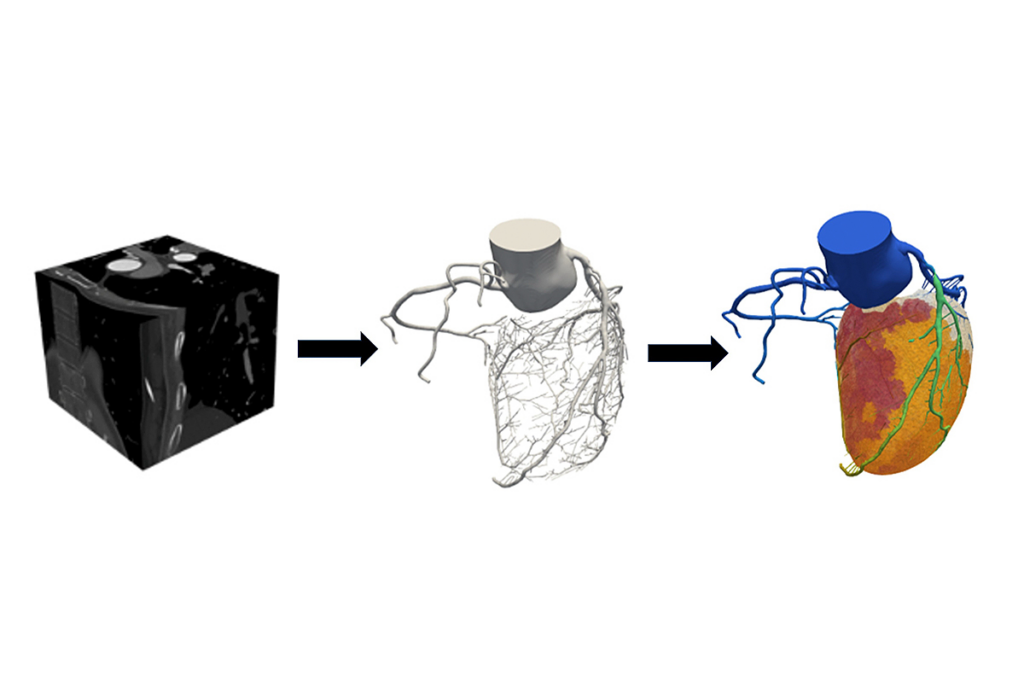
Medical digital twins are dynamic, data-driven virtual replicas of a patient’s body or specific organs. They allow physicians to analyze an individual’s physiology and anatomy with exceptional precision, enabling noninvasive tests and simulations to predict responses to various treatments prior to actual procedures. This technology shifts the focus from generalized, average-based care to personalized treatment tailored to individual patients.
The implications of this technology are profound. Charles “Charley” Taylor, a professor of internal medicine at UT’s Dell Medical School and the W.A. “Tex” Moncrief Jr. chair in computational medicine at the Oden Institute for Computational Engineering and Sciences, noted that “the market for computational medicine with the use of AI-enabled digital twin technology has the potential to revolutionize personalized patient care and impact how we treat some of the most prevalent medical diseases of our time, like heart disease, dementia, and cancer.” Taylor will guide UT’s inaugural venture, drawing on his extensive expertise in artificial intelligence, machine learning, and digital twin technology, along with his experience as co-founder of AI health care company Heartflow Inc. (NASDAQ: HTFL).
The venture studio's operational model focuses on identifying market needs and collaborating full-time entrepreneurs with university researchers to validate promising technologies. Successful solutions are further developed into ventures with attractive value propositions, fit for specific markets, and strategies designed to secure investment and facilitate launch from the university. This methodology aims to generate scalable ventures with minimized risk and expedited time-to-market compared to traditional startups.
Arnold emphasized the studio's commitment to maximizing the return on academic research investments as a public university. “As a public university, it is important that we build public trust by maximizing the return on academic research investments. The venture studio model rigorously validates technology and market fit to ensure that public investments in research are efficiently translated into real-world solutions,” he explained.
Translating medical breakthroughs into Food and Drug Administration (FDA)-cleared and widely adopted clinical services is notoriously challenging, often requiring significant time and financial investment. UT's venture model for health care innovation with digital twins is distinctive due to its shared software infrastructure alongside dedicated compliance, legal, and human resources support, which helps lower operational costs and facilitates rapid startup formation across various applications.
Health care is the primary sector targeted by UT’s venture studio, but plans are in place to expand into other areas. Ventures will leverage UT’s leadership in computational medicine and digital twin research, clinical resources from its emerging medical center, and its top-ranked entrepreneurship programs. Additionally, access to capital is provided through the $10 million UT Seed Fund. As the venture studio grows, it will capitalize on UT’s interdisciplinary strengths in artificial intelligence, advanced semiconductor science and engineering, materials science, and robotics.
“Through startup creation, commercial collaborations, and other pathways to market, Discovery to Impact is accelerating the translation of academic research and breakthrough ideas into products and businesses that can change the world,” Arnold concluded.
For those interested in exploring more about the transformative initiatives at UT, visit discoverytoimpact.utexas.edu.
World Cup Tickets Selling Out Fast: Are You Missing Your Chance Amid Chaos?

Kentucky Athletics in Crisis? Mitch Barnhart's Shocking Retirement Sparks Chaos!

Unlock a $120 Bonus NOW: Find Out Why This NBA Promo Code Is Going Viral! Don't Miss Out!

Walmart’s Shocking Strategy: How Their MLS Deal Could Change Soccer Forever—Are You Ready?

Unlock the Secret: 8 Surprising Habits That Could Slash Your Heart Risk—Are You Missing Out?

Senate Shock: Noem's Bombshell Testimony Could Change Everything for 2026 Elections!
You might also like: