
Top Scientists Warn: Trump’s Treaty Pullout Could Unleash Catastrophic Climate Consequences!

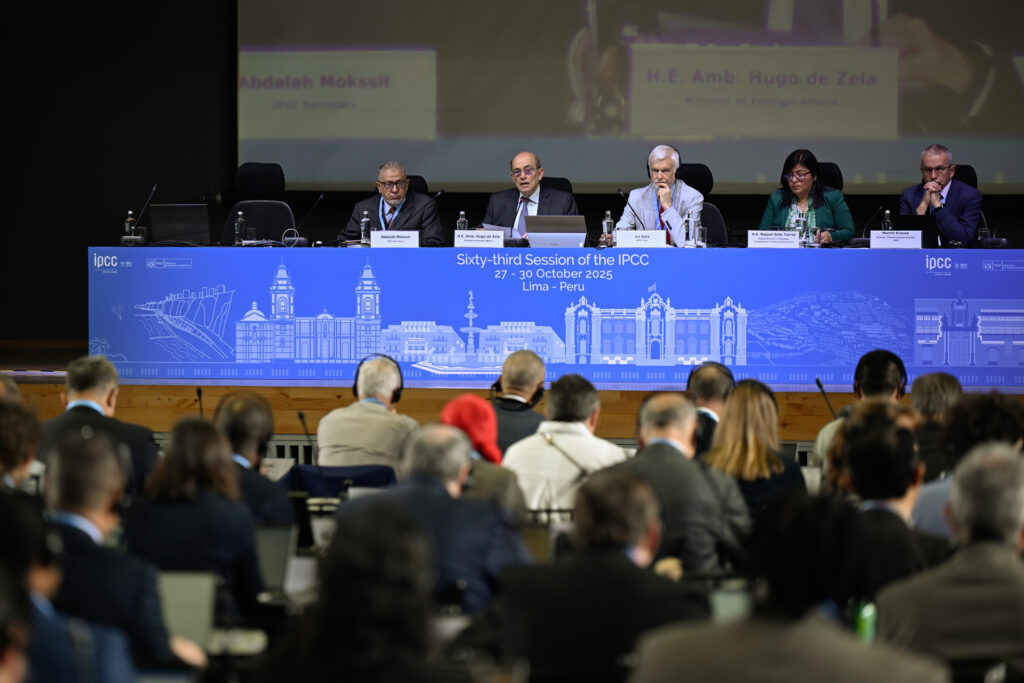
As concerns about climate change intensify, the voices of scientists grow louder, but they are not without fear. Dr. Daniele Visioni, a climate scientist and assistant professor at Cornell University, often finds himself grappling with the notion that his work could be perceived as treasonous in a political climate that seems increasingly hostile to scientific inquiry. Visioni, an Italian native, is set to contribute to the Intergovernmental Panel on Climate Change’s (IPCC) forthcoming Seventh Assessment Report, a critical document that captures the latest scientific consensus on climate change. Yet, his involvement comes at a time when the U.S. government, led by the Trump administration, has announced its intention to withdraw from the IPCC and the United Nations Framework Convention on Climate Change—moves that many scientists see as detrimental to both American scientific integrity and global efforts to combat climate challenges.
“If the U.S. decides that any IPCC author is an enemy of the state, that probably means they can keep me out of the country,” Visioni remarked, indicating the precarious nature of his role. He is not alone in his concern; numerous climate experts express apprehension over the Trump administration’s stance, which they believe undermines the scientific community and tarnishes the United States' reputation on the world stage.
Michael Oppenheimer, a veteran IPCC participant and review editor for the body’s Sixth Assessment Report, echoed these sentiments. He was part of the team that received the Nobel Peace Prize in 2007, and he views the U.S. withdrawal as a systematic attack on climate science. “This kind of action is part of a very large threat to U.S. climate science,” Oppenheimer said, stressing that this withdrawal not only isolates the U.S. but also jeopardizes global climate cooperation.
Leading voices in climate science, including Pamela McElwee from Rutgers University and Libby Jewett, a marine ecologist and former founding director of NOAA’s ocean acidification program, assert that the decision to withdraw is a significant blow to the U.S.'s leadership in international climate dialogue. McElwee articulated that this withdrawal hinders the U.S. from influencing critical policy implications and is essentially “shooting ourselves in the foot.” Jewett lamented that the U.S., traditionally seen as a powerhouse in climate science, is now poised to have a diminished role in shaping future discussions.
Despite the challenges posed by the withdrawal, many scientists remain committed to advancing climate research. McElwee highlighted that U.S. scientists are proactively working to ensure their contributions remain vital in international discussions. Initiatives like the U.S. Academic Alliance for the IPCC and the American Geophysical Union are stepping in to facilitate continued participation in the panel’s activities. “Our work will continue,” she affirmed, emphasizing the necessity of academic collaboration in addressing global issues like climate change.
However, some scientists, like John Christy from the University of Alabama in Huntsville, hold a contrasting view. Christy, who has been critical of mainstream climate science, suggested that the IPCC is biased and promotes a policy agenda focused on eliminating hydrocarbons. His skepticism reflects a larger divide in the scientific community, where the implications of climate policies and the interpretation of climate data remain hotly debated.
As the landscape of climate science shifts, many researchers are increasingly concerned about the broader implications of the U.S. withdrawal. Anna Harper, a climate scientist at the University of Georgia, voiced her dismay at the attacks on scientific institutions. “It’s discouraging to see institutions that we’ve all relied on for sound science being dismantled,” she said, adding that it undermines public trust in the scientific community.
Visioni, despite the political backdrop, finds a silver lining in the U.S. withdrawal. He contends that American scientists can still contribute meaningfully to the IPCC's recommendations for policymakers, albeit from a distance. “The only thing that this government is doing is depriving themselves of the opportunity to influence these reports in any way,” he asserted, suggesting that the IPCC's process is robust enough to withstand external pressures, even from the U.S. government.
As the climate crisis continues to escalate, the role of science in shaping policy becomes ever more critical. With U.S. scientists determined to engage in international dialogue, it remains to be seen how the dynamics will evolve in the absence of governmental support. The ongoing commitment from researchers underscores the essential nature of collaboration in the fight against climate change, even as political winds shift and challenge the foundations of scientific inquiry.
Miami Heat vs. Chicago Bulls: Shocking Injury Updates Could Change Everything! Are You Prepared?
Trump's Shocking Invite to Colombia's Petro: What This Major U-Turn Means for America!
Is Israel Using 7,000 Bots to Manipulate Your Social Media Feed? Discover the Shocking Truth Now!

Discover 5 Hidden St. Louis Gems Where Winter's Chill Can't Touch You—#3 Will Shock You!

Startups Are Paying Employees in Stablecoins—Find Out Why This Shocking Trend Could Change Your Paycheck Forever!

Is Your Dream Home Slipping Away? Houlihan Lawrence Unveils Shocking 2025 Market Trends!
You might also like: