
Tokyo's Shocking 7.1% Rent Surge: Are You Ready for the Housing Crisis of 2025?

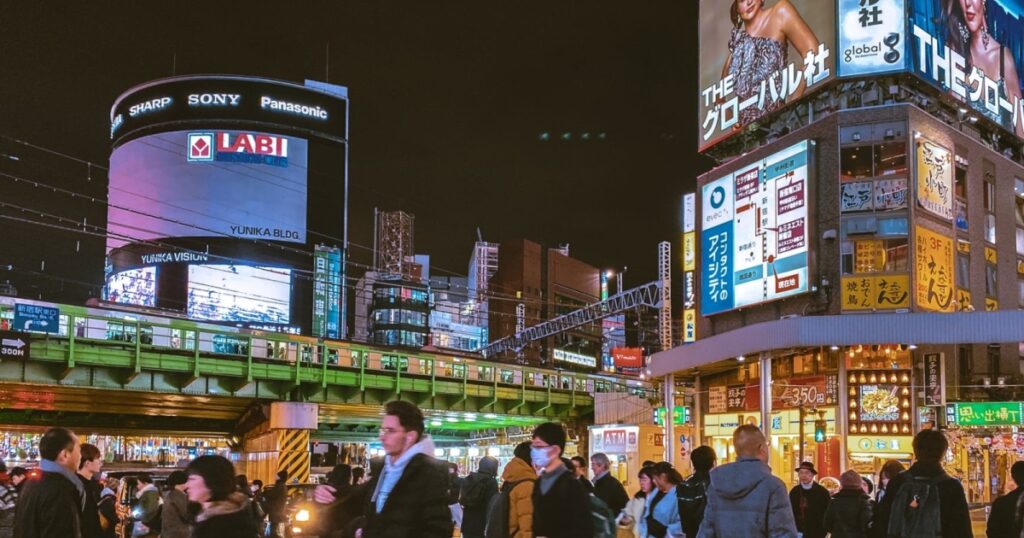
Tokyo's mid-market residential leasing segment continued its upward trajectory in the fourth quarter of 2025, with growth observed across nearly all of the 23 wards, as reported by Savills. Average rents in the Tokyo 23 Wards (23W) increased by 0.2% quarter-on-quarter (QoQ), reaching JPY4,639 per square meter. This translates into a robust annual increase of 7.1%. Notably, all wards, except for Nakano, recorded quarterly rental growth while every ward posted solid year-on-year gains.
Central Five Wards (C5W) have emerged as market leaders, showcasing impressive performance with average rents rising 2.1% QoQ and 9.0% year-on-year (YoY) to JPY5,722 per square meter. Among these C5W:
- Minato exhibited the strongest quarterly increase at 6.7% QoQ.
- Chiyoda and Shinjuku experienced moderate growth of 1.3% QoQ.
- Chuo and Shibuya recorded marginal increases of 0.4% and 0.2% QoQ, respectively.
Savills highlighted that demand remains strong in central locations, driven by factors such as wage growth and a trend of employees returning to the office.
The Inner North submarket saw the most notable quarterly expansion among all submarkets, increasing by 2.6% QoQ and 9.8% YoY to JPY4,896 per square meter. In this area:
- Bunkyo saw rents rise by 4.0% QoQ.
- Toshima experienced a growth of 1.2% QoQ.
These figures underline the sustained tenant demand in well-connected residential districts.
Meanwhile, the South and West submarkets also showed steady gains. In the South, average rents climbed 1.7% QoQ and 8.2% YoY to JPY4,816 per square meter. Noteworthy quarterly gains include:
- Ota, with the largest increase at 4.5%.
- Meguro, following with a 2.1% QoQ growth.
- Shinagawa and Setagaya saw more modest increases of 0.5% and 0.1%, respectively.
The West submarket saw a rise of 1.0% QoQ and 7.8% YoY, reaching JPY4,276 per square meter. Here, Nerima led the quarterly gains at 4.1%, while Suginami remained flat and Nakano experienced a slight decline of 0.5% QoQ, though it still achieved a robust annual growth of 8.4%.
In the Eastern and Outer submarkets, growth was observed but at a more gradual pace. The Inner East submarket recorded a rental growth of 0.5% QoQ and 8.1% YoY to JPY4,538 per square meter, with Taito and Koto both posting 0.6% QoQ growth, while Sumida saw a marginal 0.1% increase. The Outer North submarket experienced a climb of 2.2% QoQ and 6.5% YoY to JPY4,056 per square meter, driven by Kita's increase of 2.8% QoQ and Itabashi's rise of 1.6% QoQ. In the Outer East submarket, rents grew 1.0% QoQ and 7.0% YoY to JPY3,849 per square meter, with Katsushika showing the largest quarterly gain at 1.6%, followed by Arakawa and Adachi with increases of 1.3% and 0.9%, respectively.
The broad-based rental growth indicates a strong and resilient leasing market in Tokyo's mid-market residential segment. Savills' data emphasizes that both central and peripheral wards are experiencing solid annual increases. While the quarterly growth rates vary by submarket, the overall trajectory remains positive, supported by steady demand, demographic inflows, and constrained housing alternatives. This resilience reinforces the strength of Tokyo's leasing market as it heads into 2026.
Trump's Border Czar Drops Shocking News: Only 50 Troops to Remain in Minnesota! What's the Real Agenda?

You Won't Believe What CEO Jon Atkinson Revealed About the Startup Support Nonprofit's Shocking Failures!

Netanyahu's Shocking Pardon: Will This Decision Turn Israel into Political Chaos?

Only 300 Free Cat Vaccines Available THIS Sunday—Will Your Feline Make the Cut?

Nate Bargatze Stuns Everyone with This Jaw-Dropping Math Blunder at Daytona 500—Can You Guess How Many Feet Are in 500 Miles?
Is Your Portfolio at Risk? 5 Shocking Stock Market Trends You MUST See Now!
You might also like: