This Startup Just Hit 1 Million Users—Here's the Shocking Reason a16z Invested! Don’t Miss Out!

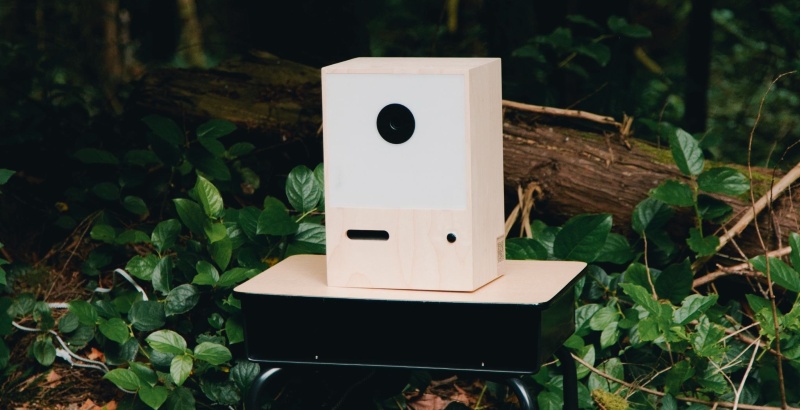
In a converted warehouse on the fringes of Bushwick, a line of people eagerly awaits their turn to get a photo taken. The photographer, a compact device no larger than a few shoeboxes, is set up on a table. Unlike traditional photo booths, these snapshots are raw and printed on receipt paper, creating a unique aesthetic. However, the most intriguing aspect of this experience is not the photographs themselves, but the innovative technology behind them.
This is Checkpoint, the flagship product of Future Primitive, a company co-founded by Benny Giang, Steve Jang, and Jayden Windle, with operations in both New York and Vancouver. Checkpoint is designed with simplicity in mind; it captures a face, prints the image instantly, and provides a tangible keepsake. Unlike conventional booths, it avoids algorithmic interference, meaning that no digital filters or feeds come into play. Instead, it offers a lightweight digital account linked to the moment, allowing venues to extend the experience through rewards, collectibles, or future interactions.
Since its launch, Checkpoint has expanded to over 90 locations across major cities including New York, Los Angeles, Miami, San Francisco, Toronto, Vancouver, Tokyo, Seattle, and Chicago. Over one million people have experienced this unique offering. The company has partnered with a variety of cultural establishments, from Nike and Reebok in fashion to A24 and Universal Music Group in entertainment, as well as renowned institutions like MoMA PS1 and LACMA.
Giang, who previously worked at Dapper Labs—the company behind CryptoKitties and NBA Top Shot—brings a wealth of knowledge from the blockchain space. However, Checkpoint is not just about crypto; it emerges from a belief that physical locations will gain importance in a world saturated with synthetic content. “The question we kept asking was where a wallet should actually live,” Giang explained. “It should not live on a laptop or inside an app that most people do not want to download. It should live somewhere people already go. The booth is the answer we arrived at.”
This philosophy aligns with broader market trends. According to trade data tracked by IAAPA, spending on in-person entertainment and live cultural programming outpaced retail growth in both 2024 and 2025. A New York Times feature from August reported a resurgence in traditional photo booths, noting that operators like Photomatica had expanded their fleets to over 400 locations nationwide. Photo booth museums are now popular attractions in cities like Brooklyn, Chicago, and Portland, indicating a cultural shift back towards tangible experiences.
Giang believes this trend is not merely nostalgic. He asserts, “There is a reason the physical world is becoming valuable again. Generative content is flooding every platform we use. Feeds look less and less like anything a person made. People are quietly deciding they want to spend time in rooms where everyone around them is definitely real.”
Checkpoint's deployment strategy reflects this insight. The company intentionally avoids venues that trade on crypto branding and instead focuses on culturally significant spaces, such as independent theaters and music venues. This approach emphasizes the value of authentic engagement in environments that shape contemporary culture.
The blockchain infrastructure underpins Checkpoint, allowing venues to reward attendance and mark special moments without overwhelming users with complex mechanics. This means a museum can issue a digital collectible that has the emotional weight of a ticket stub. Importantly, users are not required to grasp the underlying technology to enjoy the experience. “We are not selling crypto,” Giang clarified. “We are selling a booth. The booth is fun. If someone wants to understand what is happening in the background, they can. Most people will not. That is fine.”
While Future Primitive has not disclosed its revenue, the company generates income through brand-funded activations and licensing units to cultural venues. It has also participated in large-scale events like Lollapalooza and a Nike campaign in 2025. The company raised $8 million in 2024, with participation from notable investors including a16z Crypto and Kindred Ventures.
What Checkpoint represents is more than just a hardware or software innovation; it reflects a significant cultural shift. Analysts note a growing exhaustion with hyper-digital, generative content. A Pew study from March found that a majority of Americans under 30 reported reducing their time on at least one major social platform in the past year. Consequently, cultural venues are becoming essential spaces for social interaction and community building.
Giang sees Checkpoint as a key component of this cultural rebalancing. “Physical space is not going to replace the internet,” he stated. “It becomes the part of life people trust more. The internet is still where information lives. Culture, status, identity—those are moving back into the room.”
In this light, Checkpoint transforms the concept of a digital wallet into something more meaningful—a receipt for presence and engagement. The accumulation of small rewards and collectibles encourages repeat visits, fostering a sense of loyalty within the community that transcends mere transactional interactions.
As the booth prints photos and captures moments, it does so much more than that; it represents a quiet yet profound shift in how we connect and engage in an increasingly digital world.
Unlock Your Potential: 9 Shocking Fitness Trackers That Could Transform Your Health Overnight!

30 Shocking High-Protein, Low-Cal Foods You Won’t Believe UK Supermarkets Are Hiding!

You Won't Believe What ATU's Reyes Did to Become an Education Champion – Shocking Details Inside!

Startup in Panic: How 1 AI Call Erased 5 Years of Vital Data in Just 9 Seconds!

Is OpenAI's AI Smartphone Set to DETHRONE the iPhone by 2028? Shocking Details Inside!

France's Shocking New Law: Are You Ready for $1,500 Fines for Smartphone Use While Driving?
You might also like: