
This Shocking Truth About Climate Change Vulnerability Will Leave You Speechless!


In recent years, the conversation around climate change has expanded to include the often-overlooked intersections between systemic inequities and vulnerabilities. Various forms of discrimination—rooted in race, gender identity, ability, and other factors—create complex layers of marginalization that affect individuals differently. According to the World Meteorological Organization, the past 11 years have been among the warmest recorded in the last 176 years, a trend exacerbating extreme weather events that lead to “massive social and economic disruption.”
The United Nations has noted a concerning rise in global discrimination since 2015, particularly affecting marginalized groups. Anti-LGBTQ+ legislation and reduced protections against gender-based violence signal a troubling regression in securing human rights for all. As the urgency to address climate vulnerabilities grows, it becomes increasingly essential to confront these intersecting systems of inequity.
Recent developments in climate action emphasize a commitment to equity and justice, evident in initiatives across academic and policy spheres. Notably, a landmark advisory opinion from the International Court of Justice in 2024 established that governments are obligated to act against climate change to prevent foreseeable harm. This legal framework underscores the consequences of inaction, holding nations accountable for failing to protect their citizens.
At the 30th UN Climate Change Conference in 2025, nations adopted a new gender action plan to ensure climate action is gender-responsive. This plan emphasizes the need for data disaggregation by gender and other social factors, enhancing accountability through regular reporting. Such measures are pivotal as they aim to bridge the adaptation finance gap and ensure vulnerable populations receive the support they need.
📰 Table of Contents
Understanding the Systems of Inequity
Understanding the systems that perpetuate inequity is crucial. Discrimination manifests in various forms, often shaped by historical contexts that assign differential value to individuals based on race, ability, caste, class, sexual orientation, and gender identity. These systems of inequity—like racism, ableism, and patriarchy—are not merely individual biases but are deeply rooted in institutional practices and societal norms.
These intersecting systems create structural barriers that limit access, participation, and opportunities for marginalized groups, leading to an unfair distribution of resources and rights. For instance, as the Intergovernmental Panel on Climate Change highlighted in its latest assessment report, recognizing intersectionality is essential to address the complexities of vulnerability and equity in climate adaptation.
People exposed to climate hazards—such as increasing floods, droughts, and extreme temperatures—experience varying degrees of vulnerability influenced by these inequitable systems. While some face greater exposure, others are more susceptible due to underlying conditions shaped by structural barriers, such as poverty or social isolation. This relationship is often oversimplified, risking the exclusion of certain groups from climate risk assessments and adaptations.
To visualize this interconnectedness, imagine the case of Sabitri, a fictional older woman with a mobility impairment living in a mountainous area currently facing severe climate impacts. Sabitri experiences a unique intersection of gender-based discrimination, ageism, and ableism, which leads to significant structural barriers. For instance, social norms often exclude her from community decision-making, and local health services are inadequately equipped to meet her needs.
As a result, Sabitri's social isolation compounds her vulnerability during climate events, limiting her access to vital information and support systems. Her situation illustrates how systemic inequities reinforce vulnerabilities, leaving individuals like her at a heightened risk during climate crises.
The Path Forward: An Intersectional Approach
Adopting an intersectional approach to climate change adaptation is critical for effective solutions. While inequities are one of the primary drivers of climate vulnerability, they are intertwined with issues like weak governance and ecosystem degradation. This approach allows for a comprehensive understanding of how overlapping forms of discrimination enhance risk for certain groups. By focusing on the systems that perpetuate these inequities, we can develop targeted climate adaptation strategies that not only address immediate impacts but also challenge the underlying discrimination.
Climate risk assessments can serve as a foundation for this intersectional approach, enabling the identification of specific vulnerabilities and more equitable distribution of adaptation resources. Recognizing the interconnectedness of inequity and climate vulnerability can lead to broader societal benefits, advancing human rights and fostering more just communities. As the global community continues to grapple with climate change, understanding and addressing these complexities will be essential for building a resilient future for all.
You Won't Believe Where to Catch the Philadelphia Union LIVE Today—Don’t Miss Out on This Epic Soccer Showdown!

You Won't Believe What Happened at Maya Hawke's Secret Wedding with 'Stranger Things' Stars!

WHO's Shocking Approval of Biological E's Oral Polio Vaccine: What They Aren't Telling You!

NHS Trust Data Leaked: Shocking Productivity Numbers Expose Major Flaws—What Are They Hiding?

Savy King's Stunning Comeback: What He Revealed After 283 Days of Fear and Uncertainty!
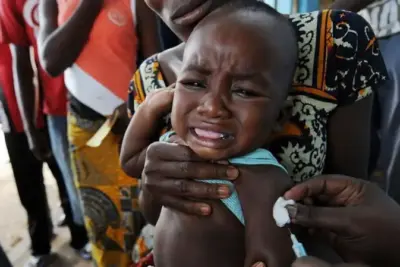
WHO's Shocking Warning: Is the U.S.-Funded Hepatitis B Vaccine Trial Putting Lives at Risk in Guinea-Bissau?
You might also like: