
This Secret Climate Solution Could Save Millions—But Most People Have No Idea!

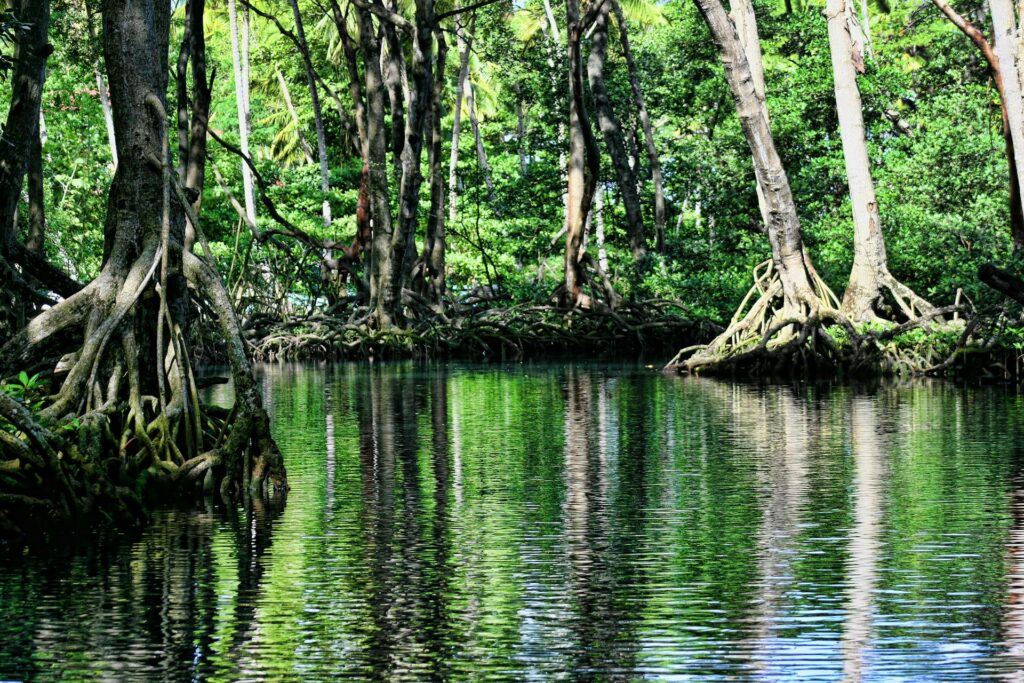
While many people know that forests play a critical role in absorbing carbon dioxide, fewer recognize the equally important contributions of the ocean's coastal ecosystems. Hidden below the waterline, these ecosystems, collectively referred to as blue carbon ecosystems, could be our most underappreciated allies in the fight against climate change.
So, what exactly is blue carbon? The term refers to the carbon captured and stored by coastal ecosystems, which include mangrove forests, seagrass meadows, and salt marshes. According to the National Oceanic and Atmospheric Administration (NOAA), these habitats are among the most carbon-dense ecosystems on Earth, with a remarkable science backing that claim. Surprisingly, much of the carbon stored in these ecosystems isn’t found in the visible parts—like leaves or branches—but rather underground.
In waterlogged, oxygen-poor soils, dead plant material decomposes slowly, allowing carbon to accumulate over centuries in thick layers of dark sediment. This carbon storage capability enables blue carbon ecosystems to absorb carbon up to ten times faster than tropical forests and store twice as much carbon per equivalent area. Together, these ecosystems account for about 50% of the Earth’s biological carbon, despite covering less than 5% of global land area and 2% of the ocean.
The Three Key Ecosystems
The three primary types of blue carbon ecosystems each serve unique functions:
- Mangrove forests are saltwater trees that thrive in tropical and subtropical coastal areas, such as Florida, the Gulf of Mexico, and Southeast Asia. Their tangled root systems play a significant role in trapping sediment and providing safe nursery habitats for fish, birds, and marine mammals. Research suggests that mangroves protect approximately 15 million people from flooding annually and prevent over $65 billion in property damage each year through their natural coastal buffering capabilities.
- Salt marshes, dominated by salt-tolerant grasses, are crucial for filtering runoff from the land before it reaches the sea. These wetlands are especially abundant along the Gulf Coast of the United States, where they protect vital areas in Louisiana, Mississippi, and Alabama. Like mangroves, salt marshes store significant amounts of carbon in their waterlogged soils.
- Seagrass meadows may be the least visible yet are incredibly impactful. These underwater fields, covering just 0.1% of the ocean floor, store up to 18% of the world’s oceanic carbon and can absorb it at rates up to 35 times faster than tropical rainforests.
Despite their small footprint, the loss of these ecosystems is alarming. When blue carbon habitats are damaged—whether through the clearing of mangroves for shrimp farms, the draining of marshes for development, or the smothering of seagrass beds by polluted runoff—the carbon locked within them is released back into the atmosphere. Scientists estimate that this degradation can result in between 0.15 and 1.02 billion metric tons of CO2 emissions each year, contributing to an additional 19% of emissions on top of current deforestation estimates.
Sadly, up to 67% of historical mangrove coverage has been lost globally, along with 35% of salt marshes and 29% of seagrass meadows. The annual loss rates currently range from 0.5% to 3% depending on the ecosystem type. If this trend continues, we could see nearly all unprotected mangroves disappear and 30% to 40% of existing tidal marshes and seagrasses vanish within a century.
Restoration and protection of these ecosystems are essential, but they cannot replace the urgent need for deep cuts to fossil fuel emissions. The Intergovernmental Panel on Climate Change (IPCC) emphasizes that limiting global warming necessitates “deep, rapid, and sustained reductions in greenhouse gas emissions” across all sectors this decade. As ocean temperatures rise and sea levels increase, even the most resilient marshes cannot withstand the pressures for long. Warmer, more acidic oceans stress seagrass beds, while higher seas can inundate marshes quicker than they can naturally recover.
The future of coastal areas like southern Louisiana hangs in the balance. In one scenario, robust restoration efforts lead to vast stretches of healthy marshland, while renewable energy initiatives help reduce fossil fuel emissions. In another scenario, coastal wetlands continue to disappear, leaving communities vulnerable to storms and rising waters.
The choices being made today—at city council meetings, within state legislatures, and in Congress—will define these futures. Investing in wetland restoration and conservation strengthens the natural barriers that coastal communities rely on for protection. Initiatives such as EARTHDAY.ORG's Our Power, Our Planet campaign aim to triple renewable energy generation by 2030, aligning with scientists’ recommendations to meet climate goals.
The loss of our coastlines serves as a stark warning, but it also showcases nature's remarkable capabilities. Beneath these marshes lies centuries of carbon storage, and whether that land continues to protect vibrant life or deteriorates into vulnerability depends on the actions we choose to prioritize. This pressing issue transcends local implications; it resonates with coasts around the world.
Lavish L.A. Lifestyle of Iranian General's Family Exposed: Are They Funding Terrorism?

Trump’s Climate U-Turn: How His Shocking New Plan Could Cost YOU Thousands!

Tonight's UConn vs. Michigan Championship: Discover 3 Shocking Ways to Watch Live—Don’t Miss Out!

Did Two Shocking Calls Cost the Warriors a Championship? Find Out the Jaw-Dropping Details!

NFL and ESPN Drop a Bombshell: What’s Next for Scott Hanson’s RedZone? You Won’t Believe the Shocking Details!
This One Simple Mistake Could Block Your Access to $10,000 - Are You Making It?
You might also like: