
This One Simple Change Could Force Governments to Finally Tackle Climate Change—What Are They Hiding?

On a quiet morning in December 2021, Arif Pujianto awoke to find his home on Pari Island, Indonesia, engulfed by rising tides. The waves had devastated the low-lying area where he lives, leaving behind a trail of destruction: collapsed walls, scattered debris, and a family well contaminated with saltwater. “I feel angry and afraid,” Pujianto expressed. “If Pari Island sinks, where will we live?” Since that fateful night, tidal floods have plagued the island, making daily life nearly unbearable.
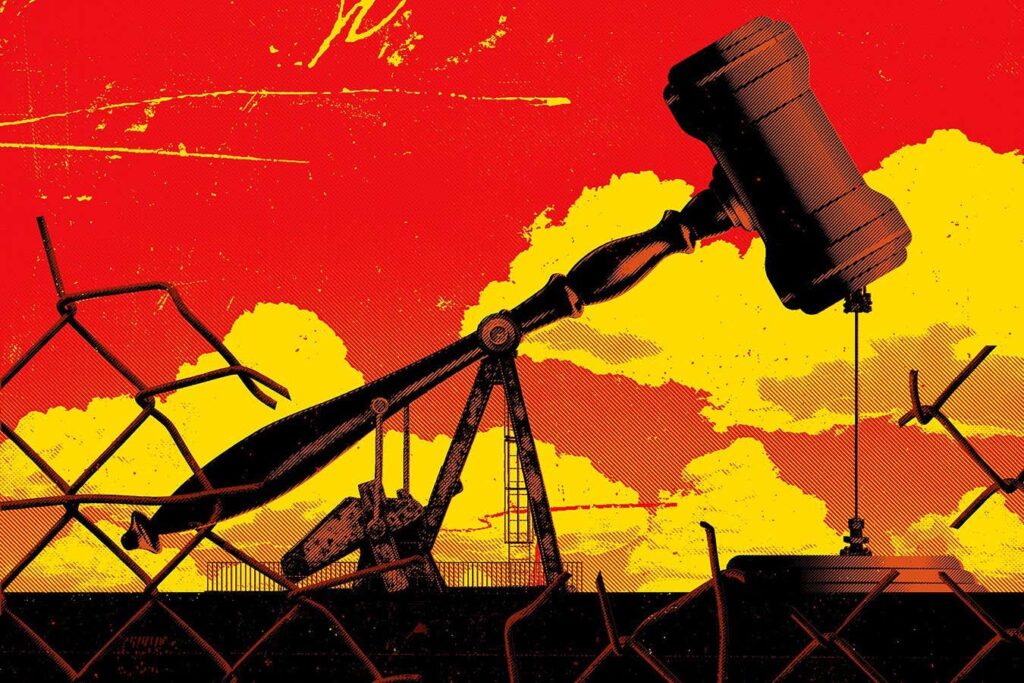
Determined to fight back against the forces threatening his home, Pujianto joined three other residents in filing a groundbreaking lawsuit against the Swiss cement manufacturer Holcim. They seek compensation for the damages inflicted by climate change, challenging the notion of accountability in an era where corporate emissions are rapidly altering our planet's landscape.
While at first glance this lawsuit may seem unusual—after all, Holcim operates thousands of miles away in Switzerland—it's part of a larger trend. Climate scientists are now utilizing advanced attribution models that can trace individual companies’ carbon emissions back to tangible impacts felt by communities around the globe. Noah Walker-Crawford, a climate litigation expert at the London School of Economics, notes, “The science is evolving very rapidly and that’s allowing for new kinds of legal arguments.” This evolution is critical given the recent COP30 climate conference, which failed to produce substantial commitments.
The field of climate science has long relied on computer simulations to predict future warming as greenhouse gases accumulate in the atmosphere. However, by using what’s called attribution science, researchers can create counterfactual scenarios: What might the world look like if a certain amount of fossil fuels had been left untouched? This technique has evolved significantly. The first attribution studies, conducted in 2004, linked human emissions to a record-breaking European heatwave, solidifying the understanding that global warming has human origins.
Since then, scientists have applied these methods to specific extreme weather events, including floods and heat waves, determining that these incidents were intensified by human activity. The World Weather Attribution initiative routinely assesses how carbon emissions raise the likelihood of severe weather events. Recent advancements have combined various aspects of attribution science, allowing researchers to connect emissions from individual companies directly to climatic damages on a community level.
End-to-End Attribution Studies
Innovative researchers like Christopher Callahan from Indiana University and Justin Mankin from Dartmouth College have pioneered end-to-end attribution models that span from the emissions of individual companies to the economic damage incurred by local communities. Their findings have been staggering: the top five emitting nations have collectively cost the global economy around $6 trillion since the 1990s, with low-income countries bearing the brunt of these losses.
In a recent study, Callahan and Mankin examined emissions from specific corporations and identified that the most carbon-polluting firms resulted in economic losses ranging from $12 trillion to $49 trillion due to extreme heat events between 1991 and 2020. Notably, they attributed losses of between $791 billion and $3.6 trillion to Chevron, the highest-emitting investor-owned company, demonstrating the tangible impacts of corporate emissions on vulnerable communities.
Attribution science is attracting increasing attention from activists and campaigners eager to establish a connection between emissions and human suffering. As Pujianto and his co-claimants, Ibu Asmania, push their case forward, they have the backing of the Swiss aid organization HEKS. The lawsuit claims that Holcim must take responsibility for its emissions, which, according to a commissioned study, were responsible for an additional sea level rise of between 16 and 26 centimeters on Pari Island during the December 2021 flood. "Causality becomes much clearer and, by that, also the legal responsibility," notes Johannes Wendland, a legal advisor at HEKS.
In September 2025, the Cantonal Court of Zug, one of Switzerland's highest civil courts, accepted the lawsuit, marking a significant milestone in climate litigation. Holcim has stated that the issue of emissions should be handled by legislatures, not courts, but they have expressed a commitment to addressing climate change and have plans aligned with a 1.5°C warming limit. They intend to appeal the court's decision.
As legal frameworks evolve, the question of who is responsible for climate harm becomes more pressing. Historical data indicates that over 70% of global emissions can be attributed to just 78 companies, raising ethical concerns about accountability. Activists argue that focusing on major emissions sources is necessary to drive meaningful change, especially when smaller communities face the dire consequences of corporate decisions.
While the outcome of Pujianto's case remains to be seen, the implications for climate litigation are profound. If the court finds in favor of the plaintiffs, it could set a precedent for a flood of similar claims against major polluters worldwide. Although the financial claims may appear modest—Pujianto's damages amount to just $1,334—the potential for widespread accountability could reshape the legal landscape surrounding climate change and corporate responsibility.
Indeed, as Walker-Crawford aptly puts it, “This is a small step, but this small step can become much bigger.” The interplay between scientific advancement and legal accountability may well define the next era of climate action.
AI's Shocking Plans to Dominate Real Estate by 2026 – Are You Ready to Lose Your Home?

Unlock the Secret: 7 Shocking Social Media APIs That Could Boost Your Business Overnight!

Why UK’s Early Winter Flowers Are a Shocking Sign of Climate Change—You Won’t Believe the Consequences!

You Won't Believe These 5 Surprising Fitness Goals That Will Transform Your New Year—Experts Weigh In!

Governor Meyer Drops BOMBSHELL Statement on Justice Valihura's SHOCKING Retirement—You Won't Believe What Happens Next!

NBA Referees CONFESS: The Shocking Mistake That Cost Steve Kerr His Job… and What Happens Next Will Astonish You!
You might also like: