
This NYC Startup Claims to Turn Air into Gasoline—Is This the Future of Fuel or a Dangerous Hoax?

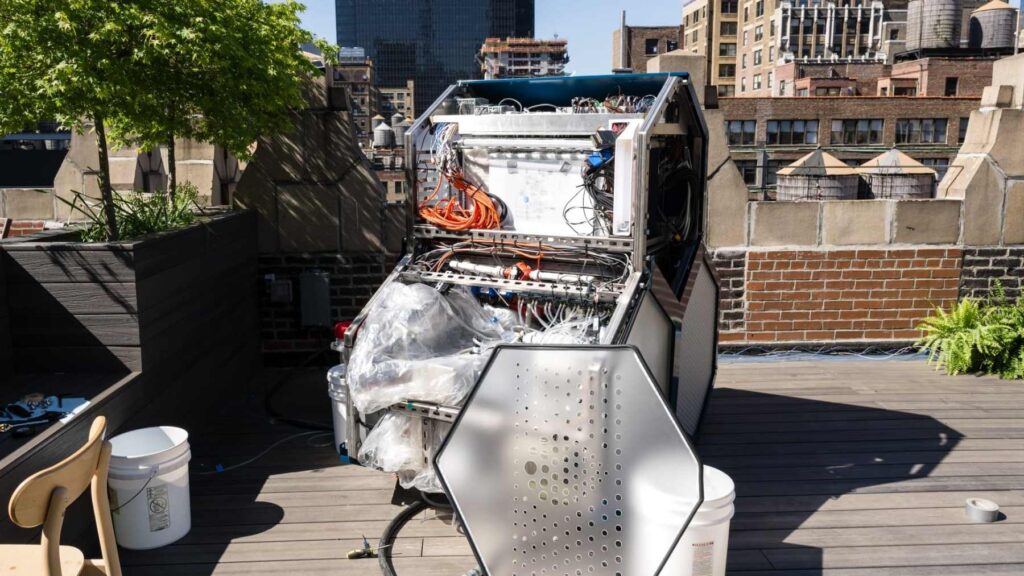
On May 22, 2025, a New York startup named Aircela unveiled technology that could revolutionize the way we think about fuel. During a rooftop demonstration in Manhattan’s Garment District, the company showcased a compact machine capable of capturing carbon dioxide from the air and converting it into usable “drop-in” gasoline on-site. This concept, which may sound like something out of a science fiction novel, raises an intriguing question: can a rooftop demo evolve into a scalable solution for combating climate change?
The core of Aircela's innovation lies in two critical processes. First, the system employs direct air capture technology, which extracts carbon dioxide from the atmosphere, even in minuscule concentrations. Following this, the machine utilizes electricity to convert water into hydrogen, subsequently combining this hydrogen with the captured carbon to produce liquid fuel. Remarkably, the resulting product is chemically identical to conventional gasoline and can be used in existing engines without requiring modifications.
The notion of “drop-in” fuel is particularly compelling in the current landscape of climate discourse, which often focuses on electric vehicles, charging infrastructure, and battery technology. For many American families, especially those with older cars or residing in areas with limited charging options, the idea of filling up at a gas station with a cleaner supply chain is a welcome alternative. At the rooftop event, the machine demonstrated its capabilities by producing gasoline in real time, filling containers in front of a select audience that included New York City Councilmember Erik Bottcher and New York State Energy Chairman Richard Kauffman.
However, the excitement surrounding Aircela's demonstration comes with caveats. Capturing carbon dioxide from ambient air is a challenging endeavor due to its low concentration, and the hydrogen production process demands significant electricity. Many experts caution that while direct air capture may be technically feasible, it can also be prohibitively expensive. This raises concerns about the economic viability of such technologies when scaled up for widespread use.
Aircela's environmental promise hinges on the energy source powering its operations. If the machine runs on renewable electricity, the carbon emissions from burning the gasoline can be largely offset by the carbon that was initially captured from the atmosphere. Conversely, if the electricity is derived from fossil fuels, the environmental benefits would significantly diminish, underscoring the importance of deployment decisions and policy frameworks in determining real-world impacts.
This narrative transcends the realm of personal transportation. The implications of Aircela's technology could extend to sectors that struggle with electrification, such as long-distance shipping, certain industrial applications, and aviation, all of which continue to heavily rely on energy-dense liquid fuels. The company has garnered investment from key players who recognize this potential; Maersk Growth and notable investors like Chris Larsen and Jeff Ubben are backing Aircela, with Morten Bo Christiansen asserting, “We invested in Aircela because of their innovative approach to the production of low-emission fuels based on direct air capture.”
While the growth of electric vehicles is undeniable—with the International Energy Agency estimating around 40 million electric cars globally as of 2023—gasoline demand is unlikely to vanish overnight. The current landscape of roadway vehicles is still dominated by traditional combustion engines, making the development of alternative fuel sources crucial. Additionally, policy efforts vary significantly across regions. For instance, Europe is advancing mandates like ReFuelEU Aviation, which encourages fuel suppliers to adopt low-carbon alternatives, including synthetic fuels produced from captured carbon. In contrast, the policy environment in the United States remains fragmented, affecting the pace at which technologies like Aircela's may transition from experimental phases to practical applications in the market.
As we observe the evolving intersection between technology, policy, and environmental sustainability, Aircela's rooftop demonstration serves as a provocative glimpse into a future where gasoline could be created from the very air we breathe. However, whether this vision materializes will depend on overcoming significant economic and infrastructural challenges, establishing a reliable clean energy supply, and navigating the complex regulatory landscape surrounding energy production and consumption.
Why Uganda's President Claims His 70% Victory Was Just a 'Warm-Up' Against a 38-Year-Old Challenger!

The Shocking Truth: 80% of Urban Pet Owners Are Hiding This Dark Secret About Their Fur Babies!

College Tennis Sensation Michael Zheng Shocks the World by Defeating Top Seed Sebastian Korda – What Happens Next?

Discover How Vaya Health's Shocking 70% Patient Satisfaction Rate is Changing Lives—Are You Missing Out?

Can You Handle This? The Ultimate American Culture Quiz Reveals Shocking Truths About Your Favorites!

Why Are 80% of Health System Failures NOT Malicious? Miriam Mutebi Reveals the Shocking Truth!
You might also like: