
This Bacterial Disease is Back with a Vengeance: Are You and Your Family at Risk? Find Out!

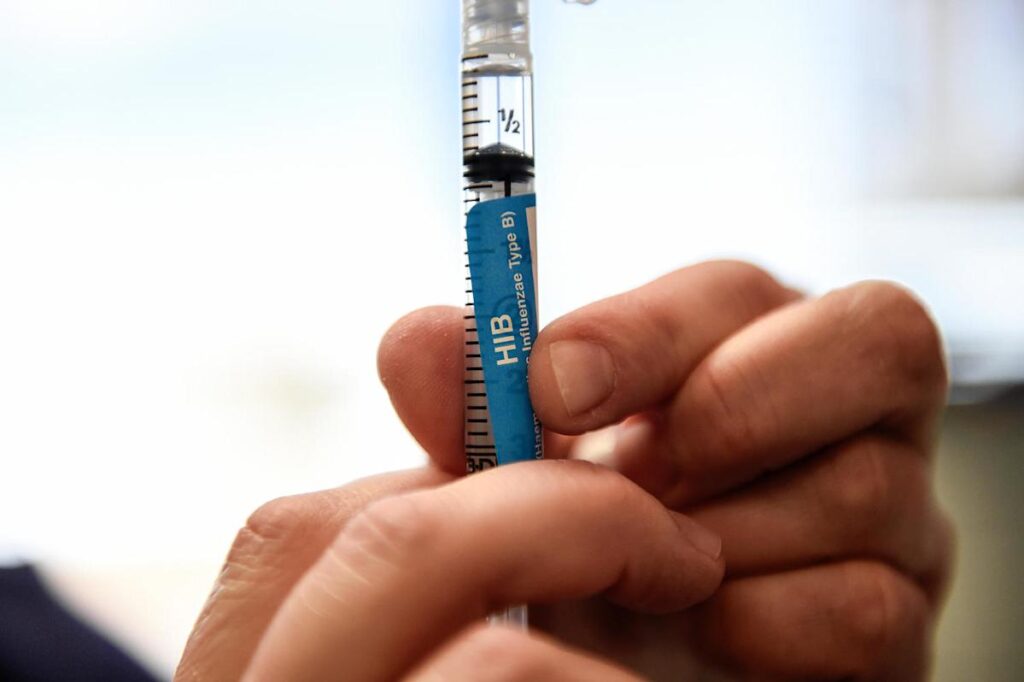
In a troubling trend, the percentage of infants receiving the complete series of Haemophilus influenzae type b (Hib) vaccinations has declined in the United States. According to the Centers for Disease Control and Prevention (CDC), coverage fell from 78.8% in 2019 to 77.6% in 2021. This decline raises alarms among healthcare professionals, who fear a resurgence of vaccine-preventable diseases like Hib, which has devastating effects on children.
For Dr. Lara Johnson, chief medical officer at Covenant Children’s Hospital in Lubbock, Texas, the dangers of Hib are not just theoretical. At the age of four, she endured a harrowing battle with the infection, which led to a life-threatening emergency tracheostomy. "I had a fever and felt like I was choking," Johnson recalls. This traumatic experience occurred in 1980, a full seven years before the Hib vaccine became available. Before the vaccine, approximately 20,000 children in the U.S. were diagnosed with severe Hib infections annually, resulting in about 1,000 deaths and many others left with permanent disabilities.
Since the introduction of the Hib vaccine, reported cases have plummeted to fewer than 50 per year. Pediatricians who have trained in recent decades have rarely, if ever, encountered a case. However, as vaccination rates wane, the fear of Hib’s return looms large. "Measles is the beginning," warns Dr. Leisha Nolen, Utah’s state epidemiologist, in the context of an accelerating measles outbreak in the state. With 559 confirmed cases of measles reported as of the latest tally, Nolen indicates that the drop in vaccination rates poses a significant risk of reviving Hib infections.
Although the CDC tracks Hib cases, the data often lags due to slow state reporting. As of March 21, the CDC documented eight cases this year, including two each in Ohio and New York, and one case each in Kansas, North Carolina, and Tennessee. However, anecdotal evidence from pediatricians suggests a worrying uptick in Hib-related illnesses. Dr. Kathryn Edwards, a vaccine safety expert at Vanderbilt University Medical Center, noted that her colleagues treated cases of Hib-related meningitis—something they hadn't encountered in years.
Dr. Eehab Kenawy, a pediatrician from Panama City, Florida, recounted treating two unvaccinated children who were hospitalized with Hib infections in December; tragically, one of them, a four-month-old, did not survive. "I’d never seen a case of Hib for years and years. Now I’m hearing about it," he said, emphasizing the urgent need for vigilance among healthcare providers.
The potential for Hib's resurgence necessitates a shift in medical thinking. Pediatricians must broaden their differential diagnoses when dealing with young, unvaccinated patients presenting with typical bacterial infections. "Now I’m not just thinking ‘strep throat, ear infection, upper respiratory infection.’ We have to start thinking about these things as a differential diagnosis in our workup," Dr. Kenawy explained. This shift could lead to more intensive monitoring and possibly unnecessary procedures to ensure the safety of vulnerable patients.
Hib is particularly dangerous because it can cause severe invasive infections, including meningitis—which inflames the brain and spinal cord. The CDC recommends a series of three to four Hib shots for all children under age five, with studies showing that the complete series is at least 93% effective in preventing the illness. However, overall childhood vaccination rates have also seen a decline; a 2025 NBC News investigation with Stanford University found that vaccination rates have fallen in at least 77% of U.S. counties since 2019.
The rise of vaccine hesitancy has been fueled by various factors, including public figures downplaying the risks of outbreaks. Dr. Rana Alissa, president of the Florida chapter of the American Academy of Pediatrics, noted an increasing number of parents who are skeptical about vaccines. "You’re always going to see people who will ‘no’ to anything, but it’s increasing," she said, warning of a "free fall" in vaccination rates.
Parents who are hesitant to vaccinate their children often do not grasp the dire consequences of these decisions. Ashlee Dahlberg, who lost her eight-year-old son, Liam, to Hib last April, advocates for vaccination to protect children with vulnerabilities. Despite being vaccinated, Liam's immune system was compromised due to asthma treatment. Dahlberg emphasizes the importance of vaccination: "What may be a cold for your child is a death sentence or a hospitalization for another."
The stakes are high. The decline in Hib vaccinations could lead to a resurgence of this deadly disease, putting countless children at risk once again. As healthcare professionals strive to maintain the progress made over the last few decades, the urgency to educate parents about the importance of vaccinations has never been greater. The collective effort to safeguard the health of our children must prevail, ensuring that diseases like Hib remain in the past.
You Won't Believe What This $3.85 Million Islip Mansion with a Helipad and Half-Pipe Just Sold For!

Rams on the Verge of a Shocking Upset: Can They Cripple the 49ers' Championship Dreams?

Is This $999 Dual-Screen Smartphone the Game Changer You Can’t Afford to Miss?

Governor Whitmer's Urgent Move: Are You Losing Thousands in Tariff Refunds? Find Out NOW!
You Won't Believe What Happens When This DIY Expert Turns a Fireplace into a War Zone!

Is 48 Hours of Sweat Enough to Erase a Week of Couch Potato Living? Shocking Truth Inside!
You might also like: