The Shocking Truth: How the Human Rights Council Could Save Our Planet—Or Destroy It!

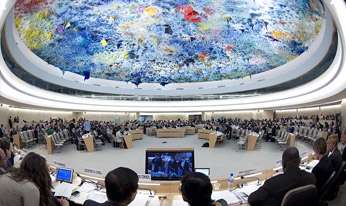
The Role of the Human Rights Council in Environmental Justice
In a world increasingly marked by geopolitical tensions, the need for robust international cooperation on human rights and environmental issues has never been more urgent. With climate change accelerating, the United Nations Human Rights Council (HRC) stands as one of the few global platforms tackling environmental harm as a human rights issue. As highlighted by Francesca Mingrone, Senior Attorney at the Center for International Environmental Law (CIEL), the HRC is a critical forum for governments, civil society, and Indigenous Peoples to seek accountability and advocate for environmental justice.
The HRC's sixty-first session, which runs from February 23 to March 31, 2026, serves as a vital moment for international dialogue on pressing issues like climate change, corporate accountability, and the protection of human rights defenders. Amid a growing liquidity and funding crisis affecting the UN and its human rights initiatives, the need for effective mechanisms to promote and protect these rights has become increasingly fragile.
Established in 2006 to replace the Commission on Human Rights, the HRC aims to strengthen the UN's human rights framework. Its various processes—including thematic resolutions, country-specific reviews, and the Universal Periodic Review—provide formal ways for States and civil society to engage and hold each other accountable. However, as global politics become more polarized, voting patterns on key issues like gender equality and environmental protections reflect deepening divisions among states. Commitments often become diluted, and thematic mandates face increased scrutiny, undermining their effectiveness.
Despite these challenges, the HRC remains instrumental in advancing environmental and climate justice. By framing environmental degradation as a violation of human rights, the Council underscores states' legal obligations to protect their citizens from the impacts of climate change. The International Court of Justice has reaffirmed this perspective in its advisory opinions, linking climate change directly to the erosion of legally protected human rights.
One of the HRC's significant achievements is the formal recognition of the human right to a clean, healthy, and sustainable environment, first acknowledged in October 2021. This landmark decision, later echoed by the UN General Assembly in Resolution 76/300 in July 2022, marked a pivotal moment in the integration of environmental concerns into the broader human rights framework. Such achievements have been driven by dedicated "core groups" of countries and procedural rules that allow the HRC to pass resolutions through voting.
CIEL's work in this arena focuses on three main approaches to leverage the HRC effectively. First, CIEL supports the development of norms by anchoring environmental harm within established human rights principles. Their legal research ensures that discussions at the Council reflect scientific evidence and existing obligations. Second, CIEL defends the HRC's Special Procedures—independent mechanisms that include special rapporteurs and working groups—by advocating for the protection of their mandates and resisting attempts to narrow their scope. These procedures provide unique expertise in bridging environmental law with human rights.
Lastly, CIEL emphasizes the importance of corporate accountability in addressing transnational environmental harms. As climate-related issues increasingly cross borders, the Council's discussions on business and human rights become essential. CIEL engages in negotiations aimed at creating legally binding frameworks for corporate conduct, stressing that both states and corporations must be held accountable for their environmental impact.
Civil society's participation is another refreshing aspect of the HRC's work. Compared to other multilateral processes, the HRC allows broader engagement from civil society organizations, which helps ground discussions in the experiences of affected communities. CIEL collaborates with these communities, ensuring their voices are heard in deliberations, thus reinforcing the legitimacy of the Council and highlighting its relevance as a global forum for human rights.
As environmental crises deepen and public demand for accountability grows, the HRC's role becomes increasingly vital. Despite the challenges of geopolitical polarization and institutional constraints, strengthening this platform and promoting active civil society participation will be essential for ensuring that climate action is firmly rooted in human rights. CIEL's ongoing efforts to connect global governance with the lived experiences of frontline communities are crucial for advancing environmental justice in this fragmented global order.
Why Dr. William Stevenson’s Shocking Exit from the Board of Health Changes Everything – You Won’t Believe the Consequences!
Is Antithesis's Risky Software Strategy a Game-Changer or a Total Disaster? You Won't Believe the Consequences!

WWE Star Hit with $100K Fine for Shocking Social Media Rant—What Did They Say?

Bears' Shocking 2026 NFL Mock Draft: 7 Game-Changing Defense Stars You Won’t Believe!

You Won't Believe How Taylor Frankie Paul Is Fighting Back After Losing Everything—Find Out Her Shocking Defense!
Why You Should Be Alarmed: Sen. Santarsiero's Shocking Vaccine Panel Reveals Hidden Dangers!
You might also like: