
The Shocking Comeback of Measles: Are We Ignoring a 35-Year-Old Warning? Discover Why You Should Be Worried!

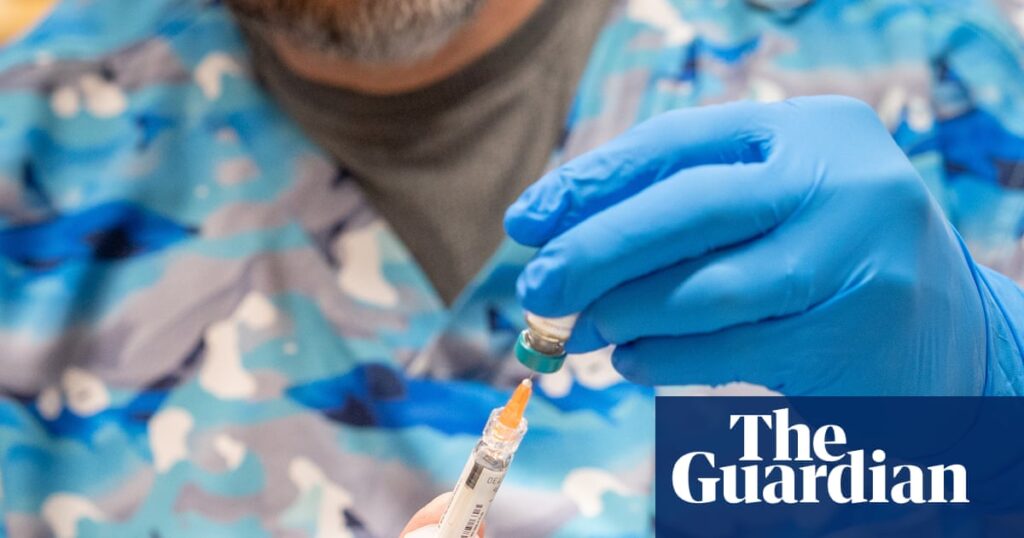
The measles outbreak in South Carolina has surged to a staggering 664 cases, more than doubling in just a few weeks, according to health officials. The highly contagious virus has spread beyond state lines, affecting North Carolina, Ohio, and Washington State, while similar outbreaks are emerging in Arizona and Utah. Initially detected in Texas nearly a year ago, the outbreak threatens to upend the United States' measles-elimination status, highlighting a broader public health crisis fueled by misinformation.
Robert F. Kennedy Jr., the secretary of the US Department of Health and Human Services and a long-time critic of vaccines, has contributed to the spread of misinformation by framing measles vaccination as a personal choice and promoting unproven treatments. This has coincided with a troubling trend: the vast majority of those infected are children who have not received the measles, mumps, and rubella (MMR) vaccine. Last year alone, the Centers for Disease Control and Prevention (CDC) reported 2,242 confirmed cases of measles across 44 states. Alarmingly, 171 cases have already been reported in just nine states in 2026, excluding South Carolina’s recent surge.
“I think it’s just the new normal, unfortunately, that public health departments have to be responding to,” said Katherine Wells, director of public health in Lubbock, Texas. Wells coordinated the city's response to the initial outbreak and emphasizes the potential for measles to serve as a warning signal for other vaccine-preventable diseases. “Measles is the canary in the coalmine,” she stated, pointing out that declining vaccination rates could lead to outbreaks of diseases like rubella and polio.
Measles is particularly concerning because it is highly contagious—it can remain airborne in a room for up to two hours. As a result, it typically spreads more quickly than other infectious diseases. “Measles is a bellwether,” said James Alwine, emeritus professor and virologist at the University of Pennsylvania. “It means that your vaccination level is so low that all the other vaccine-preventable diseases will come up with time.” Health experts warn that as vaccination rates decline, vulnerable populations—including children under one year old or those with health conditions—are at increased risk.
Vaccination rates across the United States have been dropping, largely due to increasing exemptions from school mandates, according to a study published in the Journal of the American Medical Association (JAMA). “Kennedy has been a key figure in growing anti-vaccine sentiment for decades, denigrating vaccines in general, specifically the MMR vaccine,” stated Rob Davidson, an emergency physician in Michigan and executive director of the Committee to Protect Health Care. Davidson expressed concern that Kennedy now has “the largest megaphone of public health in the country, maybe in the world.”
As of now, South Carolina has 531 individuals in quarantine and 85 in isolation, with eight hospitalized due to measles since the outbreak began. Johnathon Elkes, an emergency medicine physician at Prisma Health in Greenville, warned, “We feel like we’re really kind of staring over the edge, knowing that this is about to get a lot worse.”
The outbreak's ripple effects are not limited to South Carolina. In North Carolina, seven out of eight recent cases have been linked to the South Carolina outbreak. Ohio and Washington have reported at least three pediatric cases, while Arizona has seen 217 cases and nine hospitalizations since the outbreak began in August. Utah, too, has reported 210 cases since June.
In light of the ongoing crisis, the Pan American Health Organization (PAHO) plans to review the measles elimination status of the US and Mexico in April 2026. Since the outbreak's origin in Texas, where the first child tested positive on January 20, 2025, public health officials have struggled to contain its spread. Wells noted that the outbreak was already in full swing long before the public was fully aware. “Our investigation revealed that there were many, many sick children with measles on the ground,” she said.
The Texas cluster officially ended in August 2025, with 762 confirmed cases, 99 hospitalizations, and the deaths of two young children. However, the outbreak had already expanded beyond Texas borders by that point. Losing the US measles elimination status is a stark warning, indicating that unvaccinated communities will likely experience outbreaks that could affect even those in vaccinated areas.
Health experts like Wells advocate for stronger community ties to improve vaccination rates and public awareness. “We need to have more boots on the ground, working with communities, for all different types of health outcomes and health concerns,” she emphasized. The need for proactive public health measures is critical; as Davidson put it, “Undoubtedly we’re going to see more meningitis, hepatitis, RSV, rotavirus—all the things that they just took off the [full] recommendation list.”
The resurgence of preventable illnesses is putting additional strain on an already overburdened healthcare system. As the situation develops, public health officials urge parents to prioritize vaccinations for their children. With the risk of more outbreaks looming, experts plead for a return to the proactive measures that once helped eradicate these diseases. “The majority of parents from both political sides believe in vaccines and want to see kids being vaccinated,” Wells concluded. “We need to make sure that those parents speak out about the importance of keeping kids vaccinated.”
You Won’t Believe Which University Just Overtook MIT in Global Computer Science Rankings!

Norman Powell’s SHOCKING Transformation: How This Heat Star Is Revolutionizing the Game! Don’t Miss the Details!

Florida Governor Candidate's Shocking Plan: Mandatory School Uniforms—What Parents Need to Know NOW!

6 Shocking Snack Mistakes That Could Ruin Your All-Day Team Event—#3 Will Leave You Speechless!

Is Bitcoin's Shocking Plunge Below $90K a Sign of the End? Don't Miss What Happens Next!
Shocking Study Reveals 70% of Digital Health Apps Are Failing Users—Are You at Risk?
You might also like: