
Texas School District Shocks Community by Cutting Ties with Controversial Islamic Group—What’s Next?

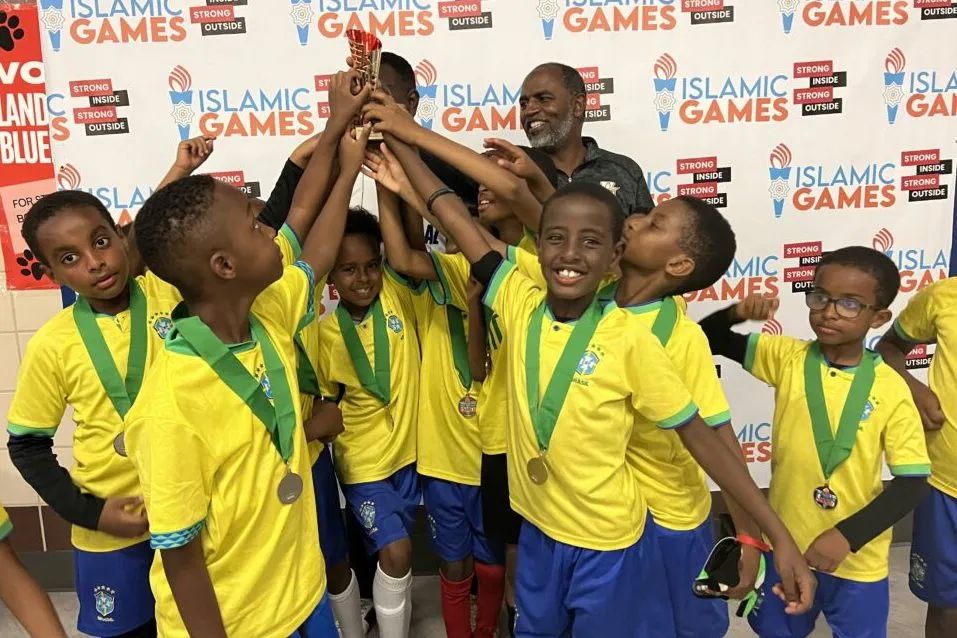
FORT WORTH — In a significant development echoing the growing tensions around religious representation in public spaces, officials from the Grapevine-Colleyville Independent School District (GCISD) recently announced the termination of negotiations with an Islamic group that sought to host an all-ages sporting tournament at a local high school. A district spokesperson confirmed the decision on Tuesday, attributing it to concerns over the event's sponsor, the Council on American-Islamic Relations (CAIR), which was designated a terrorist organization by Texas Governor Greg Abbott last year.
GCISD spokesperson Nicole Lyons noted that the decision followed administrators becoming "made aware" of CAIR's alleged sponsorship of the tournament. However, organizers of the Islamic Games quickly countered, asserting that CAIR "has never been, and is not presently, a sponsor, partner, affiliate or supporter" of the event.
“We are deeply concerned that a sporting event for children is being targeted,” said Salaudeen Nausrudeen, president of the Islamic Games. He expressed hope for a resolution that would favor the community and allow the event to proceed. Initially, Islamic Games officials requested to use Colleyville Heritage High School for the Dallas chapter’s gaming event scheduled for May. The reservation was still under negotiation when the district learned of the supposed sponsorship on Monday.
Despite the setback, Islamic Games officials announced on Wednesday that the tournament will still take place this summer, although the location has yet to be specified. Governor Abbott praised GCISD for its decision to end negotiations, describing it as a "rightful" action in light of the circumstances.
In a move that underscores the governor's stance against perceived threats from Islamic organizations, Abbott urged the Cypress-Fairbanks Independent School District to follow suit, citing similar concerns regarding CAIR's alleged involvement with the Houston version of the Islamic Games. He instructed district officials to "immediately preserve all records and communications about the event," warning he would involve the Texas Education Agency if necessary.
“Texans deserve immediate action to curb the spread of Islamic extremism,” Abbott stated, emphasizing that public facilities funded by taxpayer dollars should not host events associated with groups he deems terrorist organizations.
The Islamic Games, which is touted as North America’s largest Muslim sports and athletic event, brings together participants of all ages for various sports including basketball, soccer, and pickleball. Nausrudeen highlighted that the event is designed to be inclusive, welcoming individuals regardless of their backgrounds. This emphasis on inclusivity, however, contrasts sharply with the political narratives surrounding it.
Critics of the cancellation point to the ongoing politicization of relationships between Texas politicians and Muslim communities. Mustafaa Carroll, interim executive director of CAIR's Dallas-Fort Worth chapter, remarked, “Those kids that are trying to just play ball together haven’t done anything to contribute to Islamophobia. All they’re doing is living, and that’s the problem.”
The decision to cancel negotiations also came shortly after Keller Mayor Armin Mizani publicly denounced the Islamic Games, further fueling the controversy. In a statement, Mizani expressed gratitude for the GCISD’s swift action, affirming that the district's decision aligns with a broader commitment to security and vigilance against organizations designated as terrorist entities.
This incident highlights a broader trend in Texas, where legislation and political rhetoric increasingly target Islamic organizations. In November, Governor Abbott designated CAIR and the Muslim Brotherhood as "foreign terrorist organizations," prompting a wave of scrutiny and criticism from civil rights advocates. CAIR has consistently denied these allegations, asserting that it operates independently from any foreign influence or terrorist affiliations.
Lyons noted that Texas law prohibits governmental entities from entering contracts with organizations identified as terrorist groups, reinforcing the district's decision to cancel the sporting event. Meanwhile, local political figures, including Brandon Hall, a Republican member of the State Board of Education, expressed their concerns over any potential association with groups designated as threats to public safety.
Despite the challenges, Nausrudeen emphasized that the Islamic Games endeavor to foster community and inclusivity. He critiqued the narrative suggesting that the event excludes others, stating, “The Islamic Games are open to any individual or team regardless of race, ethnicity, nationality, or religion.”
As the situation unfolds, it raises critical questions about the intersection of religion, politics, and community engagement in Texas. The implications of this decision extend beyond sports, reflecting wider societal attitudes and legal frameworks that govern religious expression and inclusivity in public spaces.
For many, this incident serves as a reminder of the ongoing challenges faced by Islamic communities in navigating a landscape increasingly defined by political rhetoric and fear. As the Islamic Games prepare for their summer event, the hope remains that local leaders will find a way to support community initiatives that bring people together rather than divide them.
You Won't Believe What This CE Certified Outdoor Fitness Equipment Will Do for Your Park!
Sage Hill Boys' Shocking Win Over Laguna: Is This the Playoff Breakthrough They Needed?

Aptar’s Shocking ‘A’ Score on CDP Climate Change: What Did They Do That Others Didn’t? Find Out Now!

Drew McIntyre’s Shocking 5-Hour Workout Routine: What He Does to Stay Undisputed Champion!

Gen Z is Ditching Diets: Discover the Shocking Foods That Boost Your Mood and Health!

Why OpenEvidence's Shocking $250M Fundraise Could Change Your Healthcare Forever!
You might also like: