
Tesla's Cybervan Didn't Happen, But This Russian Startup's Shocking $50K Version Will Blow Your Mind!

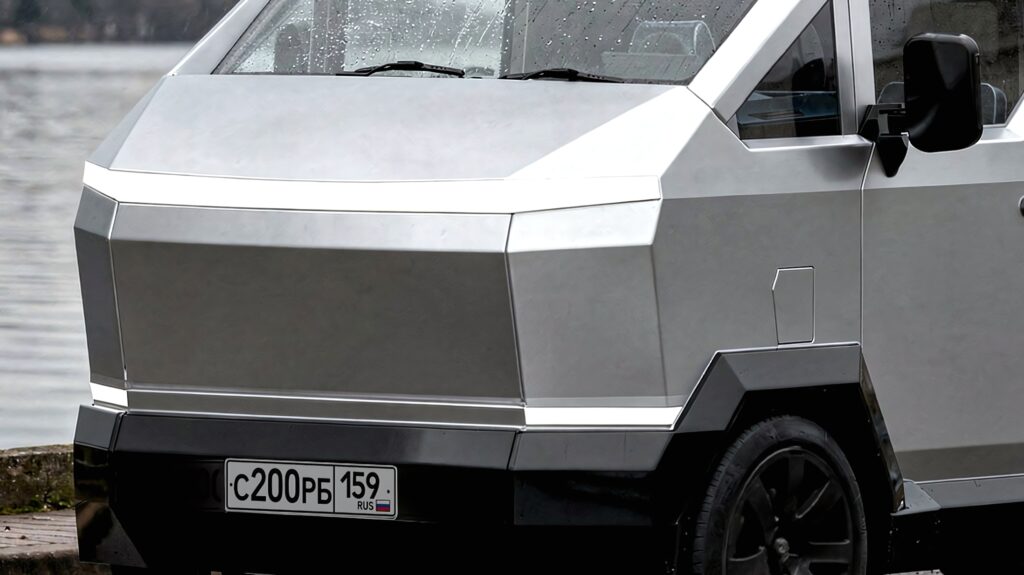
The F200 EV comes from a water dispenser maker that revived the name of historic Russian automaker Russo-Balt.
Tesla may not have brought a Cybervan to market yet, but the Russian startup Russo-Balt has stepped up with an intriguing entry into the electric vehicle market: the Russo-Balt F200. This new electric van has drawn comparisons to Tesla's Cybertruck, boasting a distinctive stainless steel design that aims to stand out in a crowded market.
As the first model from the revived Russo-Balt brand, which has historical roots stretching back to the late 19th century, the F200 is set to enter production with initial deliveries scheduled for January 2027. The van has been spotted on public roads in Russia, confirming its legitimacy beyond mere concept.
While some automotive observers have noted similarities to China's Weiqiao New Energy V90, Russo-Balt insists that the F200 is an original creation, not a rebadged version of any existing vehicle. This assertion could be crucial in establishing the brand’s identity in a global market increasingly dominated by established players like Tesla.
📰 Table of Contents
Features and Specifications
The F200 sports a hand-welded stainless steel body, reflecting Russo-Balt's expertise in metal fabrication, which they claim to have honed through their experience manufacturing water dispensers. The unpainted metal design offers a raw, industrial aesthetic, reminiscent of the Cybertruck. However, buyers can opt for polyurethane wraps in various colors to customize their vehicle's appearance.
With dimensions measuring 5,950 mm (234.3 inches) in length, 2,000 mm (78.7 inches) in width, and 2,550 mm (100.4 inches) in height, the F200 is tall enough to allow most people to stand upright inside. It utilizes a monocoque chassis, a design choice that provides better rigidity and supports a payload capacity of 1,000 kg (2,205 pounds), aligning with commercial expectations for delivery and utility vehicles.
Powering the F200 is a single electric motor generating 200 horsepower, drawing energy from a 115 kWh battery pack. The company claims a driving range of 400 kilometers (249 miles) on a single charge, with the added convenience of DC fast charging capabilities. This range positions the F200 competitively in the EV market, particularly for commercial applications.
In an interesting move, Russo-Balt offers a 100-year warranty on the body panels, a bold commitment that could reassure potential buyers about the vehicle's durability, although it remains to be seen how this will hold up once the F200 is fully operational.
Pricing for the F200 is set at 6.5 million rubles, approximately $85,200 at current exchange rates. To secure a place in the production queue, interested buyers can place a refundable deposit of just 10,000 rubles (around $131). However, the company has not disclosed the total planned volume of vehicles to be produced.
Market Implications
The F200 comes equipped with standard features such as ABS, ESP, climate control, and rear air suspension, along with a 360-degree camera setup. Designed for the harsh Russian winter, the vehicle includes heated seats, a heated steering wheel, and even heated mirrors. Infotainment is managed through a 14-inch touchscreen, allowing access to entertainment from Russian platforms like Rutube, VKvideo, and Yandex.
As Russo-Balt prepares for production, it aims to carve out a niche in the electric vehicle market, particularly in Russia, where demand for innovative and environmentally friendly transportation solutions is growing. The anticipated release of a second model, the F400, which will feature a range-extending gas engine and all-wheel drive, suggests that Russo-Balt is poised to expand its offerings further, potentially appealing to a broader audience.
In a market where established brands like Tesla dominate, Russo-Balt’s entry with the F200 presents a fresh narrative. It highlights the ongoing transformation in the automotive landscape, where new players are not just emerging but also innovating in ways that could disrupt traditional norms. Observers will be keen to see how this ambitious startup navigates the challenges ahead and whether it can deliver on its promises.
Unlock the Secrets: How CIQ's Startup Program Transformed 100+ Early Innovators Overnight!

Revealed: The Shocking $45M Deal That Could Change the Future of College Football QBs Forever!

You Won't Believe What Happens Next: The NBA's Most Shocking Season Twist Revealed!
You Won't Believe What Lee Tilghman Discovered About Social Media—It Will Change Everything!

Why Bright's New AI Chief Could Transform Real Estate Forever - Are You Ready for the Shock?

Is TikTok's $2 Billion Settlement Just the Beginning? Shocking Social Media Trials Unfold!
You might also like: