Student Startup Unveils Shocking Arsenic-Removal Tech—You Won’t Believe What They Discovered!

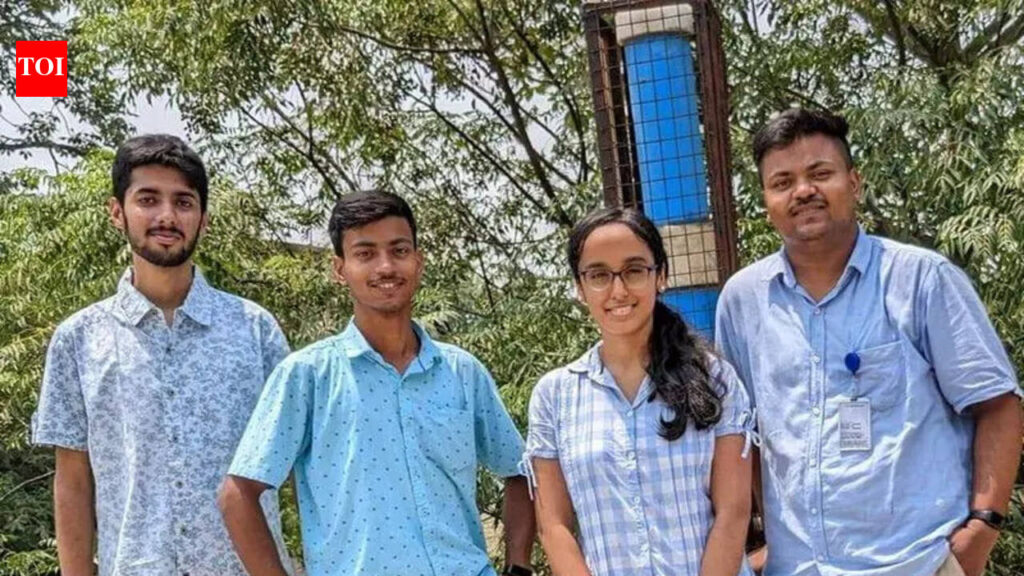
In a significant breakthrough for water purification technology, Arpit Kumar, a BSc (Hons) molecular physics student from the Manipal Institute of Applied Physics at Manipal Academy of Higher Education (MAHE), has been awarded the Innovation in Water Technology Award. This accolade was presented by Lok Sabha Speaker Om Birla at a recent event in New Delhi, recognizing Kumar's pioneering work in developing a magnetic-separation-based system designed to eliminate arsenic from drinking water.
Kumar's innovative system, known as the Magnetic Arsenic Removal Unit (MARU), stands out from traditional filtration methods by utilizing magnetic separation rather than relying on consumable filter media. This approach not only facilitates the removal of arsenic from groundwater but also offers several advantages: minimal sludge generation, low maintenance, and the adaptability of modular units for use in households, communities, and institutions. According to Kumar, this system is particularly valuable for providing safe drinking water to homes, schools, health centers, and community water points.
The origins of this technology can be traced back to a pilot project Kumar conducted in collaboration with the Bihar Bal Bhawan, Kilkari Department of Education, and the Public Health Engineering Department of the Government of Bihar. This initial research laid the groundwork for Kumar's startup, Navmarg Research and Innovation Pvt Ltd, which operates from the Innovation Centre at MAHE. Alongside co-founder Abhijeet Kumar and team members Akshat Adarsh and Shambhavi Sinha, Kumar's venture received grant support from the Rural Drinking Water and Sanitation Department of Karnataka.
The MARU system has already undergone successful pilot deployments in arsenic-affected regions of Bihar, with installations in government schools providing arsenic-free drinking water to students during field trials. Currently, the team is carrying out additional pilot deployments in the Raichur district to assess the system's performance under real-world conditions.
During these pilot operations, the MARU system effectively treated large volumes of arsenic-contaminated water, successfully reducing arsenic levels to within permissible drinking water limits. Kumar has also integrated AI-based water diagnostics and geospatial platforms to monitor and enhance the deployment of the technology.
Arsenic contamination in groundwater is a pressing public health issue in many parts of India, notably in states like Bihar, West Bengal, Assam, Uttar Pradesh, Punjab, and parts of Karnataka. This makes Kumar's innovative solution not only timely but also essential for improving public health in affected regions.
As the world grapples with water quality issues and their impact on health, innovations like Kumar's MARU system offer a glimmer of hope. The recognition he has received underscores the importance of investing in sustainable technologies that promise to make clean water accessible to all, especially in underserved communities.
Measles Alert: Did You Visit These 5 Big Island Spots? You Might Be at Risk!

Tennessee's Vaccine Debate: Are Politicians Putting Lives at Risk? Shocking Statistics Inside!

8 Shocking New Costco Foods That Could Transform Your Health—Experts Say Don't Miss Out!
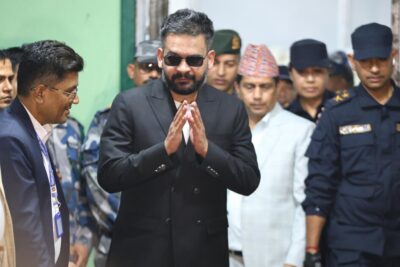
Nepal's Shocking Election Twist: Could a New Party's Landslide Victory Change Everything?

FAU Just Snagged a Shocking $4.5M Air Force Simulator—Find Out What This Means for Future Pilots!

You Won’t Believe How Christopher Jackson Plans to Defend His Title in the Fiercely Competitive Oncologists’ Fitness Challenge!
You might also like: