
Stocks Plummet 5% as Iran Chaos Sends Energy Prices Soaring—Are You Prepared?

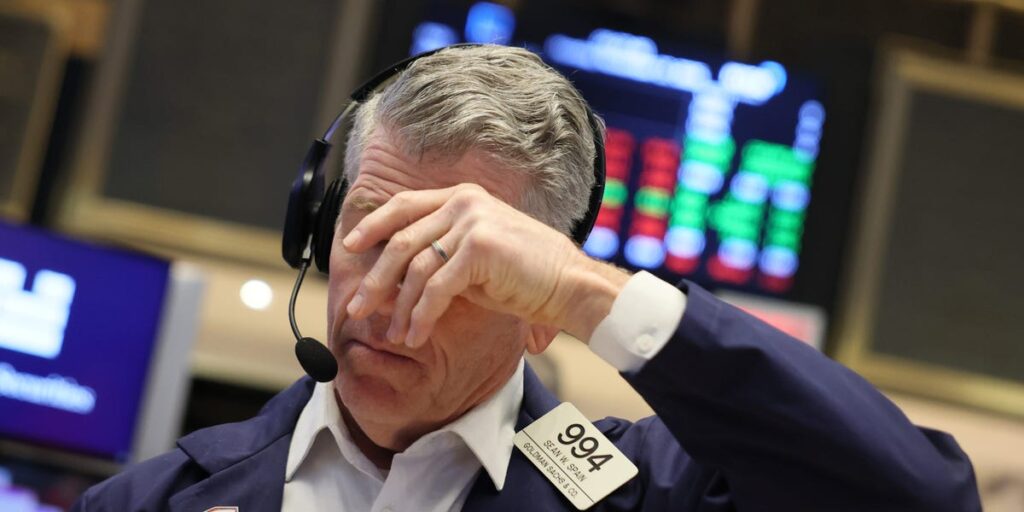
Global financial markets experienced significant turbulence on Tuesday as escalating tensions between Iran and the United States and its allies led to sharp declines in stock prices and rising energy commodity prices. By early morning on the East Coast, U.S. stock futures indicated a gloomy outlook, with futures for the S&P 500, Dow Jones Industrial Average, and Nasdaq 100 all down approximately 2%.
Across the globe, the impact was clear. Hong Kong's Hang Seng Index closed 1% lower, while South Korea's KOSPI saw its steepest drop in 19 months, plummeting by 7%. European markets were not spared either, with Germany's DAX trading down by 4%, and both Britain's FTSE 100 and France's CAC 40 down around 3%.
Energy prices surged dramatically, reflecting heightened concerns over supply disruptions. Crude oil jumped approximately 7%, with Brent crude hitting around $83 per barrel and West Texas Intermediate climbing to about $76 per barrel. A notable spike was observed in natural gas prices, particularly in Europe, where futures for the Dutch TTF benchmark soared by 40% to over 60 euros per megawatt-hour. This surge was largely fueled by Qatar's suspension of production at the world’s largest liquefied natural gas (LNG) export plant following an Iranian drone strike. Notably, Qatar accounts for 20% of global LNG supply, making this a critical factor for international energy markets.
Investor sentiment was further dampened as traders began to evaluate the implications of the ongoing conflict on various sectors. Airlines and hotel stocks were particularly hard hit, with companies like IAG and Accor seeing declines of around 6% due to fears of ongoing travel disruptions. Conversely, U.S. energy companies, including Diamondback, Devon, and Coterra, experienced a slight uptick of about 3% as they are expected to benefit from the higher oil and gas prices.
"Asian markets were weak as concern grows about rising energy prices, and U.S. futures suggest investors across the Atlantic are also starting to become more alarmed about the situation in the Middle East,"
noted Dan Coatsworth, head of markets at AJ Bell, in a morning note. He highlighted that the suspension of LNG production in Qatar serves as a "particularly sensitive pressure point," contributing to the global surge in gas prices.
The repercussions of rising energy prices extend beyond immediate market volatility. Experts caution that prolonged high prices could exacerbate inflation, potentially prompting a hawkish response from central banks, which is generally unfavorable for equity markets. Deutsche Bank researchers pointed out that historically, the S&P 500 has only fallen more than 15% when there has been a significant oil shock, which typically includes a 50% to 100% spike in oil prices lasting several months, an economic slowdown, or a central bank's aggressive stance on inflation.
"The critical question over the days ahead will be if one of these boxes is ticked,"
the Deutsche Bank note concluded, emphasizing that the current geopolitical landscape is critical for investors and market strategists alike. As the situation develops, market participants will be closely monitoring how these dynamics evolve, particularly in an increasingly interconnected global economy where regional tensions can quickly influence markets worldwide.
AUSTAR’s New Monthly Feature on ORGA: The Shocking Truth That Could Change Your Life Forever!

You Won't Believe Who's Challenging Greg Abbott in 2026 – Shocking Candidates Revealed!

Shocking Financial Results Incoming: Atour Lifestyle’s 2025 Numbers Could Change Everything by March 17!

Vivek Ramaswamy's Shocking $10 Million Advantage: Will This Destroy Ohio's Democrats?

You Won't Believe How This Bizarre MWC 2026 Phone Can Start Fires—And Why You NEED One!

Bitcoin Plummets 30% Overnight—Could This Be the End for Crypto? Don’t Miss the Shocking Details!
You might also like: