
Stock Market Plummets Again: Did Nvidia’s Record Earnings Just Trigger a Crisis?

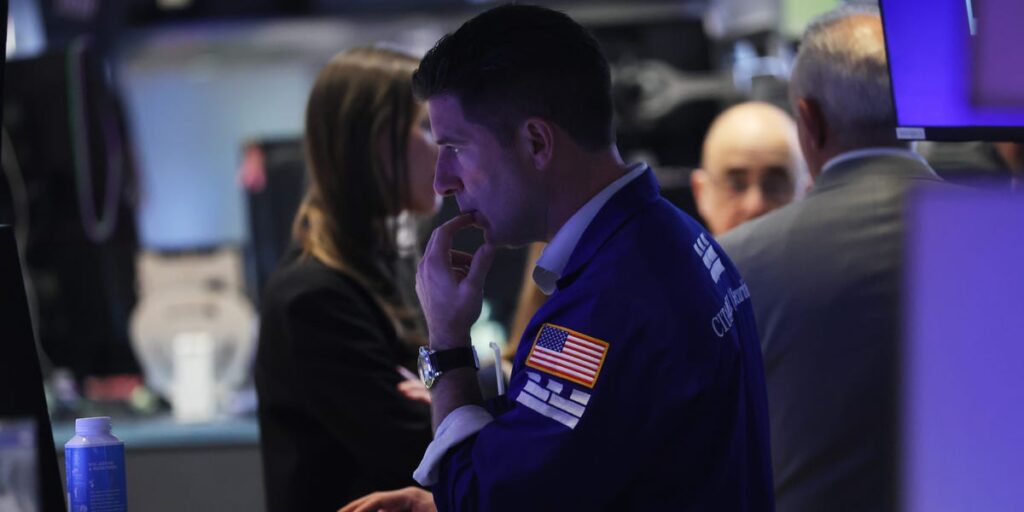
On Thursday, following a robust earnings report from Nvidia, the stock market experienced a swift downturn, highlighting the volatility that has characterized recent trading sessions. After starting strong, with the Nasdaq climbing significantly in morning trading, stocks took a dramatic turn in the afternoon, ultimately falling nearly 2% from their earlier highs.
The sudden reversal appears to be driven by renewed concerns over market valuations and the potential for a bubble, despite reassurances from Nvidia CEO Jensen Huang during the company's earnings call. "Stocks are now deep in the red, having taken a colossal U-turn following a 2% daily climb in earlier trading," noted Jose Torres, senior economist at Interactive Brokers.
During the morning rally, the S&P 500 had surged past its 50-day moving average, igniting debate among investors about whether the technology sector is indeed experiencing a bubble. Yet, as trading progressed, bearish sentiments prevailed. "Valuation hawks pulled an interception intraday, though, in a dramatic NFL-style swing," Torres added.
Market anxiety was further reflected in the Cboe Volatility Index, often referred to as the stock market's fear gauge, which spiked to its highest level since April. Concurrently, bond yields fell as investors sought safety; the yield on the 10-year Treasury note dipped by two basis points to 4.1%.
By around 2:30 p.m. on Thursday, uncertainty loomed large over U.S. indexes. Marcus Sturdivant Sr., managing member of the investment advisory firm The ABC Squared, commented, "It seems scary, but markets have not even fully corrected from the highs. We are not down 10% yet, so more selling could occur. The lack of data and a jobs report, be it delayed, showed the unemployment rate ticking up in September, and people are rattled."
Adding to the day’s volatility, the two-month-old payroll report hinted at an increased likelihood of a rate cut next month, although not enough to solidify confidence among investors. The CME FedWatch tool indicated that the odds of a 25 basis point cut inched up to 40% after the report, coinciding with the unemployment rate rising to 4.4%. The Federal Reserve had previously stated that it would be monitoring for signs of weakness in the labor market, but a data blackout due to the government shutdown has muddied the economic outlook.
Collin Martin, head of fixed income research and strategy at the Schwab Center for Financial Research, remarked, "This report doesn't change our outlook for a December pause by the Fed. It suggests the labor market is cooling, but probably not enough to move the needle for the committee members that are worried about inflation."
The initial enthusiasm surrounding Nvidia's earnings report, which projected $65 billion in revenue for the current quarter—surpassing analysts' estimates of $61 billion—has waned in the face of these broader market concerns. Even as investors celebrated the strong performance, underlying fears of a bubble seemed to linger.
Economic analyst David Rosenberg, president of Rosenberg Research, cautioned, "It has been many decades since one stock could move the market like Nvidia. This remains a bubble of epic proportions, keep that in mind. Color me a skeptic that the total size of the AI market is going to swell eightfold in the next half-decade, which is what is currently being priced in."
As the volatility continues, investors are left grappling with mixed signals, both from individual company performances and broader economic indicators. The tech sector, having experienced weeks of pressure, faces a pivotal moment as it navigates these uncertain waters.
UWO Senior's Shocking Internship with Cops: Uncover the Dark Truth About Local Drug Crisis!
Raleigh County's Shocking Vaccine Exemption Ruling: What You MUST Know Before It’s Too Late!

Is the CDC's New COVID Vaccine Advice Secretly Leaving Millions at Risk? Find Out Now!
College Football Shock: This Team Dominates Ratings with a Jaw-Dropping 30% Viewership Spike! Find Out Who!

Governor Murphy's Shocking $250 Million Proposal: Will Local Workers Finally Get Relief? Find Out!
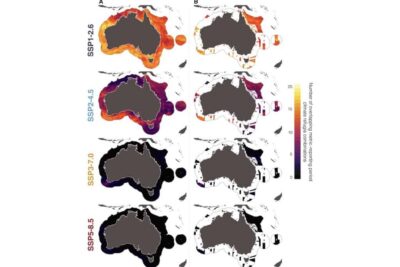
Australia's Marine Life Could Face Extinction: Are 'Safe Zones' Vanishing in Just 15 Years?
You might also like: