
Spain's Shocking New Law Targets Tech Giants: Are Your Social Media Habits in Danger?

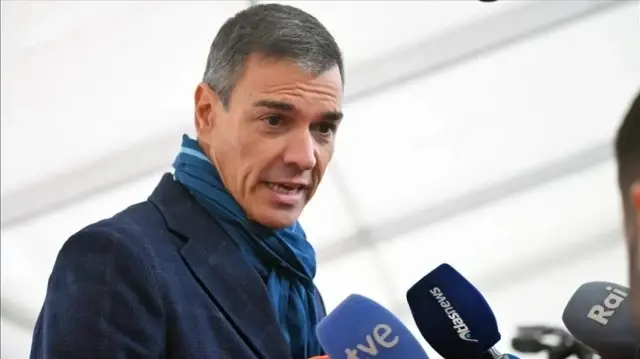
Spanish Prime Minister Pedro Sanchez has initiated a decisive crackdown on social media platforms, unveiling a series of regulatory measures designed to combat criminal activity, protect minors, and hold technology companies accountable. In a video statement released late Friday, Sanchez described his initiative as a necessary response to what he termed the "Wild West" scenario of digital platforms, which he accuses of contributing to severe societal harms.
In a pointed critique, Sanchez stated that social media applications have “become a kind of Wild West in a failed state,” providing safe havens for channels that promote criminal pornography and violence. He cited an alarming incident in which a "tech oligarch has infiltrated the phones of millions of Spanish citizens to tell them what to think," deeming such actions a significant abuse of power. Furthermore, he condemned the manipulation of artificial intelligence to generate fake explicit images, including those of minors, and accused platforms of profiting from the amplification of hate speech and misinformation.
The Spanish government's response comprises five key actions: First, it will collaborate with the Public Prosecutor's Office to investigate crimes taking place on social networks. Second, the government will prosecute the manipulation of algorithms that exploit personal data without user consent. Most notably, it intends to pursue criminal charges against companies that fail to eliminate illegal content from their platforms. Additionally, the government plans to establish "the first database of hate and polarization" aimed at tracking harmful trends while also restricting access to social media for users under the age of 16.
Sanchez’s announcement reflects a growing frustration among European governments regarding the perceived immunity of major technology firms. He directly challenged the economic and political influence wielded by these companies, asserting, "We know that this tech elite has more money and even more power than many countries, but our determination is stronger than their pockets." His administration has vowed to take action “despite their threats,” positioning Spain within a broader European Union effort to enforce stricter digital governance under regulations like the Digital Services Act (DSA). This act mandates enhanced responsibilities for platforms concerning content moderation.
The implications of Sanchez’s initiative could extend far beyond Spain, signaling a potential shift in how governments worldwide approach the regulation of social media and technology companies. As concerns about data privacy, misinformation, and the safety of minors continue to mount, other nations may look to Spain's measures as a model for their own regulatory frameworks. Given the rapid evolution of technology and its profound societal impacts, the effectiveness of these regulations will likely be closely scrutinized.
Ultimately, the actions proposed by Sanchez reflect a growing desire among policymakers to reclaim control over the digital landscape, ensuring that social media platforms operate in a manner that prioritizes societal welfare over profit. As this situation develops, it will be vital for both citizens and industry stakeholders to remain engaged in the discourse surrounding digital governance, especially as it pertains to issues of safety, privacy, and ethical responsibility.
You Won’t Believe How Two Ex-Wagner Coaches Could Change the Super Bowl Outcome!

Shocking Shift: IOC Considers EARLIER Winter Olympics—What Does This Mean for Athletes?

Bitcoin's Plunge: Have You Lost $10,000 Overnight? Discover the Shocking Truth Behind the Crypto Chaos!

Discover the Shocking Truth: Why 90% of Visitors to Folly Beach Never Leave!

Legendary Country-Rock Icon Behind a Timeless Hit Dies at 67—What This Means for Music Lovers!

Will Your Vote Matter? 2026 Primary Election Forums Expose Shocking Candidate Secrets!
You might also like: