
Social Media’s Sudden Death: What’s Taking Over and Why You Should Be Worried!

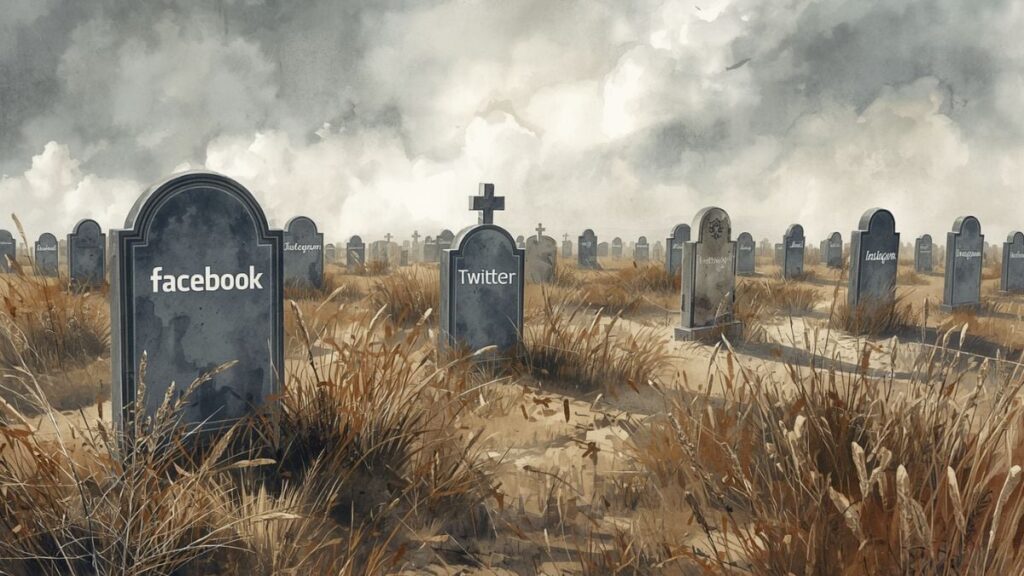
Social media, as we once understood it, is fading into the background, not with a whisper but with a loud bang. It has morphed into a more troubling beast—what Gary Vaynerchuk refers to as “attention media.” This transformation is not merely a rebranding; it represents a fundamental shift in how online platforms operate and, more critically, how they influence the news media landscape.
Vaynerchuk's insights, shared recently, underscore a stark reality: platforms no longer prioritize genuine connections between people, but rather the capture of attention—often through outrage. The cycle is vicious: outrage sparks engagement, which then drives monetization. This relentless loop continually demands more shocking content to sustain itself, reshaping all corners of media, including news organizations.
The implications are dire. Unlike businesses that sell products, news media's primary responsibility is to inform the public. However, in an environment that financially rewards sensationalism and anger, this mission is compromised. The incentives for news organizations have become fundamentally misaligned. As audience clicks and shares become the metrics of success, the louder and more provocative the narrative, the better it performs.
Consider this: "boring news" is often indicative of good governance and stability. Progress in diplomacy, a balanced city budget, or a predictable stock market may be essential for societal well-being, yet they earn scant attention in today's click-driven ecosystem. Instead of coverage that matters, we are inundated with wall-to-wall outrage—a far cry from the nuanced storytelling that fosters public understanding. Journalists, instead of honing their craft of storytelling, find themselves chasing engagement metrics, a shift that ultimately degrades the quality of journalism.
This trend isn’t unprecedented. The adage “if it bleeds, it leads” is not a new concept in journalism. However, the current media landscape lacks the diverse monetization strategies that were once available in radio and television, where straightforward audience metrics could easily justify advertising revenue. Today, many outlets find it more profitable to cater to niche audiences that thrive on anger and division, further fragmenting the media landscape and eroding trust.
As the media divides along political and ideological lines, consumers self-select into echo chambers that reinforce their pre-existing beliefs. Outlets have learned that serving an enraged audience pays better than appealing to a broad, inquisitive public. This self-reinforcing cycle deepens societal fractures and erodes the very trust that news organizations depend on for credibility.
The real threat goes beyond mere inaccuracies or bias; it touches the structural integrity of the industry. If the only way to monetize news content is through outrage, the industry will continue to cultivate a workforce that specializes in generating that outrage. Over time, nobody will remember what good journalism looked like in the first place.
Vaynerchuk, primarily a marketing expert rather than a media critic, has pinpointed a critical issue that the news industry has been slow to confront. The shift from “social media” to “attention media” is not just a semantic change; it signals a deeper problem. While attention itself is neutral, the methods used to capture it—particularly through manufactured outrage—can be corrosive, especially when truth is the product on the line.
Now the pressing question isn't whether the model is broken; we know it is. The real challenge lies in whether those within the news industry have the resolve to create something sustainable and different before the damage becomes irreparable. While some organizations are attempting to pivot towards more meaningful journalism, the road ahead is fraught with difficulty. Algorithms that prioritize engagement over depth won’t facilitate this change. The alternative—a news media landscape optimized solely for outrage—is hardly a landscape of journalism at all; it’s mere noise masquerading as news.
The fallout from this shift is already being felt, with trust in media at an all-time low. The challenge ahead requires both introspection and innovation within the industry. The question remains whether enough stakeholders will respond in time to prevent a further erosion of the quality and integrity of news, lest we become permanently entrenched in an information environment driven by outrage rather than truth.
Federal Government's Shocking Move: 90% of Vaccine Injury Claims Now at Risk—Are You Affected?
What If TUMS Could Save Our Oceans? Shocking New Discovery Reveals Hidden Carbon Secrets!

Lakers and Nuggets Snatch Playoff Spots as Shocking Suns Loss Leaves Fans Reeling—You Won't Believe What Happened!

Microsoft's Stock Skyrockets 15% Overnight—What's Behind This Shocking Surge? You Won't Believe It!

Is China Star Entertainment's Stock Surge Hiding an Earnings Disaster? Shocking Details Inside!

Shocking Heat Wave Forces Western U.S. to Enact Water Restrictions—Will Your Home Be Next?
You might also like: