
Social Media's Hidden Influence: Are Elections Being Hijacked? Discover the Shocking Numbers!

On December 9, ahead of its 11th general convention, the Communist Party of Nepal-Unified Marxist Leninist (CPN-UML) convened at its central office in Chyasal. Chaired by General Secretary Shankar Pokhrel, the meeting addressed various organizational and political matters, leading to several key decisions that could reshape the party's approach as Nepal approaches elections on March 5.
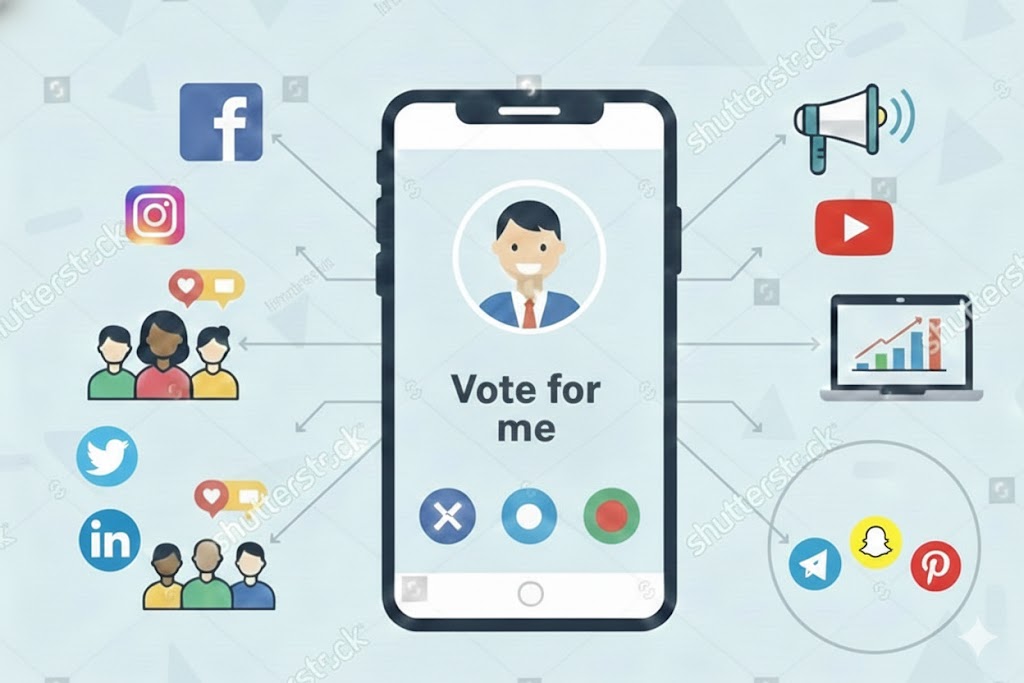
One of the most significant directives from this gathering is the mobilization of party-affiliated organizations to ramp up efforts for the upcoming elections. The leadership has underlined the need to leverage social media more effectively, aiming to shape public opinion favorably for the party. Cadres were encouraged to engage actively online, ensuring that the party's messaging permeates digital platforms and reaches potential voters.
This renewed focus on digital outreach is not entirely novel for the UML. The party has long recognized the growing significance of social media in Nepal's political landscape, urging its members to boost their online presence and coordination. The urgency of this initiative partly stems from a notable incident involving the party chair, KP Sharma Oli, who faced a formidable challenge from Balendra Shah, the independent mayor of Kathmandu. Shah's election success was primarily fueled by his strong social media backing, which often put him at odds with Oli, who found himself uncharacteristically muted in online discourse despite the party's extensive organizational network.
Adding to the challenge for the UML is the rising influence of the Rastriya Swatantra Party (RSP), which emerged as the fourth-largest political force in Nepal during the 2022 elections, even without a solid organizational framework. The RSP has effectively harnessed social media to build a wide base of support, positioning itself as a formidable contender ahead of the March elections.
Analysts point out that the increasing role of social media in shaping voter preferences is a phenomenon observed globally, and Nepal is no exception. For decades, major political parties in Nepal, such as UML, the Nepali Congress, and the Nepali Communist Party (an amalgamation of various leftist factions), have relied heavily on structured grassroots networks for electoral success. These structures include various party tiers from the central to the ward level, along with sister organizations, youth and student wings, and face-to-face voter engagement efforts.
However, the political terrain has undergone dramatic changes in recent years. Social media has emerged as a crucial platform for rapid dissemination of campaign messages and narrative shaping. What once took weeks to communicate through traditional channels can now spread like wildfire within hours, fundamentally altering the electoral landscape.
While social media offers unparalleled speed and reach, experts caution that it also introduces a multitude of risks. Unlike traditional party organizations, which are built on established hierarchies and accountability, digital campaigns can often be chaotic and emotionally charged, leading to the potential spread of misinformation and divisive rhetoric. As Krishna Khanal, a professor of political science, notes, “Social media, by contrast, rewards immediacy and emotion. That can distort policy debates and prioritize viral content over substantive discussion.”
Moreover, the shift towards digital engagement raises concerns about the erosion of internal party democracy. When online popularity begins to outweigh grassroots credibility or organizational loyalty, it could lead to a prioritization of digital visibility over long-term community engagement. This scenario poses a risk to seasoned local leaders who command trust but may lack a strong online presence.
Despite these challenges, social media has also democratized political discourse, providing a platform for historically marginalized groups, such as younger voters and migrant communities, to engage directly in the political arena. Campaigns can engage first-time voters without the complexities associated with traditional rally-based mobilization.
The leadership of UML recognizes the changing dynamics and has been vocal about the necessity for party members to enhance their online presence. Yogesh Bhattarai, UML's deputy general secretary, remarked, “Social media has simplified the job of the party organization,” while also stressing that it cannot replace traditional organizational structures. This sentiment was echoed by Bipin Acharya, joint general secretary of the RSP, who acknowledged that while social media has transformed party communication, the foundation of any political entity remains its organizational strength.
As the political climate heats up in the lead-up to the elections, all parties, including those with established organizational frameworks, are ramping up their social media campaigns. Nevertheless, experts warn against relying solely on digital influence, especially in rural constituencies where personal relationships and local networks still play a critical role in securing votes. While social media may shape perceptions, trust built through face-to-face interactions often translates into electoral success.
Epic Showdown Alert: Can No. 1 Michigan Survive Duke's Jaw-Dropping Comeback Tonight?

You Won’t Believe What This Chinese Phone Giant is Secretly Planning—And Why You Should Be Worried!
Bihar's Shocking Tech Transformation: UK Minister Reveals 5 Secrets You Won't Believe!

Stock Market SHOCKER: Why Experts Predict a 30% Crash by March—Are Your Investments Safe?

Is Hyrox the Fitness Challenge Everyone's Raving About or a Dangerous Myth? You Won't Believe the Shocking Truth!

Nearly 1,000 Measles Cases This Year: What You MUST Know to Protect Your Family!
You might also like: