
Smartphone Crisis in Gaza: Are 50,000 Users Left in the Dark? Shocking Stats Inside!

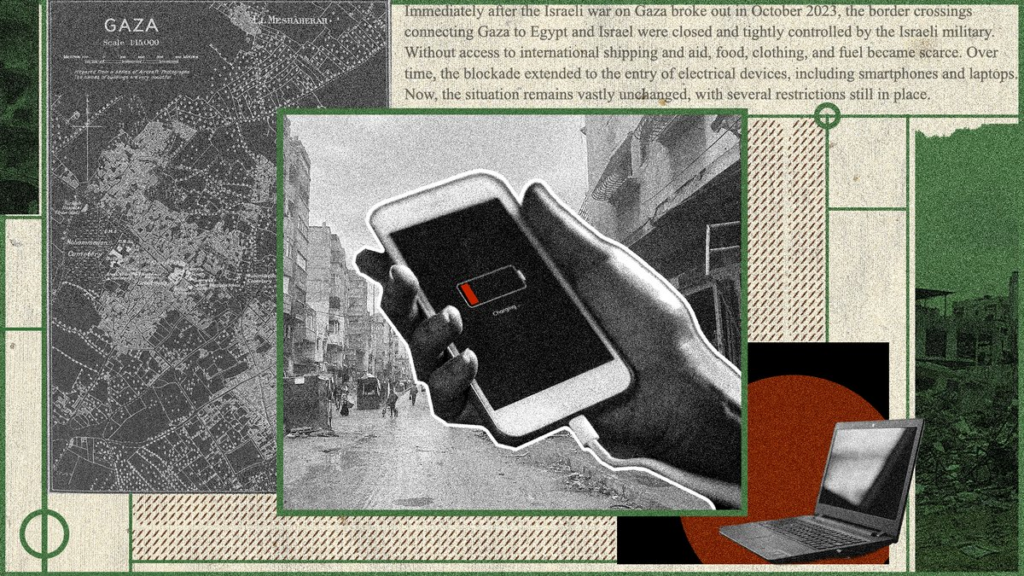
The ongoing conflict in Gaza has drastically altered the lives of its residents since October 2023, when Israel closed its border crossings to both Egypt and Israel in response to escalating tensions. This blockade has severely restricted access to essential goods, including food, clothing, and fuel. As the months have progressed, the stringent controls have expanded to include the entry of electronic devices, disrupting education and livelihoods for many.
Israel has cited concerns over “dual-use” items—those that can serve both civilian and military purposes—as justification for the ban on electronics. This has meant the restriction of everyday items, including flashlights and sleeping bags. With all of Gaza’s border crossings closed, and strict checks in place at the two operational crossings, Kerem Abu Salem and Rafah, the flow of goods has been severely affected. The Rafah crossing, which connects Gaza to Egypt, is the only entry point not directly managed by Israel but still requires Israeli approval to operate.
As the Islamic University of Gaza resumed operations in 2024, students like twenty-year-old Hala Al-Khatib found themselves at a significant disadvantage. After her mobile phone was damaged in an Israeli airstrike that struck her neighbor's home, Al-Khatib could not register for her online classes. Her phone was the sole means of accessing educational resources, highlighting a grim reality where education and technology are intricately linked. By the start of the second semester, she managed to use her mother’s phone to continue her studies, but complications arose. To replace her broken device, she had to seek out a secondhand phone online—a reflection of the hyperinflated market driven by scarcity. Yet even with a new device, Al-Khatib struggles with its declining performance. “Sometimes during my exams, the mobile suddenly shuts down,” she lamented, noting the lost time that could impact her grades.
The blockade's impact extends beyond students. Freelancers like Maysa Serdana, an Amazon Web Services solutions architect working through Upwork, face unique challenges. Since February, her laptop has been functional only when plugged into a power source. With electricity being sporadic in Gaza, her family has turned to solar panels for power. However, the limited energy output prevents her from effectively completing her work. To keep her laptop operational, Serdana spends hours at a public workspace, paying for Internet and electricity, which further compounds her struggles as a freelancer. “I need a new laptop and a reliable electricity supply to work better. I am losing many opportunities,” she expressed, voicing the frustration felt by many in similar positions.
In December 2023, after a temporary ceasefire, Israel allowed mobile phones back into Gaza. However, the prices skyrocketed; a laptop that once cost $400 now reaches upwards of $1,000. The situation reverted back to dire straits when the ban was reinstated just months later, perpetuating a cycle of hardship for Gaza's population.
The restrictions have significant ramifications for communication, particularly for job seekers. Noor, a twenty-six-year-old medical school graduate, recently experienced this firsthand. After dropping her smartphone and damaging the screen, she faced immense difficulty finding a replacement due to the blockade. Scouring local electronics stores yielded no results, with one salesperson suggesting a low-quality knockoff screen for around $300. Caught between the high cost of repairs and the risk of being completely disconnected, Noor ultimately opted to buy the expensive screen replacement, ensuring she could continue to communicate with potential employers. “Everything exists on my mobile, I can’t replace it,” she stated, a sentiment echoed by many who find their lives tethered to their devices amidst the ongoing crisis.
This troubling reality underscores a larger issue in Gaza: access to technology has become a luxury rather than a necessity. The high costs of even basic devices, coupled with the scarcity of accessories like headphones and chargers, hinder not just communication but also education and economic opportunities. For the residents of Gaza, the restrictions are more than mere inconveniences; they represent a profound barrier to survival and progress in an already challenging environment.
Wall Street in Turmoil: Why Chip Stocks Just Crashed and What It Means for Your Wallet!

Los Angeles Condo Prices Crash 30% - What This Shocking Decline Means for Your Future!

Is This Snack Giant About to Lose $1 Billion? The Shocking Truth Revealed!

Transform Your Workout Routine: Discover the Shocking Secret 90% of Gym-Goers Miss!

You Won't Believe What April Has in Store: 7 Must-See Releases That Will Change Everything!

Is Idaho's Tech Job Fair the Last Chance for 1,000+ Workers to Land Their Dream Job?
You might also like: