
Shocking Revelations: How 10,000 Families are Fighting for Justice Against COVID Vaccine Deaths in India!

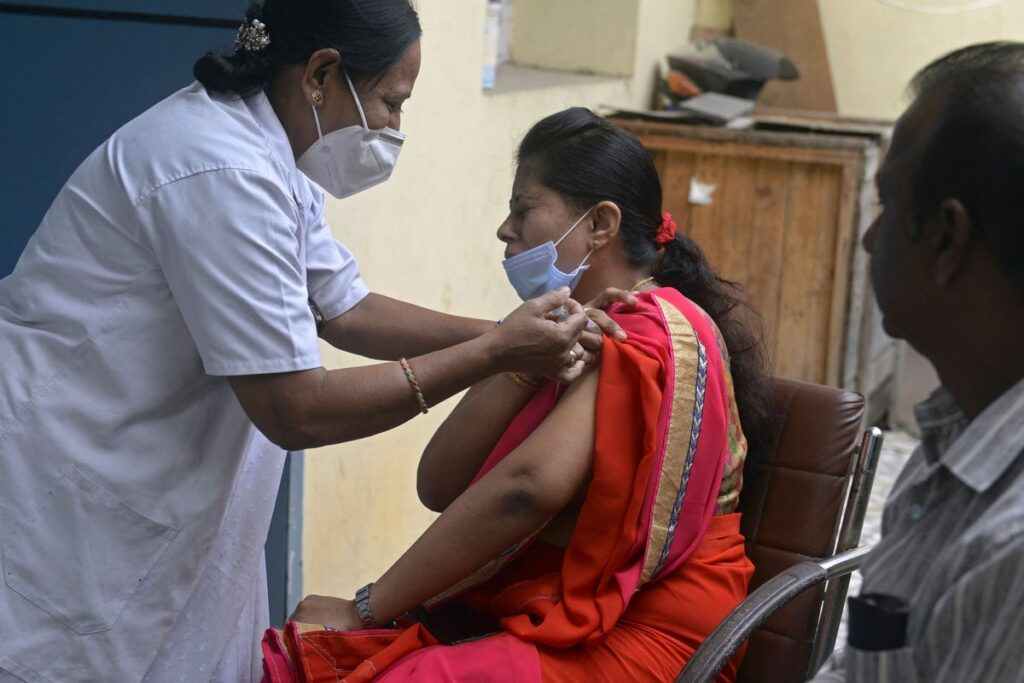
The tragic story of Rithaika Sri Omtri, an 18-year-old from Hyderabad, India, highlights the growing concerns surrounding the safety of COVID-19 vaccinations. Omtri suffered a massive brain hemorrhage just days after receiving the Covishield vaccine, developed by Oxford University and AstraZeneca. Her mother, Rachana Gangu, recalls that before the vaccination, Rithaika was a healthy teenager, eager to pursue her dreams of studying architecture in the U.S. However, on June 20, 2021, just weeks after her vaccination, she was declared brain dead after multiple medical complications, including what her family believes was a rare side effect of the vaccine.
While severe adverse effects from vaccines are rare, the figures are sobering: of the 2.2 billion doses administered in India, there were only 2,782 reported cases of severe adverse events, translating to approximately one in 800,000 doses. Tragically, 1,171 individuals died following immunization. For the families like Gangu’s, these statistics offer little solace, as their grief is compounded by the struggle for accountability and recognition.
Recently, India's Supreme Court made a landmark ruling that directs the government to establish a compensation system for serious adverse events following COVID-19 vaccinations. This “no-fault” framework is designed to provide families with compensation without requiring proof of negligence or wrongdoing by healthcare providers. Justices Vikram Nath and Sandeep Mehta emphasized the absence of a structured policy to address such cases, especially given the unprecedented scale of vaccination during the COVID-19 pandemic.
Gangu is not convinced that compensation can ever be enough. She reflects on the dreams her daughter held: “She wanted to become a big architect. Just a normal girl with big dreams.” The pressure to vaccinate was immense, particularly as institutions began to require proof of vaccination for education and travel. Gangu recalls being assured by multiple doctors that the vaccine was completely safe. “Being a healthy child, we never even had a minor thought that there could be any side effects,” she said.
Sadly, Rithaika's symptoms manifested just a few days post-vaccination. Initially, doctors attributed her condition to dengue fever rather than a potential vaccine-related issue. It was only after the stroke occurred that medical professionals began linking her symptoms to the vaccine, a connection researchers would later affirm. An Oxford University study published in August 2021 established a link between certain COVID-19 vaccines, including AstraZeneca, and an increased risk of rare blood-related conditions, including potentially dangerous clots.
Despite the risks associated with the vaccine, health authorities maintained that contracting COVID-19 itself posed a far greater risk. AstraZeneca emphasized the vaccine’s role in saving lives, claiming it had prevented approximately 50 million COVID-19 cases globally. However, the fallout from adverse events has prompted considerable concern among affected families.
Gangu’s journey for accountability was incredibly challenging. After receiving the devastating news that Rithaika had been declared brain dead, the family chose to donate her organs, hoping to give life to others. However, obtaining medical records and confirmation of causation took multiple right-to-information requests. Eventually, they received an acknowledgment that Rithaika's death was indeed associated with the vaccine.
In a similar situation, Venugopalan Govindan lost his 20-year-old daughter, Karunya, also after vaccination. The family sought answers but found navigating the health system a daunting task, echoing Gangu's frustrations with an opaque reporting process for adverse events. “Try registering an adverse event,” Govindan said. “You won’t be able to. Even if you do, it’s like a black hole.”
The Supreme Court’s ruling provides a framework for compensation but stops short of acknowledging liability or establishing an independent body to investigate adverse events. The current system for reporting and addressing vaccine-related injuries has been criticized for being inconsistent and opaque, leading many families to feel unheard and unacknowledged.
Ultimately, the ruling leaves critical questions unanswered. While compensation is a step forward, Gangu and Govindan emphasize the importance of transparency and informed consent. “What does compensation mean?” Gangu asks, highlighting the emotional toll this journey has taken on her family. Govindan stated firmly, “It is too little, too late.” Their experiences underline a larger concern: individuals must be informed of all potential risks associated with vaccinations, even if they are rare.
As the debate continues, the affected families advocate for greater transparency and communication from health authorities. They argue that public health messaging during the pandemic created a sense of compulsion, where vaccination was framed as a necessity for social participation. “When we were vaccinated, the only thing they said was you could have a mild headache and fever,” Gangu said, a reflection of the gap between public messaging and individual experience.
As the Supreme Court ruling seeks to address compensation concerns, the experiences of families like Gangu’s and Govindan’s shed light on the critical need for a more robust and transparent system for reporting and addressing vaccine-related adverse events. Their journeys for recognition, justice, and closure continue as they navigate a complex landscape of healthcare and accountability.
You Won't Believe How Avi Patel's Kled AI Just Secured $7 Million—Find Out What Happens Next!

You Won't Believe How Jaouadi Shattered Records at NCAA Championships – Florida vs. Indiana Showdown!
You Won't Believe Who Just Took Over as Greenville Liberty's Head Coach – Shocking Changes Ahead!

NCAA Football in Crisis: Why a New Commissioner Could Change Everything – Don’t Miss the Shocking Details!

S&P 500 Plummets 5% Today! What This Shocking Drop Means for Your Investments!
Wisconsin’s Lieutenant Governor Makes a Bold Move—Is This the Game-Changer for 2024?
You might also like: