
Shocking New Policies Post-COP30: Will We Really Cap Global Warming at 1.5°C Before It’s Too Late?

The recent United Nations Climate Change Conference (COP30) wrapped up in November with disappointing outcomes for global climate policy. Despite the urgency of the climate crisis, no clear roadmap emerged for phasing out fossil fuels, and significant progress in enhancing national pledges to curb greenhouse gas emissions was notably absent. Current climate policies remain vastly insufficient to meet the Paris Agreement goal of limiting global warming to 1.5 degrees Celsius. Without decisive action, the world is on track to face more frequent and severe storms, flooding, droughts, wildfires, and other climate-related impacts.
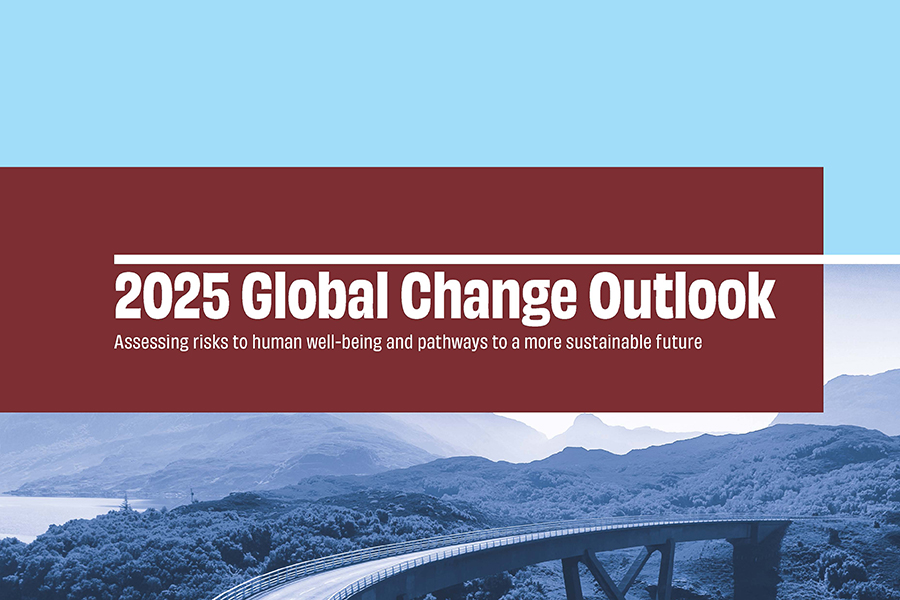
According to the “2025 Global Change Outlook” from the MIT Center for Sustainability Science and Strategy (CS3), researchers have analyzed the implications of two distinct approaches to climate policy: the “Current Trends” scenario, which reflects present emissions-reduction measures, and the “Accelerated Actions” scenario, which proposes more aggressive greenhouse gas (GHG) emissions-reduction targets. Their findings underscore what is at stake globally for both natural environments and economic systems.
The Stakes of Climate Inaction
Projections under the Current Trends scenario indicate a rise in GHG emissions compared to previous assessments, suggesting a decrease in mitigation efforts over the next decade. This rising trend, roughly equivalent to the annual emissions of either Brazil or Japan, is heavily influenced by current geopolitical tensions. Outcomes could further deteriorate if regional rivalries, possibly exacerbated by U.S. tariff policies, lead other nations to relax their climate regulations. Under such circumstances, it is predicted that global emissions could increase by 10 percent by 2050, resulting in virtually no emissions reduction over the next 25 years.
In stark contrast, the Accelerated Actions scenario outlines a pathway where global GHG emissions would decrease by 60 percent by 2050. This scenario also forecasts a decline in global energy consumption by 16 percent, driven by improvements in energy efficiency and a dramatic increase in renewable energy sources—specifically wind and solar—which could see a nearly 13-fold increase in capacity. The Current Trends scenario predicts only a 9-fold increase in the same renewable sources, alongside a 17 percent rise in overall energy consumption.
Electricity generation from low-carbon sources is expected to dominate in both scenarios, although the share of renewables is significantly larger under Accelerated Actions. Sergey Paltsev, Deputy Director of MIT CS3 and co-lead author of the report, commented, “Achieving long-term climate stabilization goals will require more ambitious policy measures that reduce fossil-fuel dependence and accelerate the energy transition toward low-carbon sources in all regions of the world.”
Projections for global warming under Current Trends are alarming, with expected increases to 1.79 degrees Celsius by 2050, rising to 2.74 degrees Celsius by 2100 and 3.72 degrees Celsius by 2150. In contrast, the Accelerated Actions scenario suggests increases of only 1.62 degrees Celsius, 1.56 degrees Celsius, and 1.50 degrees Celsius for those respective years. Additionally, variations in global precipitation under the two scenarios indicate potentially dire consequences for water availability and other environmental factors.
CS3 Deputy Director C. Adam Schlosser noted, “Our projections demonstrate that aggressive cuts in GHG emissions can lead to substantial reductions in the upward trends of global mean surface temperature, as well as global precipitation.” These changes could significantly lessen the risks of damaging climate impacts, particularly in the latter half of this century.
The implications of these findings extend beyond climate projections, posing significantly different risks for various sustainability indicators such as water availability, biodiversity, air quality, and human health. Notably, policies aligned with Accelerated Actions could yield substantial co-benefits across these areas. For instance, integrating climate policies with biodiversity and air-quality targets could be more effective and cost-efficient than pursuing them in isolation.
In summary, the “Global Change Outlook” serves as a critical reminder of the risks tied to staying on our current emissions trajectory and highlights the benefits of a more aggressive climate strategy. As CS3 Director Noelle Selin states, “We hope that our risk-benefit analysis will help inform decision-makers in government, industry, academia, and civil society as they confront sustainability-relevant challenges.” The stakes have never been higher, and the time for decisive action is now.
You Won’t Believe What Eric Howard Did to Become a Scholar All-Region Star—Find Out the Shocking Details!

A $150 Million Surprise: What Houston’s 12,500-Seat Venue Means for You in 2027!

You Won't Believe What Tim Cowlishaw’s 16-Team Playoff Could Mean for College Football's Future!

Could Bitcoin Skyrocket to $200,000 by 2026? What Experts Are NOT Telling You!
GOP SHOCKER: Key Republicans Defy Party to Vote on Health Care Extensions—What This Means for YOU!

Unlock the 5 Shocking Secrets Santa Barbara Trainer Swears Will Save Your Holiday Body!
You might also like: