
Shocking New ACIP Charter: Will Vaccine Injury Reports Skyrocket? What You Need to Know NOW!

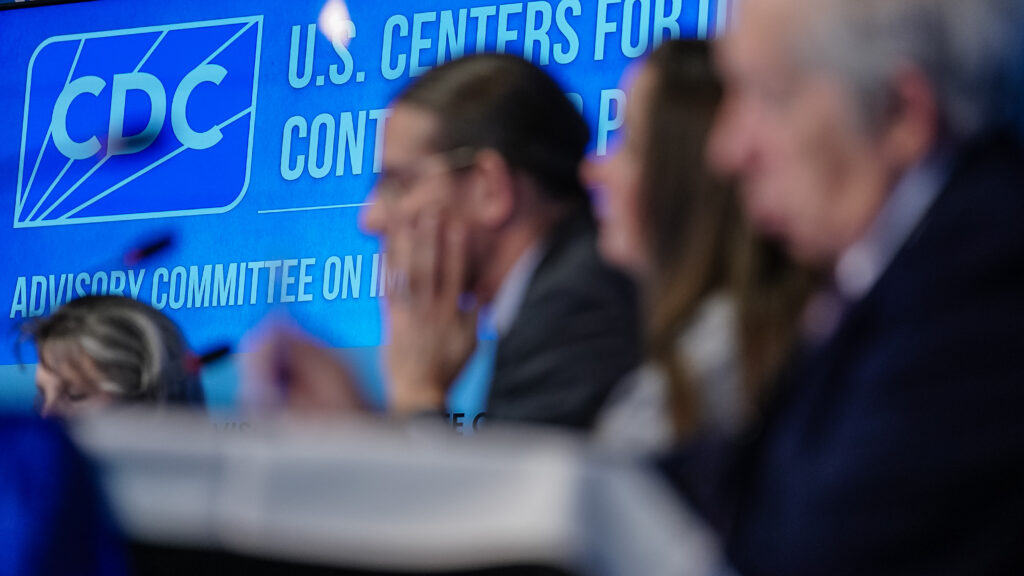
In a significant shift following a recent federal court ruling, the Trump administration's health officials have restructured the governing documents of a crucial federal vaccine advisory panel, the Advisory Committee on Immunization Practices (ACIP). The revised charter aims to broaden the committee's membership, heighten its focus on potential vaccine-related harms, and accommodate allies of Health Secretary Robert F. Kennedy Jr., a long-time critic of vaccines.
This change comes after a court declared that most current ACIP members, appointed by Kennedy, were "distinctly unqualified" for their roles. The new charter, published on Thursday, expands the qualifications for membership, now including expertise in toxicology and pediatric neurodevelopment, as well as knowledge about "recovery from serious vaccine injuries." This broadens the criteria for participation, potentially making it easier for various individuals to qualify.
According to Dorit Reiss, a law professor at UC Law San Francisco who specializes in vaccine policy, the adjustments seem designed to shield the newly constituted ACIP from further legal challenges. "They weakened the expertise requirement, just making members 'knowledgeable', likely to make it harder for judges to demand expertise," Reiss noted.
The ACIP plays a critical role in advising the Centers for Disease Control and Prevention (CDC) on which vaccines should be routinely recommended and for which populations. Typically, these recommendations filter down into state requirements for school attendance. Under Kennedy's leadership, however, the committee has become a contentious realm, with moves to limit the number of vaccines recommended for infants and children.
Notably, the charter is normally reviewed every two years, but amendments have usually been minor. The current overhaul, however, risks thrusting vaccine policy into the national spotlight at a time when the Trump administration is keen on focusing public attention on more politically palatable initiatives such as food reforms and affordability.
Furthermore, the revised charter expands the list of non-voting liaison organizations allowed to participate in ACIP meetings, now including groups like the Association of American Physicians and Surgeons, the Independent Medical Alliance, the Medical Academy of Pediatrics and Special Needs, and Physicians for Informed Consent. The Association of American Physicians and Surgeons has previously expressed skepticism toward certain vaccines, while the Physicians for Informed Consent oppose vaccine mandates. This inclusion may appease some of Kennedy's allies.
Demetre Daskalakis, former head of the CDC's National Center for Immunization and Respiratory Diseases, commented, "The new charter shifts ACIP into an organization focused more on risk and has provided a platform for organizations that have historically been opponents of vaccination." He expressed concern that vaccine policy is becoming "a chess game rather than a service to the health of people."
The new charter mirrors rhetoric often used by anti-vaccine advocates. For example, it suggests that ACIP should examine "the cumulative effects of vaccines and their constituent components," echoing claims that the number of vaccines given in childhood could increase risks for neurodevelopmental conditions like autism. Extensive research over the years has failed to substantiate such claims.
Richard H. Hughes, a lawyer who was the lead counsel on the lawsuit against Kennedy's restructuring of ACIP, stated, "While vaccine safety is always an important consideration, what we are witnessing is a manipulation of the committee’s purpose toward the singular goal of upending vaccine confidence and use in the United States."
This restructuring comes with financial implications as well. The budget for the newly formed committee has more than doubled, now set at $1.08 million, compared to the previous budget of $410,000. No details have been provided to clarify this sharp increase in operational costs.
The revised charter retains provisions allowing for a maximum of 19 members, serving four-year terms. Previously, the ACIP had 17 seated members before it was disbanded; the Kennedy-appointed committee had 15 members. This restructuring follows a suspension of ACIP's activities after the federal court's ruling, with a scheduled meeting for mid-March canceled as a result.
The new charter also addresses the controversial revisions made to childhood vaccine schedules earlier this year. It now assigns ACIP the responsibility of "reviewing global initiatives" and other countries' vaccination schedules. Earlier this year, the Trump administration modified the list of recommended vaccines for children to align more closely with Denmark's substantially reduced vaccine schedule. Critics argue this adjustment sets the U.S. apart as an outlier in global vaccination standards.
Ultimately, the changes to ACIP could have far-reaching implications for vaccine policy in the United States, raising concerns about the safety and efficacy of vaccines amid a growing atmosphere of skepticism. As this situation continues to evolve, the health of American children and the broader public health landscape hang in the balance.
The Shocking Truth: 5 'Healthy' Snacks That Can Leave You Starving—Are You Eating Them?

Trump’s Shocking Coal Plant Rescue: Will Americans Really Pay the Price of Higher Bills and Health Risks?

Is Your Strength Training Routine Sabotaging Your Gains? Fitness Expert Allie Grantz Reveals the Shocking Truth!

Tennessee's Nate Ament Shocks Everyone with Unbelievable NBA Draft Ranking—Could This Change Everything?
White House's $1.1 Billion Demand: What Shocking Changes Await Indian Health Services?

You Won't Believe How Local Teams Are Stealing the Show in This Year’s World Cup—Discover the Shocking Stats!
You might also like: