
Shocking 30% of Schools Report Dangerous Drop in Vaccination Rates—What Parents MUST Know Now!


Lucas James, a 16-year-old leukemia patient from Hempfield, relies on those around him to be vaccinated against preventable diseases. After receiving a stem cell transplant, Lucas is undergoing intravenous antibody treatments to help rebuild his immune system, making vaccination impossible for him at this time. “(Doctors) said he may never be able to be vaccinated again if his body doesn’t stop needing these transfusions,” said his mother, Megan James.
Lucas is not alone; he represents a growing number of school-age children who are unvaccinated, either due to medical reasons like his or for religious beliefs. This trend has raised alarms among health professionals, as the decline in vaccination rates impacts herd immunity—a crucial defense against outbreaks of diseases like measles, mumps, and rubella.
In Pennsylvania, the vaccination requirements for kindergarten students are stringent. They must receive four doses of the diphtheria, tetanus, and pertussis vaccine, four doses of the polio vaccine, two doses of the measles, mumps, rubella (MMR) vaccine, three doses of hepatitis B, and two doses of the varicella (chickenpox) vaccine. Alternatively, students can demonstrate immunity through proof of previous infections. However, for those who do not meet these vaccination criteria, the process to apply for exemptions has become increasingly common. In 2024, almost 1,800 students in Allegheny County sought medical, religious, or philosophical exemptions—up from about 1,300 in 2020, representing a 38% increase.
Westmoreland County exhibited an even more drastic rise, witnessing a 130% increase with 926 students filing for exemptions in 2024 compared to just under 400 in 2020. Experts like Dr. Joseph Aracri, system chair of pediatrics with Allegheny Health Network Pediatric Institute, point out that numerous reasons exist for a child's inability to receive vaccinations, including weakened immune systems, ongoing chemotherapy, or previous allergic reactions to vaccines.
For vulnerable children like Lucas, the concept of herd immunity is vital. Herd immunity exists when a sufficient portion of the population is immune to a disease, either through vaccination or previous infection, significantly reducing the disease's ability to spread. Unfortunately, data from the Pennsylvania Department of Health shows that vaccination rates among school-age children in several Western Pennsylvania counties have fallen below the herd immunity threshold. For instance, Allegheny, Westmoreland, Butler, Fayette, Greene, Indiana, and Beaver counties all reported MMR vaccination rates for kindergarten-age children below the 95% threshold.
“He’d be very vulnerable if he were exposed to someone with a virus,” Megan James warned. “It would be very likely that he would catch something. Things like the measles are really scary for us.” Lucas, who has been battling leukemia since January 2022, underwent a blood-making bone marrow stem cell transplant in June 2024, leaving his immune system particularly susceptible to infections. Although he attends school in person, he wears a mask for added protection. His mother expressed frustration, stating, “He’s been through enough. We shouldn’t have to isolate him because of misinformation.”
Public health agencies do not track how many students are up to date with all required vaccines; instead, they monitor the population by individual vaccines. Lucas’ healthcare team is vigilant, ready to notify the family if outbreaks pose a danger to him. “Things that most kids can fight off, his body wouldn’t be able to fight back,” Megan noted, emphasizing the precarious situation for her son.
The rise in vaccine hesitancy can be traced in part to the COVID-19 pandemic and the skepticism surrounding vaccines that emerged during that time. Barbara Nightingale, deputy director for clinical services with the Allegheny County Health Department, remarked, “We are not surprised by the decline (in vaccination rates), since vaccine hesitancy has been growing across the U.S. and globally for the past decade.” She noted that misinformation, particularly on social media, exacerbates public fear and skepticism toward vaccines.
Dr. Aracri observed this as the second trend in his career marked by decreasing vaccination rates, the first being linked to a now-retracted 1998 study falsely associating the MMR vaccine with autism. Today, he sees parents grappling with hesitancy rather than outright resistance. He explained that the pandemic's mixed messages have contributed to doubts about vaccines in general. "Whenever you give a child a shot and they still end up getting COVID, that makes you doubt the other things," he stated.
School nurses like Darcy Lutz, who has worked at Shaler Area High School for six years, are on the front lines of addressing this issue. She emphasizes the importance of education about vaccinations, noting that while Shaler Area has maintained a 97% MMR vaccination rate, any dip could endanger vulnerable populations like Lucas. “The most vulnerable populations really rely on herd immunity,” she said, stressing that even a small decrease could have dire consequences.
Access to healthcare remains a significant barrier for some families, particularly those without insurance or reliable transportation. Lutz noted that misinformation often fuels hesitancy, compounded by feelings of personal freedom being compromised when mandated to vaccinate.
Recent outbreaks, such as the significant measles outbreak in Texas—where over 760 cases were reported—illustrate how quickly diseases can resurge when vaccination rates fall. Nightingale reiterated that vaccines play a crucial role in preventing diseases that once caused widespread illness or death. “All vaccines play an important role in saving lives, reducing disease, and creating a healthy community,” she asserted. But as vaccination rates drop, the risk of such diseases re-emerging grows, underscoring the importance of maintaining high immunization levels, especially among vulnerable populations.
You Won't Believe What This Common Seed Can Do for Your Immunity—Doctor Reveals Startling Benefits!

Are You One of the 90% Who Could Be Declined? Verify Your Visit NOW or Risk Losing Exclusive Access!
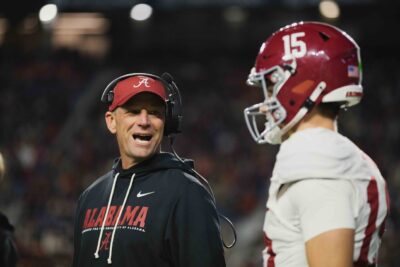
Alabama vs. Georgia: The Shocking SEC Championship Showdown That Could End Dreams of a Playoff!

You Won't Believe What Patriots' Tommy DeVito Just Revealed About His Loyalty Before Giants Showdown!

You Won't Believe What Happens When Manchester United Faces Crystal Palace—Catch the Shocking Live Stream This Sunday!
Is Your Browser Putting Your Privacy at Risk? Shocking Stats You Must See Now!
You might also like: