
Scientists Uncover Alarming Truth: Data Centers Could Heat Earth by 16 Degrees—Are You Ready for the Consequences?

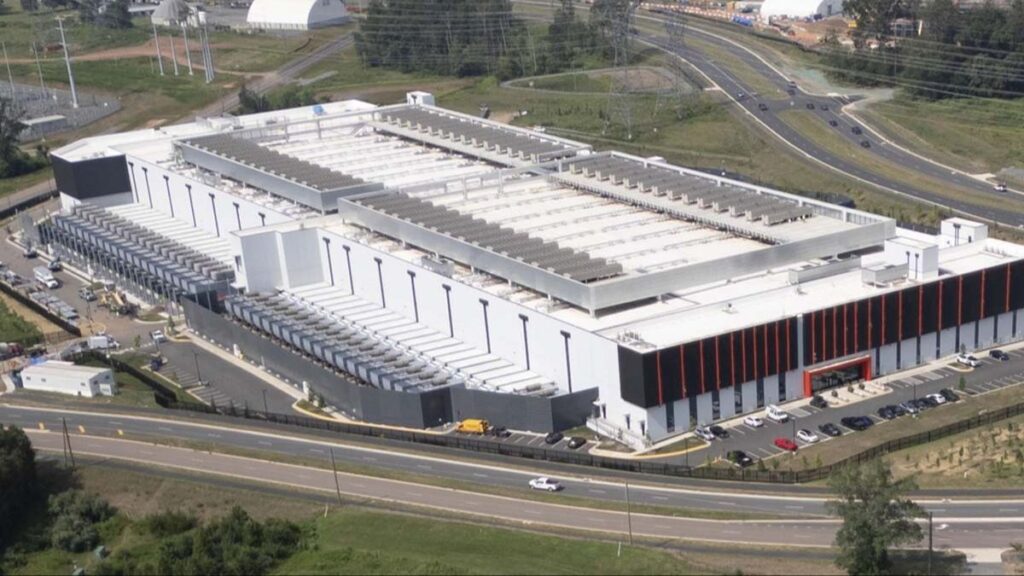
The recent global boom in data centers to support artificial intelligence (AI) is generating concerning environmental impacts, particularly the emergence of 'heat islands.' According to a study from the University of Cambridge, these data centers—crucial for powering AI technologies—are contributing to climate change by raising local temperatures significantly, in some areas by up to 16.4 degrees Fahrenheit. This troubling revelation has implications for over 340 million individuals worldwide.
As businesses rush to adopt AI technologies, the environmental costs are becoming increasingly evident. Discussions around climate change have historically been contentious, marked by differing approaches from various administrations. The current findings raise questions about the sustainability of our technological advancements.
Researchers from the University of Cambridge conducted a thorough analysis over a 20-year period, scrutinizing temperature data from approximately 6,000 AI data centers located in less densely populated areas. By selecting these sites, the study minimized the influence of external factors like nearby manufacturing emissions, allowing for a clearer understanding of the temperature changes directly attributable to the data centers. The researchers took precautions to exclude the broader effects of global warming and seasonal variations to ensure the accuracy of their results.
The findings revealed an average increase in surface temperatures of 3.6 degrees Fahrenheit after the establishment of these centers. Alarmingly, in some cases, temperatures soared by a staggering 16.4 degrees Fahrenheit. The implications of these temperature increases are profound, particularly as data centers proliferate to meet the growing demand for AI capabilities.
Andrea Marinoni, an associate professor at the University of Cambridge, emphasized the need for further research to address the gaps in understanding the environmental impact of data centers. The initial results, while alarming, underscore the urgency of assessing how our technological progress is affecting the planet.
Deborah Andrews, emeritus professor of design for sustainability at London South Bank University, acknowledged the study as a pioneering effort but urged caution. "This is a first-of-a-kind study which will certainly need more validation," she told CNN. Andrews noted that the rapid expansion of AI seems to be outpacing sustainable practices, stating, "The ‘rush for AI-gold’ appears to be overriding good practice and systemic thinking."
Ralph Hintemann, another expert in the field, expressed skepticism about the extreme temperature increases reported. He described these findings as "interesting" and "very high," reinforcing the need for additional validation of the research.
The research team outlined various strategies to mitigate the environmental impact of AI, suggesting the development of 'carbon-aware' software as one potential solution. This approach aims to reduce the carbon footprint associated with data centers by optimizing energy consumption and minimizing heat generation.
As AI continues to expand its influence across industries, the balance between technological advancement and environmental sustainability becomes increasingly critical. This study serves as a wake-up call, urging stakeholders in the tech industry to consider the broader implications of their practices on our planet.
The findings from the University of Cambridge highlight a pressing issue: as we embrace the future of AI, we must also take responsibility for the environmental consequences of our innovations. The time to act is now, and it will require a concerted effort from researchers, policymakers, and industry leaders alike to ensure that technological progress does not come at the cost of our planet's health.
You Won't Believe How a 'Haunted' NJ House Shaped Apple's Chilling 'Widow's Bay' – Shocking Secrets Inside!
You Won't Believe What Happens When You Try to Access This Shocking Secret—Only 3% Succeed!

South Florida's Real Estate Boom: How F1 Miami Is Driving Prices Up 40%—Are You Missing Out?

Frost Bank's Shocking Stock Plunge: Is Your Investment at Risk? Discover the Hidden Truth NOW!

Massachusetts Governor's Race Takes Wild Turn: Is Abortion the Game-Changer Everyone's Ignoring?

You Won't Believe What Happens When 1,000 People Row Together for Cancer—$100K at Stake!
You might also like: