
Real Estate Experts Torn: Is Trump’s Housing Plan a Game-Changer or a Disaster? Find Out Now!

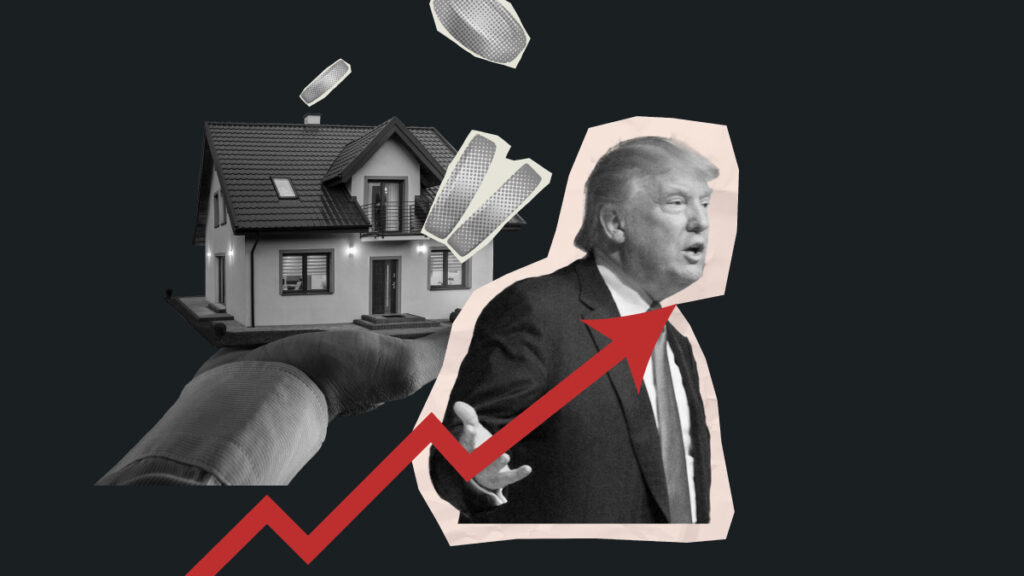
In a recent email, Chris Kelly, the CEO of HomeServices of America, expressed gratitude for the current Administration’s acknowledgment of issues surrounding housing affordability, stating, “Every incremental effort to ease pressure in today’s housing market is worth considering.” His sentiment was echoed by Anthony Lamacchia, the broker-owner of Lamacchia Realty, who praised President Trump for prioritizing housing issues. However, as discussions surrounding potential reforms heat up, stakeholders are left to ponder the practical implications of Trump’s proposed measures on the housing market.
📰 Table of Contents
Will Trump's 'Ban' on Institutional Homebuying Move the Needle?
One of Trump’s key announcements includes a “ban” on institutional homebuying, a move that many brokerage leaders view positively, albeit with some skepticism regarding its impact. “Before the Great Recession, there was no institutional market in residential single-family housing,” explained Mike Pappas, CEO of The Keyes Co./Illustrated Properties. He noted that the Great Recession opened doors for institutional investors to purchase homes at low prices, allowing them to capitalize on the market.
Lamacchia similarly noted the historical context, recalling that there was a time when institutional investments were welcomed due to an oversupply of homes. However, he doubts the ban will significantly affect the New England market, where institutional investment activity has been minimal. Chip Stella, a broker-owner at Rutledge Properties in Wellesley, Massachusetts, stated, “I feel very fortunate that institutional investors have not penetrated our market.” His view is that while he supports eliminating corporate purchases of single-family homes, it’s unlikely to change the inventory landscape in the greater Boston area.
Industry leaders have pointed to data indicating that large institutional investors own only a small share of the nation’s housing stock, estimated to be well under 5% of single-family homes nationally and even lower—between 1% and 3%—for single-family rental stock. This raises questions about the actual effectiveness of the proposed ban, with Kelly noting that “the concentrations are higher in a few specific metro areas.”
Potential Impacts on Mortgage Rates and Credit Card Debt
In addition to the homebuying ban, Trump’s directive for government-sponsored enterprises (GSEs) to acquire up to $200 billion in mortgage-backed securities (MBS) has sparked discussions on its possible effects on affordability. Kelly remarked that expanding GSE purchases could lead to modest decreases in mortgage rates, a sentiment shared by Lamacchia, who highlighted that funds accumulated by Fannie Mae and Freddie Mac from increased guarantee fees could be redirected to alleviate mortgage rate pressures. “If they won’t lower those fees, then why not use that money to help bring mortgage rates down?” he asked.
Another initiative proposed by Trump includes capping credit card interest rates at 10% for one year. While this could potentially relieve some financial pressure for first-time buyers burdened by high interest rates, brokerage leaders remain skeptical. Pappas pointed out that while relief could put extra cash in buyers’ pockets, the real impact on home purchases remains to be seen. Bess Freedman, CEO of Brown Harris Stevens, echoed this uncertainty, emphasizing that the plan must clear Congress and faces numerous hurdles.
Questions About Long-Term Impact
Despite the ongoing discussions, real estate executives urge caution regarding the size of the measures' impact on housing affordability. “It’s important to be realistic about the scope of these measures,” Kelly cautioned, stressing that long-standing issues of chronic underbuilding, rising development costs, and stagnant wage growth have created a complex web of challenges. “There is no single policy lever that can unwind those forces overnight,” he added.
Industry leaders have expressed a desire for a more significant focus on revising outdated local zoning rules and addressing how tariffs and immigration reform affect housing construction. Freedman stated that improving housing affordability hinges on increasing supply, a task complicated by factors that have hurt homebuilders.
As discussions on housing persist, many within the industry recognize the balance needed to protect existing homeowners while attempting to improve conditions for new buyers. Lamacchia cautioned, “You don’t want to put people upside down or put mortgages underwater.” The ongoing dialogue highlights the complexity of the housing market and the multi-faceted approaches required to meaningfully address affordability challenges.
Samsung's Shocking Fall: How One Brand Steals the Spotlight in India’s Cooling Smartphone Market!

You Won't Believe How This $499 Smartphone Doubles as a Projector—Is Your Phone This Powerful?

Are You Missing Out? Discover the Top 5 USA Real Estate Markets for Quick Profits Before They Skyrocket!

Is Your Vegan Dating Profile Sabotaging Your Love Life? Discover the Shocking Truth!

You Won’t Believe How These Seniors Are Defying Age with Fitness: The Shocking Truth!
Brace Yourself: This January's Winter Storm Will Hit Like Never Before—5 States in Total Danger!
You might also like: