
Portugal’s Shocking Election: Could the Far Right Steal Power in a Nail-Biting 2-Point Race?


On January 18, 2026, Portuguese voters lined up at polling stations to participate in a pivotal presidential election marked by an increasingly fragmented political landscape. A recent opinion poll indicated that three candidates, including the far-right leader of the Chega party, André Ventura, were in a near tie for a spot in a likely runoff, underscoring the growing discontent among voters with mainstream political parties.
This election is significant as it could mark the first presidential runoff in Portugal in 40 years. The last time a runoff was required was in 1986, which highlights a historic shift in Portuguese politics as voters seem eager for alternatives to traditional parties. The rise of the far-right, particularly through Chega, reflects broader trends across Europe where anti-establishment and anti-immigration sentiments have gained traction.
According to the final pre-election poll from Pitagorica, António José Seguro of the Socialist party was leading with 25.1%, followed closely by Ventura at 23%, and João Cotrim de Figueiredo, a member of the pro-business Liberal Initiative party, at 22.3%. Chega, founded just about seven years ago, has already made a substantial impact, having won 22.8% of the vote in last May’s parliamentary elections, becoming the main opposition party.
While the presidency in Portugal is largely ceremonial, it holds significant power, including the ability to dissolve parliament and call snap elections. This context amplifies the stakes for the election, as the winner could influence key legislative decisions. As of now, about 11 million voters are eligible to cast their ballots, with polling stations closing at 7 p.m. local time, and exit polls expected shortly thereafter.
Interestingly, even though Ventura has shown a strong presence in the polls, many analysts project that he would face challenges in a runoff due to his high rejection rate, which exceeds 60% among voters. The Economist Intelligence Unit noted that a Seguro-Ventura runoff would be straightforward given Ventura's limited appeal beyond his core base. Conversely, a runoff involving Figueiredo would be more unpredictable, reflecting a more balanced contest.
Among the other candidates are Luís Marques Mendes, backed by the ruling center-right Social Democrats, and retired Admiral Henrique Gouveia e Melo, who garnered public attention for leading Portugal's COVID-19 vaccination efforts. Each of these candidates is polling with more than 11%. However, voter frustration appears to be a common sentiment, as indicated by Lisbon voter José Pereira, who expressed the difficulty of choosing among a crowded field of candidates: “With so many, it's harder to choose because everyone has their own opinion and their own way of being.”
This election, therefore, serves not just as a referendum on the current administration but also as an indicator of the shifting political dynamics in Portugal and beyond. The outcome will likely have lasting implications for the country’s policies, especially regarding immigration and governance.
As the political landscape continues to evolve, the Portuguese presidential election encapsulates a broader trend of increasing fragmentation and the rise of populist movements in Europe, signaling that the future of political engagement may look very different than it did in the past.
You Won't Believe What Happens Next: Is Wheaton Precious Metals Still a Smart Investment After a SHOCKING 127% Surge?

Green Day's Super Bowl Surprise: What You NEVER Knew About the MVPs They’ll Honor!

This NYC Startup Claims to Turn Air into Gasoline—Is This the Future of Fuel or a Dangerous Hoax?
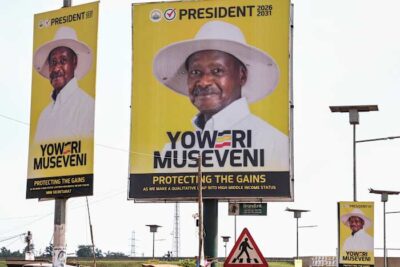
Why Uganda's President Claims His 70% Victory Was Just a 'Warm-Up' Against a 38-Year-Old Challenger!

The Shocking Truth: 80% of Urban Pet Owners Are Hiding This Dark Secret About Their Fur Babies!
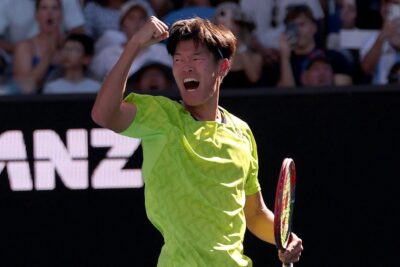
College Tennis Sensation Michael Zheng Shocks the World by Defeating Top Seed Sebastian Korda – What Happens Next?
You might also like: