
Paxlovid FAILS: Shocking New Study Reveals 0% Impact on Hospitalizations for Vaccinated High-Risk Patients!

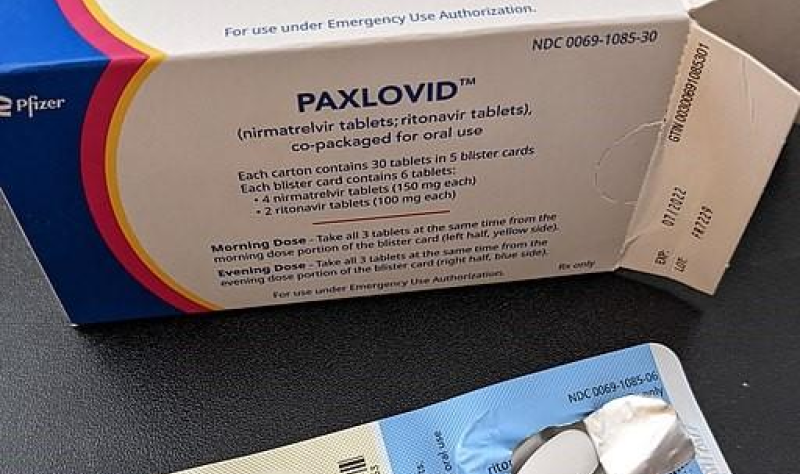
Recent studies have provided important insights into the effectiveness of Paxlovid, a treatment developed by Pfizer for COVID-19. Two major trials, known as the PANORAMIC and CanTreatCOVID studies, examined the drug's impact on recovery times for patients with COVID-19. The findings reveal that recipients of Paxlovid experienced a significantly shorter median time to early sustained recovery than those receiving usual care, with results showing 14 versus 21 days for PANORAMIC and 6 versus 9 days for CanTreatCOVID.
Specifically, the PANORAMIC trial noted that early sustained recovery was achieved by 33.0% of Paxlovid recipients compared to just 22.1% in the usual-care group, resulting in an adjusted odds ratio (aOR) of 1.74. Meanwhile, the CanTreatCOVID trial showed even more promising results, with 69.0% of Paxlovid recipients reporting early sustained recovery versus 53.1% in the usual-care group, leading to an aOR of 1.99. These statistics suggest that the antiviral treatment can indeed facilitate quicker recovery for some patients.
However, the same studies also highlighted a critical aspect of Paxlovid's efficacy. Despite the improved recovery times, researchers found no evidence that early treatment with nirmatrelvir-ritonavir—a key component of Paxlovid—significantly reduced the already low rates of hospitalization or death among participants. “We found no evidence that early treatment with nirmatrelvir–ritonavir reduced the already-low incidence of hospitalization or death in either trial and were unable to identify any prespecified subgroup with compelling evidence of treatment effect,” the researchers stated.
Christopher Butler, MBChB, MD, who led the PANORAMIC trial at the University of Oxford, emphasized the shifting landscape of COVID-19 treatment in today's highly vaccinated populations. “While people feel better sooner from treatment with this important antiviral drug, we found no reduction in the already low rates of hospitalizations or deaths,” he noted. “This provides essential evidence for optimal, cost-effective targeting of this treatment.”
Understanding Changing Efficacy in Treatment
In an editorial by H. Clifford Lane, MD, and Anthony Fauci, MD, the authors reflect on the evolving understanding of Paxlovid's benefits. They argue that the 89% relative reduction in severe outcomes seen in the earlier EPIC-HR trial does not necessarily apply to current circumstances, given that most adults now have some pre-existing immunity and face different COVID-19 variants.
Lane and Fauci caution against overinterpreting the new data, clarifying that while Paxlovid may not drastically change hospitalization and death rates, it still demonstrates a degree of clinical efficacy and antiviral activity. “The enhanced recovery and more-rapid reduction in viral load indicate a degree of clinical efficacy and antiviral activity,” they wrote. They suggest that clinicians might become more selective regarding which patients to refer for treatment. Nonetheless, they advise that it remains prudent to consider antiviral treatment on a case-by-case basis, particularly for older adults, individuals with compromised immune systems, and those for whom rapid recovery is a priority.
As the landscape of COVID-19 evolves, these findings underscore the importance of ongoing research in optimizing treatment protocols. They also highlight the nuanced realities of managing a public health crisis in an era of widespread vaccination. For many patients, Paxlovid may provide a faster return to health, even if it does not drastically alter hospitalization rates. This speaks to the larger issue of how health systems can best allocate resources to ensure effective and equitable care.
Unlock the Secret: How 90% of Users Transformed Their Skin and Shed Pounds with This One Peptide Trick!

Unlock Hidden Wealth: 4 Shocking Sources of Stock Gains You’re Ignoring—Are You Missing Out?

You Won’t Believe What Turkey’s Social Media Is Hiding – Shocking Truth Revealed!

Virginia's Democrats Gain Ground—But Are Voters About to Pay a Shocking Price? Find Out Now!

Las Vegas NBA Franchise Proposal: What Shocking Secrets About the Diamond Arena Are Experts Hiding?

ASUS Makes a Bold Move: Can Their New OLED Tablet Compete After Shocking Smartphone Exit?
You might also like: