
Palantir CEO Reveals the Terrifying Truth About Europe's Future: Are We All in Danger?

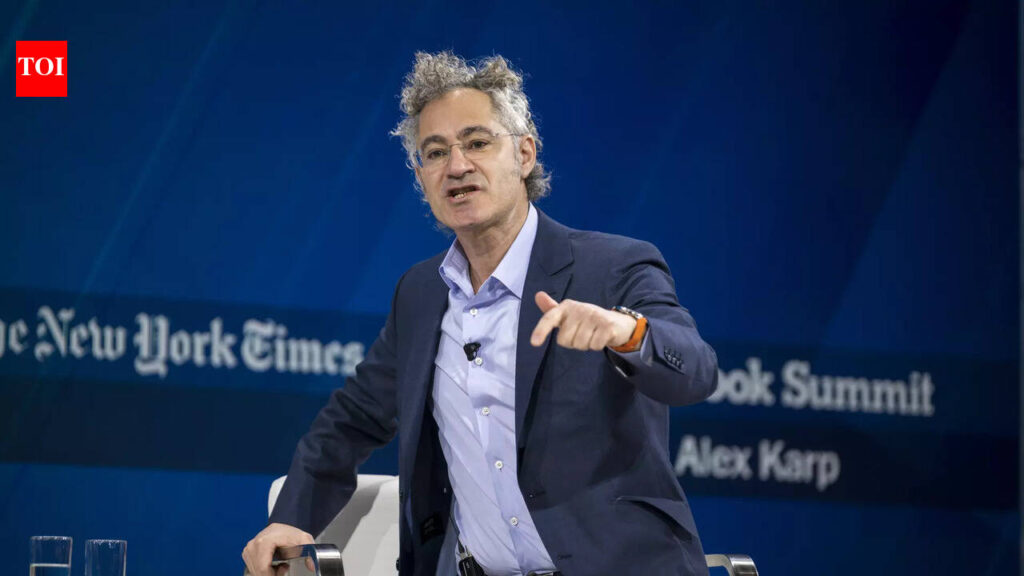
At the World Economic Forum, Palantir CEO Alex Karp delivered a sobering message regarding Europe’s struggle with technology adoption. During a discussion moderated by Larry Fink, CEO of BlackRock, Karp expressed his concerns about Europe’s political inertia, stating, “The tech adoption in Europe is a serious and very, very structural problem.” He lamented the absence of political leaders willing to acknowledge and address what he views as a critical issue, contrasting this with the swift strategies adopted by the U.S. and China in deploying artificial intelligence (AI) at scale.
Karp's insights highlight a fundamental challenge facing Europe, which he argues is lagging in embracing digital innovation. While he lauded AI’s potential to enhance civil liberties and revolutionize healthcare, he emphasized that many European hospitals are grappling with inefficiencies. “We power tons of hospitals, but they’re struggling,” he said, noting the burden of staffing shortages and outdated patient processing systems. Karp explained that AI could optimize these operations, enabling hospitals to process patient intakes “10 to 15 times faster,” which could ultimately save lives.
In his remarks, Karp pushed back against the notion that AI could exacerbate global inequality. While acknowledging that the U.S. and China are making significant strides, he posited that their scalability is likely to outpace what many anticipate. He warned against underestimating the long-term societal impacts of AI, asserting that “the discount rates on its societal transformation are way too high.”
Another alarming point raised by Karp was the future of employment in the humanities. Drawing from his own academic background—holding a philosophy degree from Haverford College, a law degree from Stanford, and a Ph.D. in social theory from Germany—Karp indicated that such qualifications may soon lose their market value. “AI will destroy humanities jobs,” he said candidly. He urged those with degrees in non-technical fields to acquire supplementary skills, emphasizing the heightened demand for workers with technical and vocational training. Karp cited the battery manufacturing sector as an example where vocational technicians are becoming “very valuable, if not irreplaceable.”
In this rapidly evolving digital landscape, Karp's warnings signal a critical juncture for Europe. The challenges of adopting AI technologies not only reflect broader geopolitical dynamics but also raise essential questions about the future workforce. As AI continues to develop, the emphasis on technical skills may reshape the job market, placing a premium on adaptability and vocational expertise.
The implications of Karp's insights extend beyond mere economic considerations; they touch upon the very fabric of society. As AI becomes increasingly embedded in healthcare and other vital sectors, the quest for fairness and transparency in its application will be paramount. “It bolsters civil liberties,” Karp asserted, highlighting AI's capacity to elucidate discrepancies in patient processing based on factors like economic status or background.
In summary, Alex Karp's perspectives at the World Economic Forum reveal not only the urgent need for Europe to confront its tech adoption issues but also the broader societal shifts that AI is poised to generate. The conversation underscores the necessity for strategic leadership and proactive measures in navigating this complex landscape, ensuring that technological advancements serve to enhance, rather than hinder, societal progress.
Scientists Just Discovered 7 Microbial Secrets That Could Revolutionize Your Health—Are You Missing Out?

Shocking NFL WR Trades: 5 Superstars Desperate to Leave in 2026—Will Your Team Suffer?

Raiders on the Brink: Shocking Lamar Jackson Trade Rumors Could Change Everything—Are You Ready?

You Won't Believe These 9 Shocking Secrets to Snacking Healthier—#5 Will Change Your Life!

Trump’s Shocking New Strategy: Will Nevada Homebuyers Lose Everything to Corporations?

Mel Kiper Jr. SHOCKS Raiders Fans with Explosive Take on Fernando Mendoza—You Won’t Believe What He Said!
You might also like: