
New Laws Could Shield Corporations from Climate Lawsuits—Is Your Community Next?

Republican lawmakers across multiple states and in Congress are pushing forward with proposals that aim to shield fossil fuel companies from climate accountability. This effort seeks to prevent any form of legal liability for climate change-related harms, even as the impacts and associated costs of climate change continue to escalate.
This initiative is part of a broader counter-offensive against states, municipalities, and individuals who are suing major oil and gas companies as well as their trade associations. These lawsuits typically focus on the rising costs associated with climate change and allegations that these companies have misled consumers regarding the risks and potential solutions related to climate change. In parallel, several states are considering laws akin to the federal Superfund program, which would impose retroactive liability on large fossil fuel producers and levy charges to fund climate adaptation and resiliency efforts.
However, many of these lawsuits and proposed climate superfund laws may face significant roadblocks. The conservative majority on the U.S. Supreme Court, along with a Republican-controlled Congress, could act to dismantle these initiatives. For instance, in a recent development, the Supreme Court agreed to hear a petition from oil companies Suncor and ExxonMobil regarding a case brought by Boulder, Colorado. This case argues that Boulder’s claims are barred by federal law. Should the justices side with the oil companies, it could potentially jeopardize not only Boulder’s lawsuit but also many others of a similar nature. The court is expected to hear the case in October.
In Congress, there is a growing sentiment among Republicans to enact legislation that would grant the fossil fuel industry legal immunity, akin to protections given to gun manufacturers under the 2005 Protection of Lawful Commerce in Arms Act. Sixteen Republican attorneys general have urged U.S. Attorney General Pam Bondi to recommend legislation providing such immunity, and a Republican congresswoman recently announced that this legislation is in development.
The Fossil Fuel Immunity Push
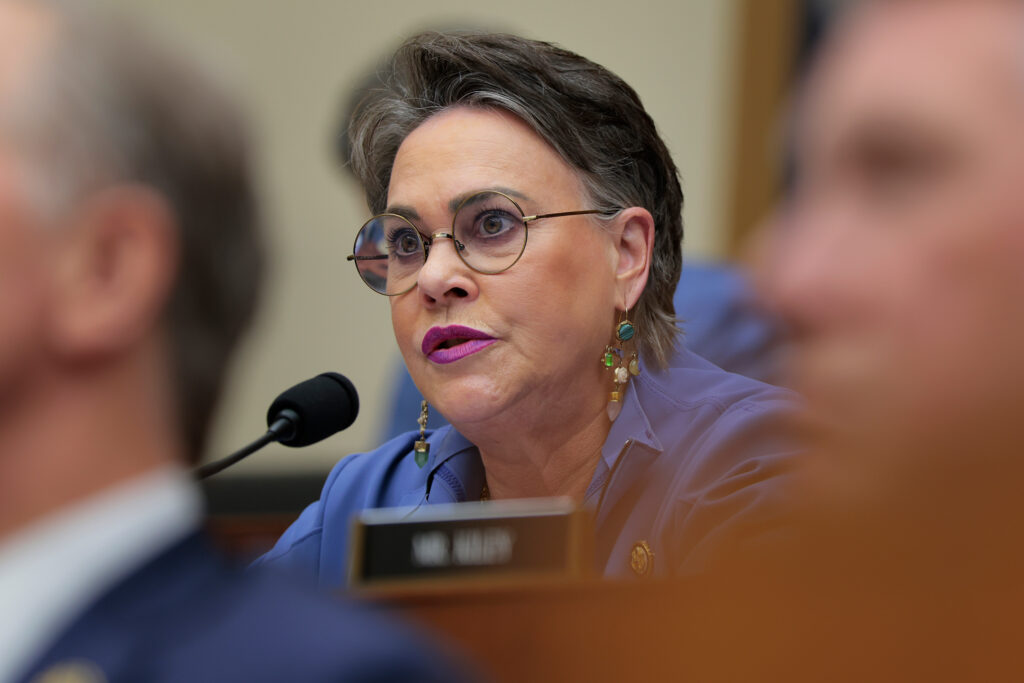
During a House Judiciary Committee oversight hearing last month, Rep. Harriet Hageman (R-Wyoming) criticized state-led climate lawsuits, describing them as “extreme anti-energy policies” that disproportionately increase costs for American consumers. Hageman indicated that as climate lawsuits advance toward trial, Congress has a role to play in countering these efforts. She stated, “I’m working with my colleagues in both the House and Senate to craft legislation tackling both these state laws and the lawsuits that could destroy energy affordability for consumers.”
The specifics of this draft legislation are still unclear, and Hageman's office did not respond to inquiries about its status. Nevertheless, she expressed confidence that there is substantial interest among her colleagues to discuss legislation shielding energy companies from climate liability, suggesting it would serve as a form of preemption against state and local liability actions.
“If you haven’t done anything wrong, you don’t need immunity.”
— Iyla Shornstein, Center for Climate Integrity
Meanwhile, lobbying disclosures reveal that the American Petroleum Institute has been actively lobbying for legislative measures aimed at curbing state-level climate liability. API’s senior vice president and general counsel, Ryan Meyers, stated that these lawsuits pose a threat to an industry central to everyday American life, asserting that penalizing companies for meeting consumer demand for affordable energy would set a dangerous precedent.
Advocates for climate accountability, such as Cassidy DiPaola from the Make Polluters Pay campaign, contend that the push for immunity reveals the fossil fuel industry’s attempt to avoid accountability. DiPaola points out that nearly 200 advocacy groups have urged Democratic leaders like Sen. Chuck Schumer and Rep. Hakeem Jeffries to take a stand against measures that would shield polluters from legal consequences.
In addition to federal proposals, state-level liability shield bills have emerged in at least five states, designed to protect the fossil fuel industry and other significant greenhouse gas emitters. For instance, in Oklahoma, state Sen. Julie Daniels introduced the “Energy Security and Independence Act,” which has already passed the Senate and would prohibit climate change-related lawsuits against fossil fuel producers. Similarly, in Utah, a bill is on the verge of becoming law that would limit civil and criminal liability for damages caused by greenhouse gas emissions, with narrow exceptions for violations related to specific emissions limits.
Other states like Iowa, Louisiana, and Tennessee are also pursuing similar legislative measures. For example, Louisiana's “Energy Protection Act” would broadly block liability for climate change damages, while Tennessee’s “Energy Freedom Act” closely mirrors a model bill supported by groups opposed to environmental initiatives.
These legislative efforts raise critical questions about accountability and the intersection of corporate and environmental interests. As climate damage increasingly impacts local communities, many are left to wonder whether their lawmakers prioritize corporate profits over the welfare of their constituents. As DiPaola articulated, “What the public must ask is whether the law applies equally to everyone, or whether corporations with enough money and access can just carve out exemptions for themselves.”
The push for immunity from climate liability among fossil fuel companies mirrors broader efforts by various industries to evade accountability for harmful practices, prompting activists to organize in response. Former Washington Governor Jay Inslee pointedly criticized these immunity proposals, arguing that they effectively deny Americans access to justice and the ability to hold polluters accountable in court.
Inslee’s sentiment resonates with many who see the unfolding battle over liability as not just a matter of corporate governance but as a fundamental question of American democracy and accountability.
11 NCAA Tournament Spots Hang in the Balance: Will Your Team Face Heartbreak This Saturday?

Unlock the Secret: 5 Shocking Fruits That Could Transform Your Gut Health Overnight!

You Won't Believe How a $15K Bet Shaped the 24 Hour Fitness Empire – Discover the Shocking Twist!

Is Indiana's QB Fernando Mendoza the Secret Weapon the Raiders Can't Afford to Miss?
Gas Prices Are Skyrocketing Again: Is Your Wallet About to Feel the Pain? Find Out Now!
You Won't Believe What Happened When This 25-Year-Old Tried to Access a Restricted Site!
You might also like: