
New CDC Vaccine Rules for Kids: What Every Parent Must Know Before the Next Doctor Visit!

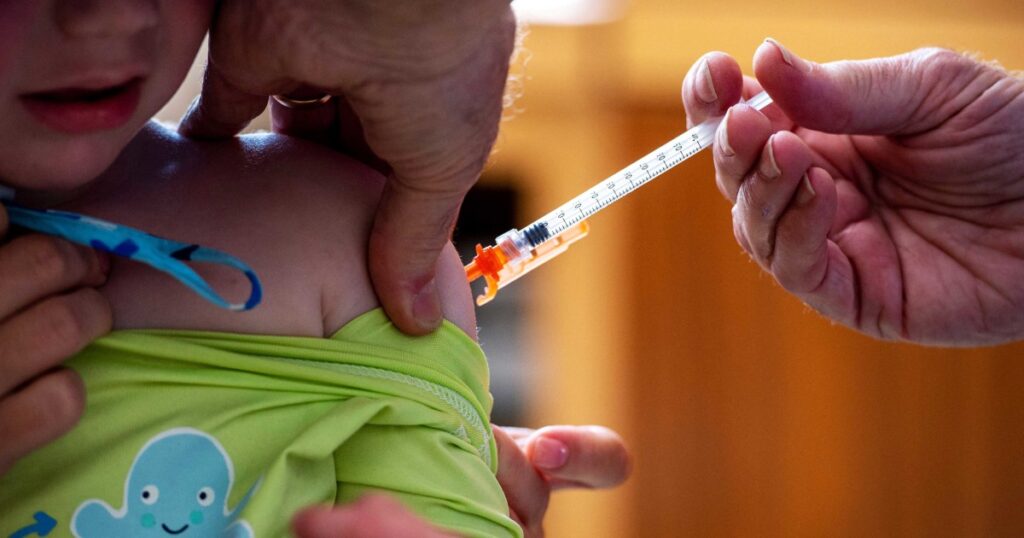
For parents of young children, recent changes to childhood immunization schedules recommended by the Centers for Disease Control and Prevention (CDC) could present new challenges and confusion. In an unprecedented move, the CDC has reduced the number of diseases targeted by mandatory vaccinations from 18 to 11, which contradicts advice from medical groups such as the American Academy of Pediatrics (AAP).
Announced on Monday, the new vaccination schedule categorizes vaccines into three distinct groups: universally recommended shots, vaccines for high-risk groups, and those recommended based on shared clinical decision-making between patients and healthcare providers. For instance, COVID-19 and flu shots now fall into the third category, while the vaccine for respiratory syncytial virus (RSV) is reserved for high-risk infants.
This overhaul raises numerous questions for families eager to understand their children's immunization needs. Parents may find themselves needing to monitor their children's vaccination schedules more diligently rather than relying on pediatricians for reminders. Fortunately, the changes are not expected to affect insurance coverage for childhood vaccines.
📰 Table of Contents
Understanding the New CDC Criteria
Under the revamped CDC guidance, vaccines for 11 diseases remain universally recommended. These include vaccines for measles, mumps, and rubella; pertussis, tetanus, and diphtheria; chickenpox; polio; pneumococcal disease; human papillomavirus (HPV); and Haemophilus influenzae type B (Hib). However, recommendations have shifted for vaccines targeting seven additional diseases, including RSV shots, which are now only recommended for high-risk groups.
Parents should consult healthcare providers regarding vaccination for rotavirus, COVID-19, and flu, which now fall under shared decision-making. Vaccines for hepatitis A and B, along with two types of bacterial meningitis, are classified into both high-risk and shared decision-making categories.
This has led to pressing questions from parents: How can they determine if their child is considered high-risk? And can they still access the vaccines that require shared decision-making? While any parent can request specific vaccines, as long as a healthcare professional agrees, determining a child's risk level is less straightforward. For example, 75% to 80% of infants hospitalized with RSV are otherwise healthy, complicating risk assessments.
“There is no way to stratify who’s at risk for RSV in this country,” said Dr. Yvonne Maldonado, a professor of global health and infectious diseases at Stanford University.
According to the updated guidelines, the CDC recommends an initial RSV dose for infants under eight months if their mothers did not receive an RSV shot during pregnancy, while a second dose is suggested for children with underlying health issues, such as chronic lung disease. This aligns with recommendations from the AAP.
Many pediatricians may still adhere to AAP guidelines, and thus may continue to notify parents when children are eligible for vaccines that the CDC no longer classifies as universally recommended, such as flu shots. Pharmacies will also provide reminders online and in-store, according to Dr. Brigid Groves, vice president of professional affairs at the American Pharmacists Association. However, Dr. Jake Scott, an infectious diseases specialist at Stanford Medicine, pointed out that many doctors rely on automated systems that flag vaccinations based solely on CDC recommendations, often ignoring those in the shared decision-making category. This could shift more responsibility onto parents to keep track of immunizations.
Implications of Reduced Vaccine Uptake
The adjustments to the vaccine schedule may lead to a downturn in demand for specific vaccinations. Dr. Sean O’Leary, chair of the AAP’s committee on infectious diseases, indicated that many clinicians might stop stocking vaccines categorized as requiring shared clinical decision-making.
This shift risks creating misinformation among parents who may assume these essential vaccines are no longer necessary, potentially leading to lower vaccination rates. “The shift towards shared clinical decision-making will lead to dramatically lower uptake, and lower vaccine uptake leads to preventable illness and death,” Dr. Scott warned. Experts fear a potential rise in COVID-19 or flu cases, as well as a resurgence of conditions like meningitis.
Immunocompromised children are often less protected by certain vaccines or may be ineligible to receive them. If some school districts choose to adopt the CDC’s new schedule, it could expose vulnerable children to greater health risks. Dr. Kelly Gebo, dean of the Milken Institute School of Public Health at George Washington University, expressed concern about the possible chaos stemming from varying recommendations across different states.
On the insurance front, the Department of Health and Human Services has reassured that both private and federal insurance programs will continue to cover all vaccines recommended under the previous CDC childhood immunization schedule. Three major insurers confirmed that coverage will extend through 2026. Aetna, for example, will cover all vaccinations recommended by the CDC’s vaccine advisory panel starting September 1, 2025, while Blue Cross and Blue Shield plan to continue similar coverage commencing January 1, 2026. UnitedHealthcare will also maintain its coverage, relying on guidance from the American Academy of Family Physicians and AAP.
Ultimately, there’s no compelling reason for children to receive fewer shots than previously recommended. Despite some claims that too many vaccinations could lead to adverse reactions, experts assert that there are no safety concerns related to the previous number of shots. “The science hasn’t changed,” said Dr. Groves. “These vaccines are safe, they’re effective, and they prevent disease and death.”
Additionally, the CDC now recommends that children ages 11 to 12 receive one dose of the HPV vaccine instead of the previously recommended two or three doses. This change is based on recent clinical trials suggesting that a single dose may be as effective as two in preventing human papillomavirus, which can lead to cervical cancer. However, the AAP continues to advocate for two doses for children ages 9 to 12, and three doses for teens who haven’t initiated the series by age 15.
As parents navigate these changes, clear communication with healthcare providers will be essential to ensure that their children receive the necessary vaccinations for optimal health.
Is Your Child's Snack Choice Sabotaging Their School Year? Shocking Facts Inside!

The NCAA Transfer Portal: 5 Shocking Moves That Could Upend College Sports Forever!

Maryam Nawaz's Shocking Invite to DAMAC: Is This the Game-Changer for Pakistan’s Tech Industry?

You Won't Believe What Covera Health Just Revealed – Thousands Could Be Affected!

Discover the 10 Surprising Cities That Make You More Well-Traveled Than 95% of Americans! Are You on the List?

You Won't Believe These 5 Mind-Blowing Gadgets Unveiled at CES 2026—#3 Will Change Your Life!
You might also like: