
Nepal's Shocking Election Twist: Could a New Party's Landslide Victory Change Everything?

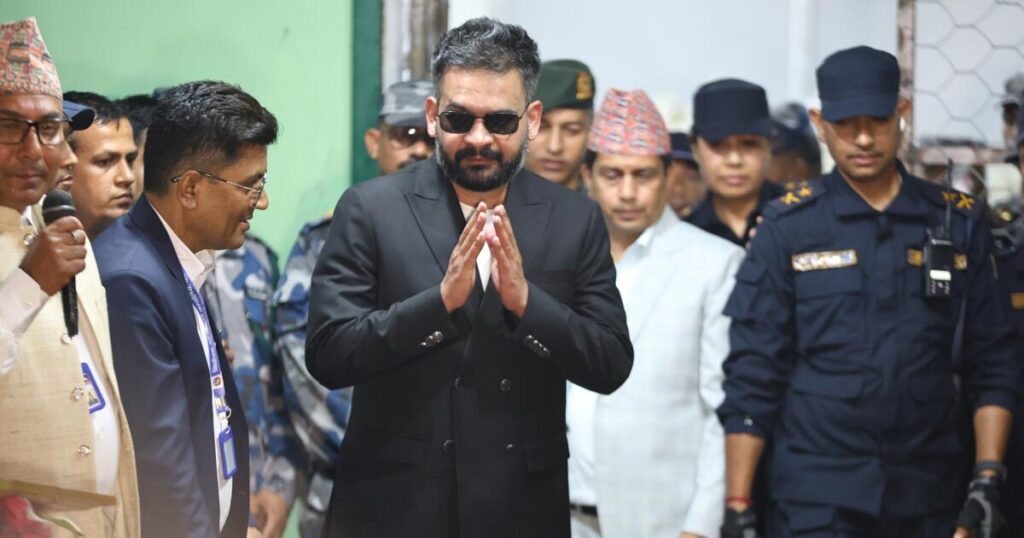
KATHMANDU, Nepal — In a stunning political shift, the Rastriya Swatantra Party (RSP), led by former rapper Balendra Shah, is poised to achieve a landslide victory in Nepal's first parliamentary elections following the youth-driven protests that toppled the long-standing political elite. RSP has already claimed 117 out of 165 directly elected seats and is leading in eight additional constituencies, according to the results released by Nepal’s Election Commission on Sunday.
This election has seen a significant departure from the historical dominance of the Nepali Congress and the Communist Party of Nepal (Unified Marxist–Leninist), which have alternated in power for decades. The RSP's victory is thus being described as a historic moment by local media outlets, with The Himalayan Times declaring, “RSP set for a landslide victory,” and the Annapurna Post noting a “people’s ballot revolt” that signifies a shift in political paradigm.
Balendra Shah, the party's prime ministerial candidate, first gained public recognition by winning the mayoral race in Kathmandu in 2022. His role as a leading figure in the 2025 uprising that resulted in the ousting of Prime Minister Khadga Prasad Oli has further solidified his status in Nepali politics. Shah's promises of no compromises on national development resonate with voters who are eager for change. “The future prime minister has clearly spoken that there will be no compromise when it comes to developing the country,” said Khagendra Chapagain, an RSP member and volunteer.
In Nepal's electoral system, voters choose a candidate and a political party on separate ballot papers. The RSP's strong performance extends beyond the directly elected seats; they also lead the proportional representation system, securing around 51% of the 110 proportional seats. This solid majority puts the RSP in a favorable position to form a government.
However, the party faces a complex set of challenges ahead. Political analysts caution that while the RSP may have the numbers to establish a single-party government, delivering on the high expectations of the electorate poses a significant hurdle. “The problem or challenge with this new party would be to deliver things, given the limited resources and the limited institutional support,” remarked Keshab Prasad Poudel, an independent analyst. The public’s high expectations could clash with the realities of governance.
The backdrop to this electoral upheaval is a series of youth-led protests last year, sparked by public outcry over corruption and poor governance exacerbated by a controversial social media ban. The protests turned violent, resulting in dozens of deaths and hundreds of injuries, with demonstrators clashing with police as they sought to voice their grievances. Despite their celebratory spirit, RSP officials have urged supporters to temper their celebrations in honor of the lives lost during these protests.
As the vote counting continues, with final results anticipated later in the week, the RSP's sweeping victory is more than just a change in leadership; it signals a potential new chapter in Nepal's political history, one that could redefine governance in this Himalayan nation. The electorate's demand for accountability, transparency, and development will undoubtedly shape the RSP's tenure, posing both opportunities and challenges as they navigate the complexities of governing a country marked by political instability and economic struggles.
FAU Just Snagged a Shocking $4.5M Air Force Simulator—Find Out What This Means for Future Pilots!

You Won’t Believe How Christopher Jackson Plans to Defend His Title in the Fiercely Competitive Oncologists’ Fitness Challenge!
Is XRP About to Crash? Shocking Supply Changes Could Leave Investors in the Dust!

Jim Cramer Just Dropped a Shocking Oil Prediction—Is This Your Chance to Get Rich Before It’s Too Late?

German Greens Shockingly Outpace Merz's Conservatives in Election — What This Means for Germany's Future!

Netflix Just Bought Ben Affleck's AI Start-Up—You Won't Believe What Happens Next!
You might also like: