
NBA's Shocking 'Tanking' Dilemma: Is Your Favorite Team Cheating for a Top Pick?

Picture yourself as the director of football at a Premier League club facing an existential crisis. In this alternate reality, relegation doesn’t exist, and every June, the best young talent becomes available through a draft. As you look ahead to the pivotal 2026 draft, names like Barcelona’s Lamine Yamal and Pau Cubarsí, along with Lennart Karl from Bayern Munich and Franco Mastantuono of Real Madrid, loom large. The allure of signing one of these prospects could herald a return to glory for your beleaguered team.
However, there’s a significant twist: teams finishing in the bottom four of the Premier League have only a 14% chance of landing the first pick. As you contemplate your strategy, climbing up the league table could diminish your chances of achieving that coveted selection. Do you instruct your players to fight for every point, risking a shot at a top draft pick? Or do you consider a more controversial route—resting star players and allowing your team to slide down the standings to secure a better position in the draft?
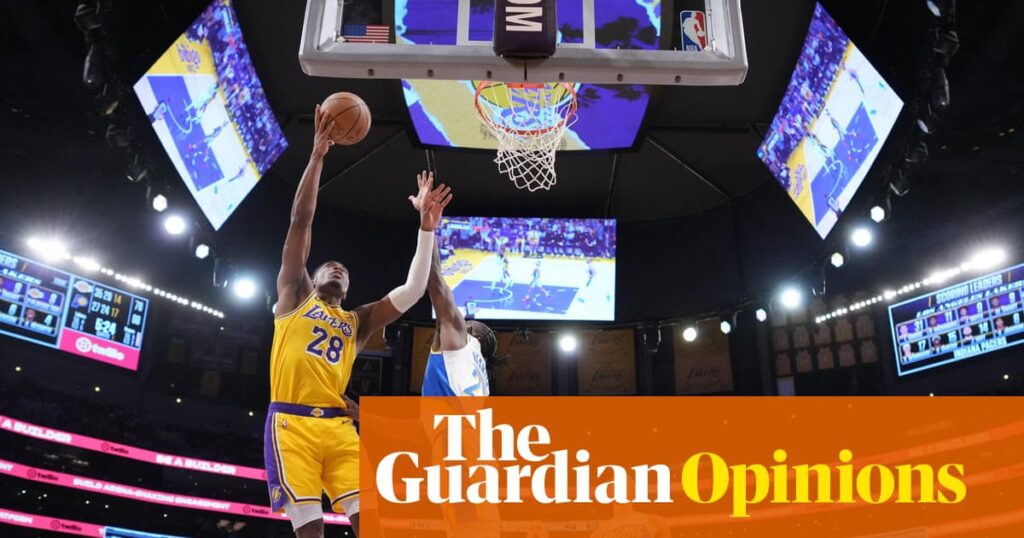
This peculiar dilemma mirrors the ongoing conversation in the NBA about the phenomenon of “tanking,” where teams deliberately underperform to enhance their chances of acquiring elite draft picks. The debate over how to curb this strategy has spurred numerous theories but has yet to yield a comprehensive solution. Recently, the league penalized the Utah Jazz $500,000 for failing to field their best players during a critical phase of the season. Similarly, the Indiana Pacers incurred a $100,000 fine for removing key players in an apparent effort to lose games. Yet, both teams remain mired in a losing streak, part of a broader trend that reveals deeper issues within the league.
As of early February, the NBA's seven worst teams have combined for a staggering 20 wins against 87 losses, with 13 of those victories occurring when two struggling teams faced off. This speaks to a culture where players and teams are acutely aware that tanking is a growing concern. Brooklyn Nets' Michael Porter Jr. articulated this sentiment, stating, “I don’t like how teams are deliberately trying to tank to get a good draft pick.”
This issue isn’t entirely new. Research conducted by academics examining NBA games from the 2006-07 to 2017-18 seasons found clear evidence of teams resting healthy players once they were eliminated from playoff contention. Yet this season, more teams are losing games earlier in the schedule than ever before, which has prompted NBA Commissioner Adam Silver to recognize the issue. He stated over the weekend, “Are we seeing behavior that is worse this year than we’ve seen in recent memory? Yes, is my view. There’s been a destigmatization around certain behaviors … the guardrails have come off a little bit. We are going to make substantial changes for next year.”
Silver acknowledged a “perfect storm” this season, exacerbated by the presence of four college superstars expected to enter the draft, including Darryn Peterson from the University of Kansas, AJ Dybantsa from BYU, Cameron Boozer from Duke, and Caleb Wilson from North Carolina. The subsequent draft classes do not appear as strong, heightening the stakes for teams eager to secure top talent.
Theoretically, drafts are designed to help weaker teams acquire strong players, thus fostering parity and providing a glimmer of hope to struggling franchises. For example, the San Antonio Spurs turned their fortunes around after finishing with the second-worst record in 2023, acquiring Victor Wembanyama, Stephon Castle, and Dylan Harper in successive drafts. Meanwhile, the New England Patriots bounced back from back-to-back 4-13 seasons to compete for a Super Bowl in the current year.
Much of this success can be attributed to the salary cap structure in leagues like the NBA and NFL, which helps level the playing field. However, such a turnaround is less likely in European leagues like the Bundesliga or Ligue 1, where the competitive landscape is often dominated by a handful of teams. The Premier League may be competitive, but realistically, only about six teams have a genuine chance to win the title over the next decade.
One major issue remains: the incentives for teams to tank are stronger in the NBA than in other leagues. With only five starters on the court, acquiring one or two superstars through the draft can drastically change a team's prospects. Thus, losing becomes a viable strategy for some franchises. Ironically, being a middle-ranked team may be the worst place to be, as these teams find themselves unable to challenge for championships while also missing out on the generational talents that top draft picks can provide.
So, what solutions have been proposed? Some experts suggest restricting teams from receiving a top-four draft pick in consecutive years to deter ongoing losing strategies. Others advocate for flattening the lottery system, capping any team's chances of securing the first pick at around 10%. Critics also point to the grueling 82-game NBA season, arguing that such a long schedule encourages teams to lose interest once playoff contention is out of reach. While some form of relegation could also address the issue, this remains highly unlikely.
Ultimately, the reality is that as long as draft picks reward losing teams, the incentive to tank will persist. For anyone managing a struggling franchise, the temptation to engage in “Tankapolooza” is hard to resist. The question remains: what does the NBA need to do to ensure that integrity and competition are maintained in a league where the stakes are ever-increasing?
Havas Media India Takes the Lead: What This Means for Modenik Lifestyle’s Future Will Shock You!

Indiana's Shocking New Law: Will Your Degree Become Useless Overnight? Find Out the 2024 Impact!
Santa Clara Shocks No. 21 Saint Mary’s with Stunning 76-71 Upset—Can They Take Down Gonzaga Next?

Ex-Microsoft Techie Drops Shocking Truth: Why Indian Workers Are Missing Out on Deep Tech Opportunities!
You Won't Believe What Happens When Access is Denied: Shocking Consequences Revealed!
Voting Chaos Unleashed: UMSG Executive Election Faces Shocking Re-Vote—What’s at Stake?
You might also like: