
Moderna Drops Phase III Trials Amid Growing US Vaccine Skepticism—Is Your Health at Risk?

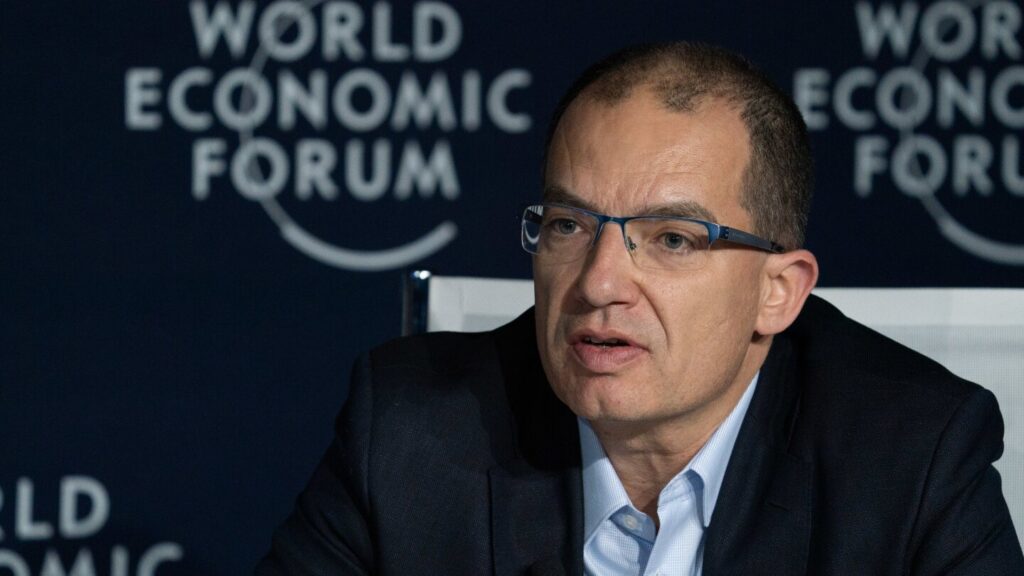
Moderna, the biotech company best known for its COVID-19 vaccine, is significantly reducing its investments in vaccine development, signaling a challenging environment for immunizations in the U.S. market. CEO Stéphane Bancel shared this assessment during the World Economic Forum in Davos, Switzerland, stating, “You cannot make a return on investment if you don’t have access to the U.S. market.” Bancel noted that various regulatory hurdles and a decline in support from health authorities have contributed to a “much smaller” vaccine market.
As a consequence, Moderna has decided to halt funding for late-stage vaccine studies, although it remains unclear whether this decision affects all vaccines or is specifically targeted at those for infectious diseases. In a recent note to investors, analysts at Jefferies indicated that Bancel is now inclined to focus on developing vaccines for oncology and rare diseases, particularly for high-risk patient populations. This shift could lead to deprioritizing at least 11 infectious disease programs that were previously in the pipeline.
The analysts at Jefferies also emphasized that vaccines generally offer one of the highest returns on investment (ROI), suggesting that this strategy may help Moderna cut costs more rapidly and improve its cash flow towards a projected breakeven point by 2028.
Moderna's recent troubles can be traced back to changes in U.S. health policy under Robert F. Kennedy, Jr., who took the helm of the Department of Health and Human Services in February 2025. Since assuming office, Kennedy has enacted policies that limit immunization access for Americans, which has adversely affected the vaccine industry's ability to innovate and expand. For instance, in May 2025, he removed COVID-19 from the routine immunization guidelines for healthy children and pregnant women, and in August, he terminated 22 mRNA vaccine research projects involving major companies like Pfizer, Sanofi, and AstraZeneca, as well as Moderna.
Kennedy's administration has also brought in officials who are seen as obstructing vaccination efforts. One notable figure, CBER Director Vinay Prasad, recently made controversial claims in an internal FDA memo, suggesting that at least 10 children had died “because of” COVID-19 vaccines. A subsequent internal safety review from the FDA disputed this assertion, indicating that the number was likely exaggerated.
In June, Kennedy dismantled the Advisory Committee on Immunization Practices at the CDC and later reformed it with known vaccine skeptics, further raising concerns among public health experts. This shift in leadership and policy has drawn criticism not just from Bancel but also from Pfizer CEO Albert Bourla, who characterized the Health and Human Services’ vaccine policies as “almost like a religion” during discussions in Davos.
These significant policy shifts have hit Moderna hard, particularly as the company has faced consecutive quarters of declining earnings. In May, Moderna withdrew its approval application for a combination flu and COVID-19 vaccine. A few weeks later, it lost a lucrative government contract related to bird flu, a project valued at over $760 million, after the HHS terminated it.
In response to these financial pressures, Moderna has taken steps to manage its cash flow, such as reducing its workforce by 10% in July and discontinuing three mRNA vaccine programs in November. As the landscape for vaccination and immunization shifts dramatically under the current administration, the future of vaccine development at Moderna and similar companies remains uncertain.
XRP at $1.90: Is This the Last Chance to Profit Before a Massive Surge or Sink?
Nvidia Stock Soars as Chinese Tech Giants Secretly Plan H200 Imports—What You MUST Know NOW!

Why Are 80% of Vaccine Trials Ignoring This Vulnerable Group? The Shocking Truth You Need to Know!

You Won't Believe Why the National Park Service Just Yanked a Climate Change Sign at Fort Sumter!

Is Your Favorite Fitness Influencer Hiding THIS Shocking Secret? The Alarming Trend You Must Know!

You Won't Believe What Jolie Martinez Revealed About Her Shocking Fitness Transformation!
You might also like: