
Middle East on the Brink: WHO Issues Dire Health Warning—Funding Shortfall Could Cost Thousands Lives!

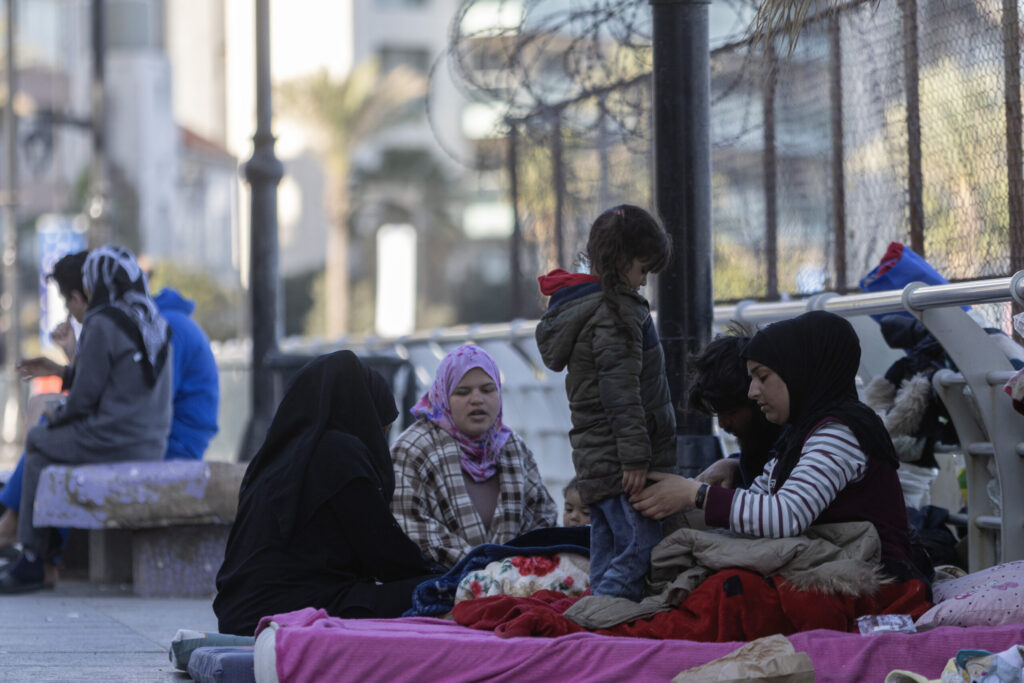
As the conflict in the Middle East escalates, the ripple effects are being felt far and wide, with dire implications for health and food security in the region. The World Health Organization (WHO) has reported that it has mobilized only 37% of the funding necessary to address the deteriorating health conditions in the Eastern Mediterranean Region (EMRO). This alarming statistic was shared by regional director Dr. Hanan Balkhy during a media briefing, where she urgently called for a permanent cessation of hostilities.
With wars affecting fourteen countries in the EMRO, over 4.3 million people have been displaced. The conflict has resulted not only in physical and psychological trauma but also in the destruction of health facilities and a significant setback in maternal and child health targets. “Stability is on a knife-edge across the region,” Balkhy warned. “Public health risks are rising. Displacement is increasing the threat of outbreaks.” She highlighted that essential services are being disrupted, exacerbating issues related to safe drinking water and air pollution.
Furthermore, the recent 5.8 magnitude earthquake in Afghanistan has compounded the challenges, affecting health services in an already vulnerable environment. The WHO revealed that of the $689 million required for emergency operations in 2026, only 37% has been secured. In response to the escalating crisis, the WHO has launched a $30.3 million flash appeal aimed at supporting health responses in Lebanon, Iran, Iraq, Syria, and Jordan.
📰 Table of Contents
Environmental and Health Risks
Dr. Balkhy also raised concerns about the environmental implications of the ongoing conflicts. The Middle East is one of the most water-stressed regions globally, relying heavily on desalination plants for municipal water supply. The Gulf region hosts approximately 400 desalination plants, which produce 40% of the world’s desalinated water. However, military actions have threatened these vital resources, with one Iranian desalination plant rendered inoperable due to bombings and near misses at facilities in Bahrain, Kuwait, and the United Arab Emirates.
The environmental degradation could lead to serious health issues, including respiratory illnesses from poor air quality. “We cannot live without water and oxygen... The damage that’s happening to the environment could contaminate the water and the air,” Balkhy emphasized.
In addition to environmental risks, the WHO has expressed concern over the increasing likelihood of radiological or nuclear incidents. The International Atomic Energy Agency (IAEA) reported eight strikes near Iranian nuclear facilities, with one occurring just 75 meters from a nuclear site. Dr. Balkhy noted that any attacks near such facilities could have devastating consequences for public health and the environment.
While the WHO is equipped to handle health crises, the complexities of chemical, biological, radiological, or nuclear incidents pose significant challenges. “WHO’s job is to keep health systems prepared for exactly that kind of low probability, high impact event. But it is not easy,” she said, advocating for sustained ceasefires and peace to mitigate the risks.
Global Consequences of Health System Collapse
The fallout from the conflict is not confined to the region. Following the US-Israeli attack on Iran in late February, hostilities between Israel and Hezbollah intensified, leading to ground troop deployments in Lebanon. The consequences are stark: six hospitals have closed, 200 hospitals have been damaged, and 51 primary healthcare centers are no longer operational. Approximately one in five people—around one million—have been displaced in Lebanon, with nearly 5000 injured and over 1500 fatalities.
In response, the WHO has mobilized more than 187 metric tonnes of medical supplies valued at over $3.1 million for urgent needs in the region. A convoy carrying 22 tonnes of supplies has already reached Lebanon, benefiting around 50,000 patients. Additional shipments are also being dispatched to Gaza and Afghanistan to assist millions more in need.
Dr. Balkhy cautioned that the collapse of health systems in a region already facing half of the world’s humanitarian needs will have far-reaching effects. “That is a very unfortunate situation. It will have regional and global consequences,” she stated, highlighting the critical need for immediate funding and international cooperation as the humanitarian crisis unfolds.
You Won't Believe What Happens When PSG Faces Liverpool LIVE Tonight—Don’t Miss This Shocking Showdown!

You Won't Believe What Don S. Dizon Just Revealed at the Oncology Meeting - The Shocking Truth About Social Media's Impact!

Unlock 10% Off NOW: The Shocking Novig Promo Code Everyone's Talking About! Will You Miss Out?

Unlock $10 NBA & Masters Bonuses NOW with Kalshi's Secret Promo Code - You Won't Believe What Happens Next!
Your Browser is Blocking Critical Updates – 85% of Users Are at Risk! Are You One of Them?

This Startup's Revolutionary Plant-Based Casein Could Change Pizza Forever—Will You Miss Out?
You might also like: