
Mexico's Climate Crisis: Are You Prepared for the 500% Rise in Security Threats?

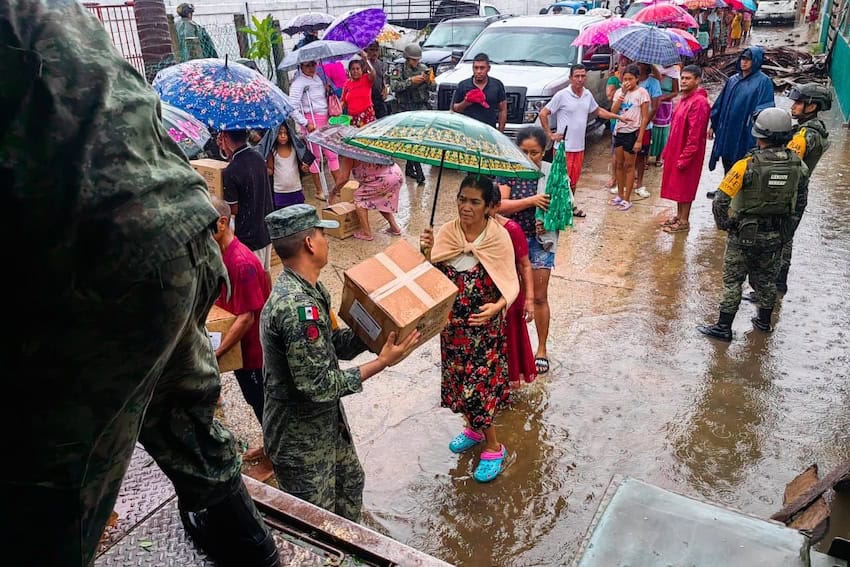
Climate change is starting to be recognized as a significant factor in global security, with experts noting that its impacts extend beyond the environment to affect political stability and economic security. This is particularly evident in Mexico, where defense planners and policy experts are examining the interplay between climate pressures and existing social tensions, especially in regions already vulnerable to instability.
The consensus among experts is that climate change does not directly cause conflict but acts as a “threat multiplier.” This term, popularized by security expert Sherri Goodman, describes how climate stressors can intensify existing grievances, leading to unrest and instability. For instance, prolonged droughts in Mexico's northern states, such as Chihuahua and Sonora, have strained already limited water supplies. This has caused agricultural failures that undermine rural economies, putting additional pressure on already vulnerable communities.
Severe storms and flooding, particularly along Mexico's Pacific and Gulf coasts, further erode public trust in governments that struggle to respond effectively to these crises. When environmental stress is layered onto existing issues like poverty, weak governance, and regional rivalries, the risk of unrest and displacement rises significantly.
Water scarcity is a prime example of this dynamic. In areas like Mexico’s northwest, where agriculture is heavily reliant on consistent rainfall, persistent drought conditions can devastate livelihoods. This has led to heightened tensions over water allocation between farming communities and urban centers. As incomes collapse due to agricultural failures, migration often becomes the only option—sometimes within Mexico and other times across the border to the United States. This influx can strain housing, job markets, and social services in receiving communities, inflaming political tensions even further.
Rising sea levels add another layer of complexity. Mexico’s extensive coastlines, which are integral to major ports, resort economies, and fishing communities, are increasingly vulnerable to flooding and storm surges. Critical trade cities like Veracruz and Manzanillo face risks that could disrupt supply chains, impacting economic stability far beyond local areas.
Recognizing these challenges, security institutions are beginning to take climate risks seriously. Military planners are assessing how extreme heat can affect troop readiness and how climate-related disasters might necessitate swift humanitarian responses. In Mexico, the armed forces have played a growing role in disaster response efforts, from hurricane relief to flood evacuations. As a result, climate risk assessments are becoming an integral part of long-term strategic planning for multiple countries.
This shift in perspective does not replace environmental or economic viewpoints; rather, it enhances them. By understanding how climate pressures interact with governance, demographics, and development, policymakers hope to preemptively address potential crises. Adaptation and resilience are now central to planning efforts. Investments in strengthened infrastructure, improved forecasting, diversified water supplies, and regional cooperation are critical in helping societies withstand such shocks.
For Mexico, international collaboration is essential, given the importance of shared river basins with the United States, the dynamics of cross-border migration, and deeply integrated supply chains. The conversation surrounding climate change has evolved significantly over the past two decades, transforming from a peripheral concern to a central consideration in defense strategies. The key question is no longer whether climate change impacts security—it's how governments and institutions can prepare for its cascading effects.
As communities around the world, including those in Mexico, confront a future marked by increasing weather extremes and long-term environmental changes, the intersection of climate and societal stability is poised to remain a defining issue of the 21st century.
On March 10, 2026, Sherri Goodman will speak in San Miguel de Allende on “Threat Multiplier: Climate and Global Security in the 21st Century,” part of the i3: ideas that inform & inspire series. Goodman, who served as the first deputy undersecretary of defense for environmental security in the United States, has been at the forefront of integrating environmental considerations into military planning and policy. She currently serves as secretary general of the International Military Council on Climate and Security and is the author of “Threat Multiplier: Climate, Military Leadership, and the Fight for Global Security.” Tickets and additional information are available at i3SMA.org.
Tonight’s NBA DFS Picks Could Make or Break Your FanDuel Lineup—Shocking Injuries & Must-Have Stars Revealed!

Ethereum's Vitalik Buterin Reveals Shocking Truth: Why 'Sanctuary Tech' is the Future—Don't Miss This!

Is Your Future in Jeopardy? How Georgia's SkillZilla is Equipping Gen Z with 7 'Power Skills' to Survive the AI Revolution!

I Tried to Plan My Birthday—Only 2 Friends Actually Wanted to Come! What I Discovered Will Shock You!
You Won't Believe What Happens When This Request Fails: 5 Shocking Consequences Revealed!

Yellowstone Star Breaks Silence on Shocking Exit—Fans Are Left Reeling! What’s Next?
You might also like: