
Measles Could Cost U.S. $1 Billion Annually If Vaccine Rates Plummet—Are Your Kids Safe?

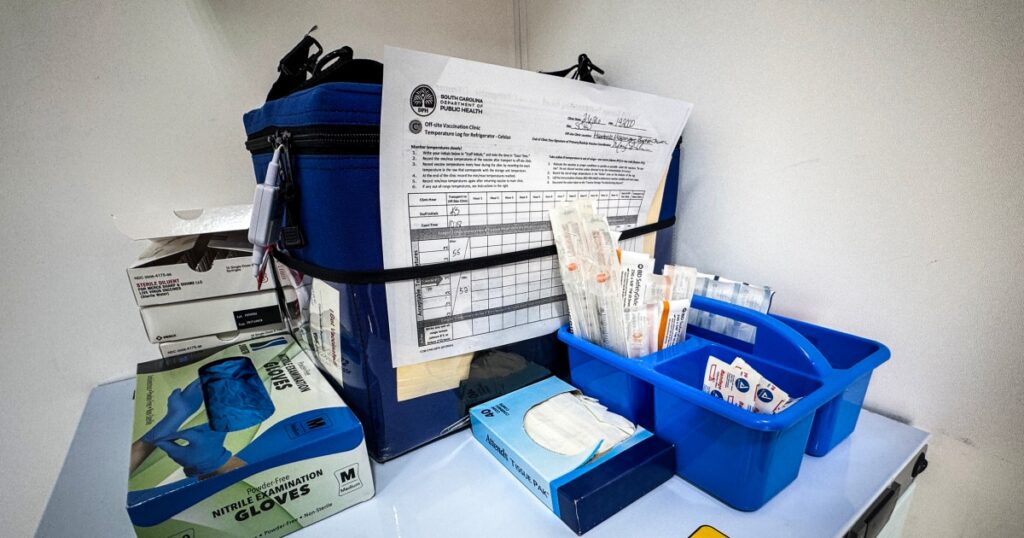
In early 2025, a troubling measles outbreak began to sweep through West Texas, and Katherine Wells, director of Lubbock’s public health department, found herself in desperate need of funding. The outbreak, concentrated in Gaines County, about an hour away, raised alarms as exposures were reported at local pediatricians' offices, urgent care centers, restaurants, and daycares. Wells needed to bolster her team to effectively respond to the crisis.
“We were really relying on staff that aren’t hourly, because I can work them for 80 hours if I have to, which is horrible,” said Wells. In emergency planning meetings with the Texas Department of State Health Services, she made a compelling plea for roughly $100,000 to hire temporary workers who could assist her exhausted staff. “I was like, can I just have money so that if I need a few hours of work from a retired school nurse who we’ve worked with before, I can just pay them?” Unfortunately, Wells reported that the answer was consistently “no.” While the state did send a few travel nurses from other areas, no additional funding was provided.
To halt the measles outbreak from spiraling out of control, public health officials must act swiftly. They must contact every person exposed to the virus, determine their vaccination status, and encourage them to either get vaccinated or remain in quarantine for three weeks. In a bid to manage the outbreak, Wells diverted at least half of her staff from their regular duties to focus on the emergency response.
The Price of a Measles Outbreak
Wells could not determine the total cost incurred by the Lubbock Health Department to contain the outbreak, which originated in a largely unvaccinated Mennonite community in late January of the previous year. This situation is reflective of a troubling trend: since 2019, over two-thirds of counties and jurisdictions in the U.S. have reported significant declines in vaccination rates, according to an investigation by NBC News and Stanford University. Among states tracking MMR (measles, mumps, rubella) vaccination rates, more than half—67%—are below the levels necessary to prevent a measles outbreak.
A new report from the Yale School of Public Health provides alarming projections about the economic impact if these vaccination rates continue to decline. If the rates were to drop by just 1% annually over the next five years, the cost to the U.S. could reach $1.5 billion each year. Utilizing existing county-level vaccination coverage data, Yale researchers applied mathematical models to predict future increases in measles cases, hospitalizations, and the associated medical and societal costs.
The report estimates that $41.1 million would be needed annually to cover the basic medical needs of patients, including health insurance, while $947 million would be required for public health responses like surveillance and contact tracing. Additionally, workforce productivity losses could amount to $510.4 million each year. Dr. Dave Chokshi, chair of Common Health Coalition, a nonprofit public health organization that collaborated with Yale on the project, emphasized the widespread impact of measles outbreaks on “the health ecosystem.”
“The human consequences of measles outbreaks are important for us to face very squarely,” Chokshi noted. “But we also wanted to make it clear that there are economic consequences, including employees absorbing lost work and public health departments that are stretched too thin to respond.” Measles was declared eliminated in the U.S. in 2000, but declining vaccination rates now threaten to undermine that achievement.
As the outbreak spread in West Texas, President Donald Trump was taking his second oath of office. Under his administration, following guidance from Health Secretary Robert F. Kennedy Jr., there has been little strong endorsement for vaccines as a necessary measure to curb such outbreaks. Instead, messaging regarding childhood vaccination has leaned toward “personal choice” rather than public health urgency.
By early 2026, over 1,000 confirmed cases of measles had already been reported, nearly half of the total 2,281 cases from all of 2025, with 94% of those infected being unvaccinated. A recent analysis from Johns Hopkins Bloomberg School of Public Health indicated that the initial financial burden from a measles outbreak to a community averages about $244,480. This figure includes costs for resources like vaccine clinics and staffing until the outbreak is contained.
“We know the ingredients that go into dealing with a measles outbreak, how many cases end up becoming severe and seeking care,” said study author Bryan Patenaude, an associate professor of health economics. “Each additional case of measles averages $16,000 for contact tracing, medical expenses, and quarantine monitoring.” According to these estimates, five measles cases could cost approximately $324,480, while an outbreak involving 50 cases might escalate to around $1 million.
In 2019, Clark County, Washington, experienced an outbreak with 72 confirmed cases. Officials spent countless hours ensuring quarantined individuals adhered to guidelines, even bringing in staff from the CDC and neighboring states for support. Dr. Alan Melnick, public health director for Clark County, noted that productivity losses from that outbreak exceeded $1 million.
The measles vaccine remains free in the U.S., and Dr. Melnick highlighted the value of vaccines. “The public should be aware of what a good deal vaccines are,” he said, “because they save a lot of money in addition to saving lives.” Dr. Richard Pan, a former California legislator and pediatrician, echoed this sentiment, emphasizing the tremendous cost of outbreaks, which ultimately falls on American families.
As South Carolina grapples with the country's largest outbreak in more than a generation—over 1,000 cases reported in Spartanburg County—state health officials face mounting challenges. The South Carolina Department of Public Health has remained tight-lipped about the financial implications of their response efforts, though they are in discussions with the CDC for additional funding. Dr. David Wohl, a global health and infectious disease specialist at the University of North Carolina at Chapel Hill, described the strain on health systems as the outbreak spilled into North Carolina, emphasizing the extensive effort required to contain the virus.
The potential economic burden of measles outbreaks is quantifiable, but the personal cost of unprotected children against this highly contagious virus is immeasurable. Hundreds infected over the past year have faced serious complications like high fevers and pneumonia, and families have experienced significant emotional and physical tolls as they care for sick children. Tragically, two young girls in Texas, ages 6 and 8, lost their lives within weeks of contracting the virus.
As Dr. Chokshi poignantly stated, “Behind every number is a child struggling with a devastating illness, or a family reckoning with an unexpected hospitalization, and, in the worst circumstances, a death or a long-term consequence from what is a preventable disease.”
Panic in the NCAA! Which Bubble Teams Are On the Brink of Heartbreaking Elimination?
Hawaiʻi Tax Cuts Suddenly Vanish: What Are Lawmakers Hiding & How Will It Affect You?
You Won't Believe What Happens When This Celebrity Faces Legal Action—The Shocking Truth Revealed!

You Won't Believe What This Unknown QB Did at the NFL Combine – Shocking Stats Inside!

NBA Legend Kevin Garnett's SHOCKING New Role: Why You NEED to Know This NOW!

Bitcoin Skyrockets to $68K! What Khamenei's Shocking Death Means for Your Wallet!
You might also like: