
Lou Holtz, the legendary Notre Dame coach, passes at 89: What shocking secrets did he take to the grave?

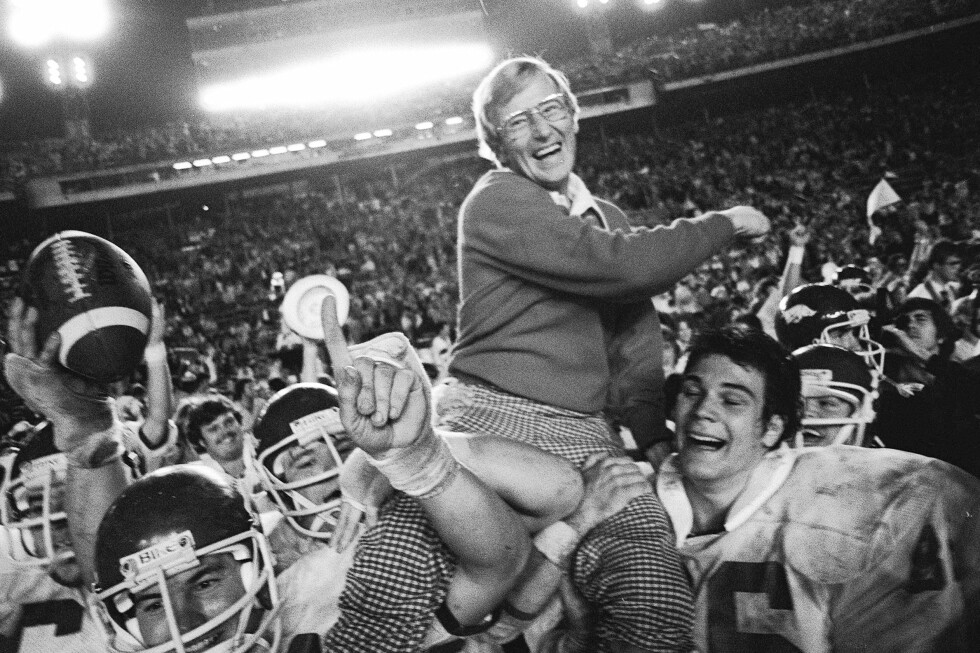
Lou Holtz, a towering figure in college football, passed away at the age of 89 on Wednesday in Orlando, Florida, as confirmed by a statement from the University of Notre Dame. Known for his unique ability to inspire both players and fans, Holtz leaves behind a storied legacy marked by nearly 250 wins, one national championship, and a reputation as one of the sport's most lovable yet controversial characters.
Born on January 6, 1937, in Follansbee, West Virginia, Holtz had always dreamed of coaching high school football. His career, however, took him far beyond those humble aspirations. His journey began at Kent State and later took him through various coaching positions, including at William & Mary and North Carolina State, before leading him to the NFL with the New York Jets, where he struggled to find success and ultimately resigned after a disappointing 3-10 season in 1976.
Despite his brief NFL stint, Holtz's most notable achievements came during his time at Notre Dame, where he revitalized a floundering program and captured the national title in 1988. He famously led the Fighting Irish to a 31-30 victory over Miami that season—a defining moment in the “Catholics vs. Convicts” rivalry of the 1980s. Under Holtz's leadership, Notre Dame went on to achieve a school-record 23 consecutive wins and finished second in the AP poll multiple times, solidifying his impact on the program with a remarkable 100-30-2 record before departing in 1996.
“Notre Dame mourns the loss of Lou Holtz, a legendary football coach, a beloved member of the Notre Dame family, and devoted husband, father, and grandfather,” said Notre Dame president Rev. Robert A. Dowd in a statement. Holtz's son, Skip, also shared his reflections, noting his father's significance beyond just success on the field: “He was successful, but more important he was Significant.”
Holtz's coaching philosophy revolved around core values of trust, commitment, and accountability. He famously declared, “Life is ten percent what happens to you and ninety percent how you respond to it,” emphasizing the importance of resilience and a positive outlook. His motivational style was often peppered with homespun wisdom, with quotable lines that brightened bulletin boards and inspired players to push their limits. Holtz could make any team—from Akron to Alabama—believe they could win on any given Saturday.
Restoring Notre Dame to Greatness
Before Holtz arrived, the Notre Dame football program was stuck in mediocrity, struggling to live up to its storied past. His immediate impact helped the team reach the Cotton Bowl in just his second year, a feat that set the tone for his tenure. Holtz's coaching style was both demanding and unconventional; he once suspended star players for tardiness before a key game, demonstrating his commitment to discipline and accountability.
His time at Notre Dame was marked by his ability to recruit top talent, with the 1990 recruiting class alone producing five future first-round NFL draft picks. Holtz's knack for finding and nurturing talent, coupled with his distinctive motivational techniques, helped him lead several teams into the AP Top 25, making 18 appearances, eight of which were in the top 10.
After leaving Notre Dame, Holtz returned to the coaching ranks at South Carolina, where he initially faced challenges, including a winless season. However, he rebounded strongly, leading the Gamecocks to significant victories, including wins over top-ranked teams. Following his coaching career, he transitioned to a successful stint in broadcasting, joining CBS and later ESPN. Holtz, however, always maintained a connection to the game, emphasizing that his experiences were not merely about winning but about the relationships built along the way.
Throughout his life, Holtz was not only a coach but also a father figure to many players and colleagues, fostering a sense of community and camaraderie that transcended the game itself. His legacy is not solely defined by his impressive win-loss record but also by the lives he touched and the values he instilled in those around him.
Lou Holtz’s impact on college football will be felt for years to come, as he not only shaped a generation of players but also left behind a rich legacy at Notre Dame, one that future coaches and players will surely aspire to emulate. As he famously noted, “You’re never as good as everyone tells you when you win, and you’re never as bad as they say when you lose.” In Holtz’s case, he was undeniably significant.
Former Soldier Reveals SHOCKING Secrets to Helping Fayetteville Homebuyers – You Won't Believe What He Discovered!

Tarrant County's Election Battle: 5 Surprising Candidates You Didn't Expect to Rise!

You Won't Believe How This $1 Million Funding Will Transform Dental Care in Georgia!

From Blog to Breakthrough: How Rawcology Defied the Odds to Become a $10M Allergy-Friendly Snack Empire!

Elon Musk's Shocking Confession: Did He Sabotage Twitter's Stock Before His Takeover?

Seahawks Star Faces SHOCKING Injury Update—Fans Are Left in TOTAL Panic! What Happens Next?
You might also like: