
Lionel Messi & Donald Trump: A White House Ceremony Spirals into Shocking Iran War Chaos! What Happened Next?

On Friday evening, Nigerian radio personality SizZzle posted a tweet that resonated across continents, asking, "What did Messi do to his fellow Argentinians to make them so angry with him?" As he noted, Argentinians were fiercely criticizing Lionel Messi in the comments of his Instagram, a situation that attracted 1.2 million views on his tweet. This reaction highlighted how quickly news can shift in the digital age, with a radio host in Bayelsa, Nigeria, picking up on the emotional turmoil surrounding the soccer superstar before most English-language media had even reported on it.
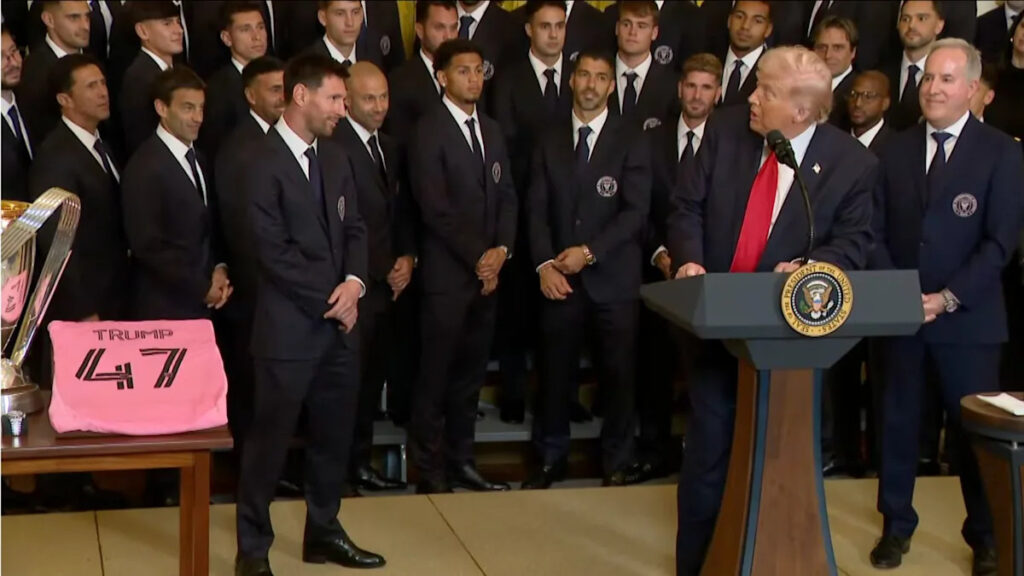
The backdrop to this social media uproar was a visit by Messi and his team, Inter Miami, to the White House on Thursday to celebrate their 2025 MLS Cup championship. However, Messi's appearance took an unexpected turn. Instead of the traditional congratulations, President Trump opened the ceremony with a live briefing regarding the U.S.-Israel military strikes against Iran, which had reportedly resulted in over 1,200 deaths. Following this, he discussed other geopolitical issues, including Venezuela and Cuba, while Messi stood silently by his side, only breaking his silence to applaud at the end of the briefing.
The fallout from this event was immediate and intense, but it wasn't merely the usual cycle of internet outrage—the criticism came predominantly from Messi's own compatriots. Argentine journalist Mariano Sinito described the moment as "a huge stain on Messi's legacy." One fan poignantly captured the emotional fracture, stating, "Whatever happens, you'll always be my greatest idol, but you can't count on me for this." Palestinian journalist Abubaker Abed condemned the incident as "utterly shameful and repulsive," specifically calling out Messi and fellow players like Mascherano, Suárez, and De Paul. Defenders of Messi argued that he and Suárez didn't fully grasp what was being said during Trump's address, an assertion that speaks volumes about the implications of the moment: the greatest soccer player of his generation found himself at the center of a politically charged event, receiving a lukewarm defense from fans who wished to separate his actions from the context in which they occurred.
What makes this situation even more complicated is the contrasting reaction to Cristiano Ronaldo’s visit to the White House just four months earlier. Ronaldo attended a state dinner for Saudi Crown Prince Mohammed bin Salman, receiving a warm reception from Trump without the weight of a live war briefing overshadowing the occasion. The backlash Ronaldo faced was short-lived, while Messi’s moment continues to reverberate. The difference in circumstances is stark: Ronaldo's visit was as a personal guest, while Messi was part of a longstanding American tradition where championship teams visit the White House, a ritual that, while routine, has become laden with political implications.
Championship visits to the White House are a uniquely American tradition, akin to tailgating in its cultural significance. Yet, they also carry a heavy political calculus. Athletes like LeBron James and Megan Rapinoe have publicly expressed their reluctance to participate, understanding that such appearances often serve as tacit endorsements of the sitting president's policies. For Messi, who moved to Miami only in 2023 after spending over two decades in Barcelona, this expectation was likely foreign. Inter Miami coach Javier Mascherano pointed out that they were merely following protocol, saying, "I thought we would talk about football but I guess I'm not lucky." However, Messi's silence during a politically charged moment transformed the occasion into something that transcended sports, challenging the very nature of what such visits signify.
Throughout his illustrious career, Messi has crafted a persona that is globally recognizable yet remarkably neutral. This brand-safe image has made him appealing to major sponsors like Adidas and the Saudi tourism board, allowing him to avoid controversy. But when thrust into a politically fraught environment—where silence is often interpreted as complicity—Messi became a powerful symbol of the intersection between sports and politics. He did not merely walk into a controversy; he stumbled into an American institution that has always been complex, becoming the first athlete of his stature to expose its underlying tensions.
As the world watches and critiques, Messi remains silent, leaving many to wonder not just about his thoughts but about what his very presence at the White House signifies in this tumultuous political landscape. In an era where athletes are increasingly expected to take stands on social issues, Messi's silence may speak louder than words, inviting both criticism and reflection on the role of sports figures in today’s world.
I’m Racing Against Time for My Unborn Son’s Life: Can You Help Save Him From This 90% Fatal Heart Defect?

Shocking 85% Turnout in Student Council Election – What’s Fueling This Unprecedented Shift?
You Won't Believe How Many Fans Are Storming Baltimore for the Epic DC United vs Inter Miami Clash!
Kazakhstan's Central Bank Just Announced a Shocking $350M Bitcoin Bet—What Happens Next Will Blow Your Mind!
Madonna's Shocking Secret: How She Found Celta Vigo's Missing Jersey—And Why It Could Change Everything!

MongoDB's Shocking Leadership Shakeup: What This Means for AI & Startup Investments!
You might also like: