Leica’s Groundbreaking 1-Inch Smartphone Camera: Is This the End for Traditional Filmmaking?

Leica has entered the smartphone market with a groundbreaking new device, the Leica Leitzphone, powered by Xiaomi. This latest innovation features a large 1-inch image sensor and incorporates LOFIC dynamic range technology, a combination that seems almost futuristic for smartphones just a few years ago. As we delve into this development, a critical question arises: Are smartphones finally closing the gap on the imaging capabilities typically reserved for dedicated cameras, especially in the filmmaking world?
This launch is indicative of a broader trend in the imaging industry, where traditional camera manufacturers are venturing into the smartphone arena. Their aim is clear: to transfer their extensive optical heritage, color science, and imaging expertise into devices that are now an integral part of daily life for millions of consumers.
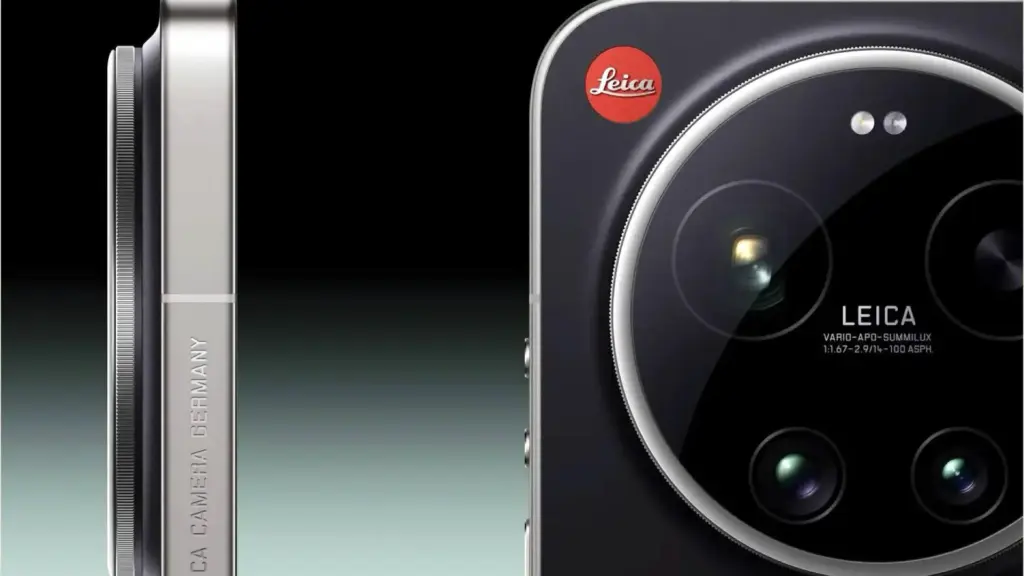
The centerpiece of the Leitzphone is its impressive camera system, built around a 1-inch sensor—a size significantly larger than the small imaging chips that have long dominated mobile devices. This sensor employs LOFIC technology, which stands for Lateral Overflow Integration Capacitor. This sophisticated architecture allows pixels to retain excess electrical charge when exposed to bright light, preserving highlight information that would typically be lost. As a result, this dynamic range enhances the phone’s ability to capture scenes with stark contrast.
Leica has designed the Leitzphone to include a triple camera system, taking inspiration from its renowned optical design. This setup comprises a 14 mm ultra-wide camera, a main 23 mm camera that utilizes the 1-inch sensor, and a periscope telephoto camera boasting a remarkable 200-megapixel sensor. The telephoto module provides optical zoom ranging from 75 mm to 100 mm, mimicking the functionality of a compact photographic zoom lens. Notably, the phone features a physical camera ring around the lens module, allowing users to manually adjust zoom, ISO, exposure value, shutter speed, and focal length—efforts to emulate the tactile experience of traditional photography.
Mobile imaging is evolving rapidly. As companies like Leica and ARRI begin to place their technology inside smartphones, the boundaries between traditional cameras and mobile devices are slowly beginning to dissolve.
Leica's foray into smartphones encapsulates a significant shift in the imaging landscape. No longer can smartphone cameras be regarded as just another consumer gadget; they are becoming platforms for traditional camera brands to extend their technology. A pertinent example of this transition is ARRI's partnership with Honor, integrating cinema color science and imaging expertise into a smartphone. This collaboration has sparked discussions among filmmakers—some embrace the idea of cinema technology in smartphones, while others worry about the dilution of cinema camera branding.
Initial reviews of the Leitzphone suggest it has been crafted with video creators in mind. The device supports 8K recording at 30 frames per second and 4K recording up to 120 frames per second. It also offers a Log recording profile for 4K at 120 fps, providing creators with flexibility during color grading. Reviewers have noted the impact of the large 1-inch sensor on video quality, particularly its performance in low-light conditions and its ability to create natural depth separation. The sensor’s larger size helps retain detail in highlights while minimizing noise in darker scenes.
Additionally, Leica’s renowned color science is highlighted as a strong advantage; footage captured on the Leitzphone appears less processed than many smartphone cameras, showcasing more natural skin tones and balanced contrast. This quality is especially evident in mixed lighting environments, where many mobile cameras struggle with color accuracy. However, reviewers also point out that smartphones still face limitations compared to dedicated cinema cameras, such as thermal constraints, restricted optics, and a heavy reliance on computational processing.
The Leica Leitzphone stands at a fascinating crossroads where mobile technology meets photographic heritage. A smartphone equipped with a 1-inch sensor and sophisticated LOFIC dynamic range technology would have seemed implausible only a few years ago. Whether smartphones can genuinely rival cinema cameras remains to be seen, as significant gaps still exist in optics, thermal performance, and professional workflows.
Nonetheless, it is increasingly clear that the world of mobile imaging is evolving. With companies like Leica and ARRI embedding their technology in smartphones, the once-clear boundaries between traditional cameras and mobile devices are gradually fading. As consumers lean towards multifunctional devices, the landscape of both photography and filmmaking is set for a transformation.
80% of Users Are at Risk: Are You Using an Unsupported Browser That Could Expose Your Secrets?
You Won’t Believe What Happens When This Request Gets Denied – Shocking Consequences Revealed!
You Won't Believe What Happens When You Settle for That Cheap Smartphone—Is It Worth the Risk?

Teen's Shocking Video Sparks Felony Charge—Is This the New Face of Danger Online?
You Won't Believe What Happens When Your Request Gets Denied - Shocking Consequences Revealed!

Shocking MITRE HR Lawsuits Unveil Disturbing Truth About Vaccine Exemptions – What Are They Hiding?
You might also like: