Korea's Tourism Soars 200%: Are You Missing Out on These Hidden Gems?

The recent Asia-Pacific Economic Cooperation (APEC) summit held in Gyeongju, North Gyeongsang, has not only made waves in international diplomacy but also spotlighted some of South Korea's hottest tourism trends. High-profile visitors, including U.S. officials and tech executives, are increasingly showcasing Korean products and food, elevating local businesses to must-see destinations for foreign tourists.
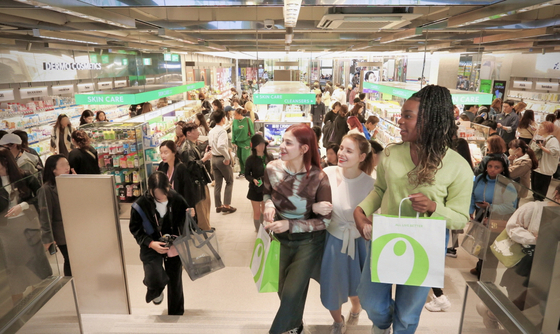
On October 29, White House press secretary Karoline Leavitt visited the Hwangnam branch of Olive Young, a popular K-beauty store in Gyeongju, where she shared her experience on Instagram, highlighting 13 Korean skincare products she purchased under the caption “South Korea skincare finds.” The following day, in Seoul, Jensen Huang, CEO of Nvidia, dined at Kkanbu Chicken in Samseong-dong with South Korea's corporate elite, including Samsung Electronics Executive Chairman Lee Jae-yong and Hyundai Motor Group Executive Chair Euisun Chung. Post-meal, Huang's enthusiastic comments about the chicken wings—“so good”—went viral, sparking a noticeable uptick in orders across the nation.
This increasing attention on Korean brands is backed by impressive numbers. A representative from CJ Olive Young reported that in the previous year, 9.42 million foreign customers from 189 countries shopped at their stores across Korea, accounting for 26.4% of total sales in the first half of this year. Analyst Yu Jung-hyun from Daishin Securities noted that foreign shoppers are increasingly moving away from downtown duty-free shops to specialty retailers like Olive Young.
Furthermore, Kyochon F&B, which operates Kyochon Chicken, recently opened a concept store, Kyochon Pilbang, in Itaewon, central Seoul. Interestingly, over 80% of its visitors last year were foreigners, attracted by its interior design that reflects East Asian aesthetics.
Other destinations are also seeing a surge in popularity among foreign tourists. At Daiso stores located in key tourist hubs such as Myeong-dong and Dongdaemun in central Seoul, almost half of sales are now from foreign visitors, drawn by the low prices. The National Museum of Korea welcomed 190,052 foreign visitors from January through October 20, with attendance expected to climb further due to the global popularity of Netflix’s animated film KPop Demon Hunters.
New shopping venues like The Hyundai Seoul mall in Yeouido have also reported growth, with foreign shopping sales jumping to 15.2% in September 2023—up from just 3.3% in 2022. This uptick in interest can be linked to increased exposure through Korean dramas and social media platforms like YouTube, TikTok, and Instagram.
Feedback from tourists illustrates this trend; a Reddit user recently stated, “Daiso in Korea is not just a store. It’s a full-blown lifestyle,” receiving over 800 upvotes for sharing their shopping experiences ranging from plates to electronics at bargain prices.
As foreign tourism in Korea continues to rise—hitting 16.37 million visitors last year (up 48.4% from 2023)—China remains the largest source of tourists, with 4.6 million visitors, followed by Japan (3.22 million), Taiwan (1.47 million), and the U.S. (1.32 million). Analyst Nam Sung-hyun from IBK Investment & Securities projects that the number of inbound visitors will grow at an annual average rate of 7.1%, potentially reaching 23 million by 2029, largely fueled by the global success of Korean media and government initiatives promoting medical tourism and MICE (meetings, incentives, conferences, and exhibitions).
Despite this positive outlook, challenges persist. A survey conducted by the Ministry of Culture, Sports and Tourism revealed that eight out of ten tourism-related businesses reported staffing shortages. This trend coincides with a significant drop in enrollment in tourism and hotel programs, which has decreased by over 10,000 students in the past three years due to factors like low wages and limited benefits, according to Lee Hoon, a tourism professor at Hanyang University.
Additionally, the disparities in tourism infrastructure and visitor numbers between Seoul and regional cities remain a pressing concern. As of May this year, only 7.8% of foreign tourists ventured beyond Seoul, Gyeonggi, and Incheon, primarily visiting well-known locations such as Jeju and Busan. Efforts such as 11 region-specific tourism packages launched last year have had limited impact, as highlighted by Shin Hak-seung, another tourism professor from Hanyang University, who emphasized the need for diverse content and stronger product development.
Currently, tourism accounts for approximately 3% of Korea’s GDP, which is relatively low compared to other OECD nations, where the global average is around 9%. A representative in the tourism industry stressed the importance of capitalizing on this momentum, stating, “the government must seize this golden moment for Korean tourism with sustained attention and comprehensive support measures.”
Duterte Faces SHOCKING Trial Decision: What's Next After ICC Denies His Release? You Won't Believe the Consequences!

Knicks Shock NBA by Dismissing Bucks—What This Means for Their Playoff Hopes!

Is Your ‘Healthy’ Snack Bar Hiding a Shocking 20g of Sugar? Discover the Hidden Dangers Now!

Bitcoin's Jaw-Dropping $1 Billion FOMO Surge: Are You Missing Out on This Epic Moment?
FDA’s Shocking Report: 10 Kids Dead After COVID Vaccine—What You Need to Know NOW!

BCCI's Shocking Ultimatum to Rohit Sharma: Will He Risk His Career Over Fitness?
You might also like: