
Korea's Bold Move: Is Silicon Valley Ready for this Game-Changing Startup Revolution?

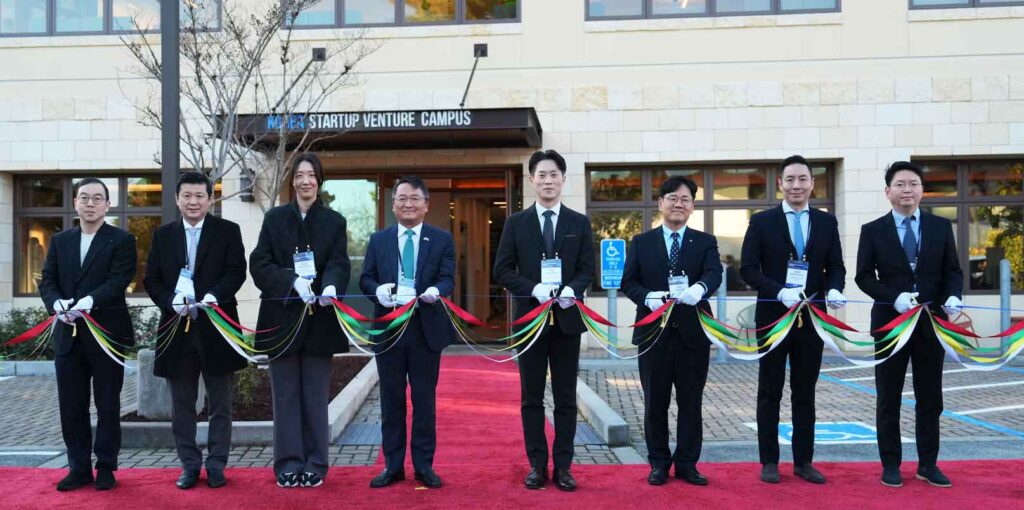
In a significant move towards establishing its presence in the global innovation landscape, South Korea has officially launched the Startup Venture Campus (SVC) in Silicon Valley. This initiative marks a crucial step in Korea's ambition to become one of the world's leading venture capitals, transitioning from theoretical plans to tangible infrastructure. The SVC serves as a dedicated operational base for Korean startups, representing a convergence of public strategy, private investment, and international aspirations.
On January 9, 2026, the Ministry of SMEs and Startups (MSS) inaugurated the SVC, marking Korea’s first permanent global hub for its entrepreneurial ventures. This facility is designed not only as a workspace but also as a strategic center that will aid startups, investors, and institutions in navigating the complex U.S. innovation ecosystem.
Located in Menlo Park, the SVC consolidates previously separated entities, including the K-Startup Centers (KSCs) and Global Business Centers (GBCs), into a streamlined operation. Key agencies such as the Korea Venture Investment Corp. (KVIC), the Korea SMEs and Startups Agency (KOSME), the Korea Institute of Startup and Entrepreneurship Development (KISED), and the Korea Technology Finance Corporation (KOTEC) will reside at the campus, creating a rich supportive environment for Korean entrepreneurs.
The collaborative efforts at the SVC are set to deliver over 200 tailored programs annually, which will include services such as market validation, investment matchmaking, and collaborative research and development with global corporations, including Naver and Hyundai Motor. The campus aims to provide essential workspace and networking opportunities for Korean startups looking to establish or expand their U.S. operations.
At the opening ceremony, attended by over 200 guests, including Vice Minister Noh Yong-seok and Consul General Lim Jeong-taek, the significance of the SVC was underscored as a vital platform for expanding Korea's startup ecosystem on a global scale. Vice Minister Noh emphasized the role of Silicon Valley as the world's most influential startup environment, particularly in the realms of AI and deep-tech industries, which are reshaping global competition.
This initiative is part of Korea’s broader goal to position itself among the world’s top four venture nations by 2030, as outlined in its ambitious KRW 40 trillion Global Venture Powerhouse Master Plan. This strategic plan seeks to unify policy finance, deep-tech development, and international startup campuses, enabling startups to pursue global expansion with structured support instead of relying on isolated acceleration programs.
Unlike earlier overseas efforts that focused on temporary residency or acceleration, the SVC represents a long-term institutional foothold for Korean startups in Silicon Valley. It links governmental support with private capital and international investor networks, effectively bridging Korea’s domestic ecosystem with the heart of global venture capital.
Vice Minister Noh highlighted the importance of collaboration between public and private sectors in transforming Korean startups into global players. Following the launch, a roundtable discussion with startups, venture capitalists, and institutional partners was held to explore operational strategies. Initially, twenty Korean startups and venture capital firms are expected to be based at the SVC, with plans for expansion as the hub grows.
“Startups and ventures are reshaping global economic order around AI and deep-tech industries. Through SVC, we will work with the Korean founder community abroad to expand our startup ecosystem and accelerate internationalization, providing full policy support toward Korea’s goal of becoming one of the world’s top four venture powers,” said Vice Minister Noh.
The establishment of the SVC signals a shift from policy drafting to execution within Korea's globalization agenda. By positioning key agencies within Silicon Valley, the MSS has created a direct pipeline between Korea's venture ecosystem and global funding networks. The collaboration with organizations such as the Asan Nanum Foundation, Naver, Hyundai Motor, and KVIC enhances corporate, financial, and mentorship opportunities, thereby strengthening co-investment channels with U.S. venture capitalists and institutional investors.
This structural transformation indicates a blending of state-led policy infrastructure with private innovation networks, allowing Korean startups to evolve from government-supported challengers to independent global competitors. The model is already being considered for replication in other innovation hubs, including Tokyo and Singapore.
The launch of the Startup Venture Campus is more than just a milestone; it represents the first physical manifestation of Korea’s global venture vision. It effectively connects entrepreneurs, investors, and institutions, transforming national ambition into an active international ecosystem. As this initiative matures, Korea's startup globalization is set to evolve from a mere policy objective into a dynamic living system that fosters innovation and collaboration at an unprecedented scale.
Raphinha's Stunning Two Goals Ignite Barcelona's Shocking 3-2 Upset Over Real Madrid! What Happened Next?
AI Cameras Unleash a Firestorm: 200% Surge in Fire Detection Tech Across Tasmania—What You Need to Know NOW!

Discover the A$100M Penny Stocks Set to Explode—Are You Missing Out on This Goldmine?

Shocking Measles Outbreak in Rutherford County: Were YOU Exposed at This Church?

Unlock the Secret: 5 NBA DFS Picks, Including Reed Sheppard, That Could Make You a Fortune Tonight!

You Won't Believe What the 2026 Golden Globes Could Mean for Your Favorite Stars! 7 Shocking Revelations Inside!
You might also like: