
Korea’s Bold Move: How a Startup Revolution Could Leave Silicon Valley in the Dust!

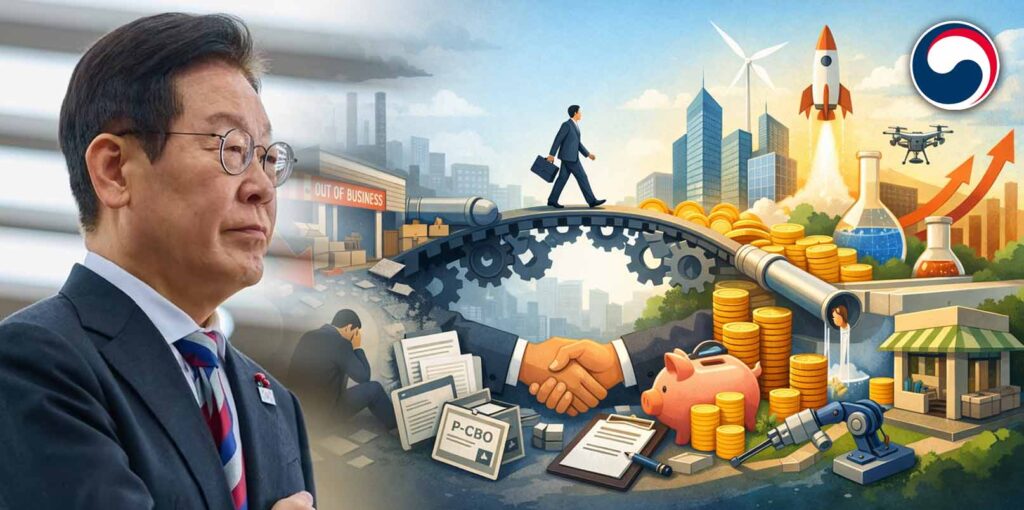
South Korea is undergoing a significant transformation in its approach to entrepreneurship, particularly concerning the inevitable challenges of failure. The government’s 2026 Economic Growth Strategy is redefining the venture ecosystem, positioning entrepreneurship as a dynamic cycle rather than a one-time endeavor. This shift reflects a growing recognition that failure can be an integral part of the journey toward success, and it aims to embed a culture of resilience within the startup landscape.
The cornerstone of this new strategy involves a substantial expansion of the national Fund of Funds and the creation of the Re-Challenge Fund. The Fund of Funds, a critical source of public venture capital, will see its fiscal reinvestment grow from KRW 1 trillion to KRW 1.6 trillion by 2026. This increase will be bolstered by the establishment of a new “National Account” enabling pension and retirement funds to invest, alongside a risk-sharing framework for managing potential losses.
Equally notable is the expansion of the Re-Challenge Fund, which is designed to assist entrepreneurs in rebuilding after business failures. This fund will increase from KRW 150 billion (allocated from 2021 to 2025) to a remarkable KRW 1 trillion by 2030. This move represents the largest public re-start capital pool in South Korea’s venture history, highlighting the government's commitment to fostering a supportive environment for second chances.
As part of this initiative, ten government ministries are collaborating to contribute to nineteen Fund of Funds accounts, which serve as the backbone of much of Korea's policy venture capital. The new account system aims to broaden private co-investment opportunities and minimize concentration risks across different sectors.
Building a Resilient Entrepreneurial Ecosystem
The South Korean government is striving to institutionalize what it calls a “re-challenge ecosystem.” This concept ensures that founders can recover from failures without the fear of being excluded from future capital or policy support. Specific measures are being put in place to assist businesses at various stages of distress. The government will allocate KRW 200 billion in restructuring assistance to companies facing operational challenges, while joint liability limits will be expanded to include technology finance companies during the business closure phase.
Additionally, P-CBOs (Primary Collateralized Bond Obligations) issued by small and medium enterprises will be exempt from joint guarantees, and existing liabilities will be phased out upon maturity. This layered approach aims to ease the burdens on founders and facilitate smoother transitions during critical phases of business operation.
Capital access will also be enhanced during the re-launch phase through new guarantees, loans, and fund mechanisms. The introduction of a Re-Challenge Special Guarantee aims to support entrepreneurs who have previously failed to repay technology guarantees, while financing opportunities will be expanded to assist companies still undergoing restructuring.
According to Kim Jae-hoon, Director of the Economic Policy Bureau at the Ministry of Economy and Finance, these reforms are intended to bolster Korea’s venture landscape, making it more cyclic and resilient. He emphasized, “We will significantly expand support for venture creation so that a new wave of startups emerges and new success stories are written.”
This policy is not merely about financial support; it also aims to redefine the government’s approach to small business competitiveness. The 2026 strategy pivots from emergency relief to sustainable restructuring, focusing on three core pillars: “Everyday R&D” for practical innovation, scaling through collective capacity, and crisis and recovery support for small business owners.
The Everyday R&D initiative seeks to fund projects that enhance productivity in small businesses, such as developing regional signature recipes or integrating AI-assisted technologies for marketing. Aiming to accelerate collaboration, the government plans to support 80 small business cooperatives with funding of up to KRW 300 million each for joint product development and process improvements.
By 2030, South Korea aims to establish 17 glocal anchor commercial districts and 50 local base business zones, combining culture, industry, and tourism to stimulate regional economies. This vision includes nurturing 10,000 local founders and 1,000 local entrepreneurs annually, with the inauguration of two Local Startup Towns as community innovation hubs.
The government will also implement a real-time risk detection system to monitor approximately three million small business borrowers, enabling early intervention based on sales and credit data. The first phase of proactive alerts and support is set to commence in June 2026. For those closing their businesses, a new low-interest relocation support loan of up to KRW 6 million will help cover dismantling and relocation costs.
As Director Kim highlighted, the strategic focus this year is on strengthening domestic demand and building fundamental competitiveness through Everyday R&D. This marks a shift from last year’s focus on emergency measures like debt forgiveness.
The implications of these policies extend beyond South Korea. By embedding failure into the venture lifecycle, the government is signaling a philosophical and structural evolution in its approach to innovation. Countries like the U.S. and Israel have long viewed failure as a stepping stone to success, and South Korea’s shift aims to bridge this cultural gap.
For investors, this redefined landscape reshapes risk perception, potentially encouraging more early-stage participation. By expanding the Fund of Funds and lowering re-entry barriers, South Korea is implicitly creating a safety net for high-risk innovation, which could foster deeper alignment between private and public capital.
As South Korea transforms its venture investment landscape through the 2026 Economic Growth Strategy, it sends a clear message: resilience is now part of its infrastructure. However, the success of this transformation will depend on execution and the trust of founders in the new system to allow them to fail, recover, and rebuild. If successful, Korea's next generation of startups may emerge not only as more globally competitive but also as more enduring, underpinned by the idea that with the right support, failure can be a foundation for growth.
– Stay Ahead in Korea’s Startup Scene –
Get real-time insights, funding updates, and policy shifts shaping Korea’s innovation ecosystem.
➡️ Follow KoreaTechDesk on LinkedIn, X (Twitter), Threads, Bluesky, Telegram, Facebook, and WhatsApp Channel.
UCLA Ends 10-Game Losing Streak—You Won't Believe the Social Media Chaos That Followed!

Is Boardwalk REIT's Shocking 14% Surge Hiding a Dangerous Investment Trap? Find Out NOW!
Seoul's Shocking Global Innovation Forum: Are You Ready to Miss the Next Billion-Dollar Startup?

You Won't Believe Which 3 Senior Real Estate Titans Just Joined London's Elite Team!

NFL Fans EXPLODE Over Ben Johnson's SHOCKING Fourth-Down Choices—What You Missed Could Change Everything!

Local Leagues Explode in Tension: You Won’t Believe Who’s Fighting for the Top Spot!
You might also like: