
Is Your Health at Risk? Shocking Stats Reveal How Incarceration Impacts Millions!

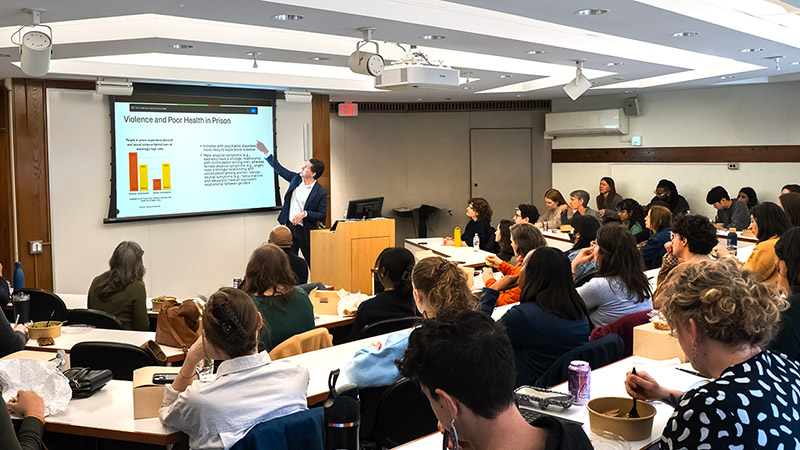
Incarceration in the United States has long been viewed primarily as a criminal justice issue, but recent discussions highlight its profound implications for public health. At a recent seminar at the University of Pennsylvania, LDI Senior Fellow Jason Schnittker, PhD, emphasized that the consequences of incarceration extend far beyond prison walls, impacting the health of individuals, families, and entire communities.
During the seminar, part of Penn Medicine’s 11th Annual Health Equity Week, Schnittker presented insights from his research and his co-authored book, “Prisons and Health in the Age of Mass Incarceration,” published by Oxford University Press in 2022. He argued that incarceration serves as a significant social determinant of health, affecting not just those currently incarcerated but also their families and communities.
“There’s something about it that changes your fate,” he remarked, highlighting the often-overlooked scale and complexity of this issue. Schnittker noted that estimating the number of individuals affected by incarceration is challenging, especially when trying to account for those who have been released. By 2010, approximately 3% of U.S. adults, and up to 15% of Black men, had direct experiences with the criminal justice system. These statistics speak to the widespread and deeply unequal health impacts of incarceration.
Interestingly, Schnittker’s research revealed a paradox: for some high-risk individuals, health may temporarily improve during incarceration due to structured environments and access to basic medical care. However, these benefits often diminish rapidly upon release, as formerly incarcerated individuals face significantly higher risks of infectious diseases, stress-related conditions, and drug overdoses. In fact, Schnittker found that incarceration itself causally worsens health, particularly mental health, significantly increasing the risk of mood disorders such as major depression.
“Depression is the leading edge of the incarceration effect,” he explained, emphasizing that mental health conditions often hinder the ability of formerly incarcerated individuals to reintegrate effectively into society.
The implications of incarceration and its health effects extend beyond individuals to ripple through families and communities. Schnittker pointed out that when fathers are incarcerated, their partners face heightened risks of major depression, independent of income loss or caregiving burdens. Children of incarcerated parents also suffer, contributing to intergenerational cycles of disadvantage and trauma.
The strain on health systems is another critical concern. As substantial numbers of formerly incarcerated individuals seek care, they place additional demands on local health services. This influx can lead to hospitals cutting services or reducing staffing, ultimately diminishing the quality of care available even for those without connections to the criminal justice system.
In light of these findings, Schnittker advocated for comprehensive policy approaches aimed at addressing these challenges. He proposed several actionable solutions, including:
- Pre- and post-release health interventions
- Stronger mental health support
- Maintaining family connections during incarceration
- Reducing stigma and improving reintegration opportunities
Schnittker’s insights remind us of the broader implications of incarceration as a public health crisis. As millions of Americans navigate the complex realities of the criminal justice system, addressing the health consequences associated with incarceration becomes crucial for fostering healthier communities and creating pathways for sustainable recovery and reintegration.
GOP Candidates Risk It All: Can They Win Without Trump’s Seal of Approval? Shocking Strategies Revealed!

Abu Dhabi’s Synthan Sciences Just Launched a Game-Changer—Will It Save Your Life?
Is Your Startup Missing Out? The Shocking Truth About Real-Time Market Signals in Europe!
Is Your Fitness Tracker About to Become Obsolete? Shocking Market Changes Ahead for 2026-2033!

Korean Community in Israel on Edge: Is President’s Shocking Post About to Ignite a Diplomatic Crisis?

Boston Celtics Shock Everyone with Bold Roster Move! What This Means for Their Championship Dreams!
You might also like: