
Is Your Future at Risk? Former Defense Leaders Warn: Oil Wars Could Spark Global Chaos!

In a striking call to action, 19 prominent Australian security experts and former Defence leaders have published an Open Letter, underscoring the pressing need for Australia to transition away from fossil fuels. This letter, appearing in full-page advertisements in the Australian Financial Review and the Sydney Morning Herald, asserts that the nation's heavy reliance on fossil fuels poses significant economic and security risks.
The signatories include notable figures such as Admiral Chris Barrie, former Chief of the Australian Defence Force; Air Vice-Marshal John Blackburn AO, Deputy Chief of the Royal Australian Air Force (Retd); Cheryl Durrant, former Defence Director of Preparedness and Mobilisation; and Brigadier Michael Bond CSC and Bar, Australian Army (Retd). They collectively argue that accelerating the rollout of renewable energy sources is now a critical security imperative for Australia.
“We call on the Australian government to accelerate the transition to clean, domestic energy. Rapidly expanding renewable energy – including wind, solar, batteries, hydro, and renewable fuels produced in Australia – and electrifying our transport system with home-grown energy will strengthen Australia’s security, reduce exposure to global energy shocks, and help limit the escalating risks driven by climate change,” the letter states.
Current geopolitical tensions, particularly the ongoing conflicts in Ukraine and the Middle East, have highlighted vulnerabilities in global energy supplies. Past conflicts such as the Suez crisis, two Arab-Israeli wars, the Iran-Iraq war, and the Gulf War of 1991 have all incited energy supply disruptions, leading to skyrocketing food prices and inflation. The current situation involving Israel, the U.S., and Iran threatens to worsen these issues, potentially leading to an oil shock that could be more severe than previous crises.
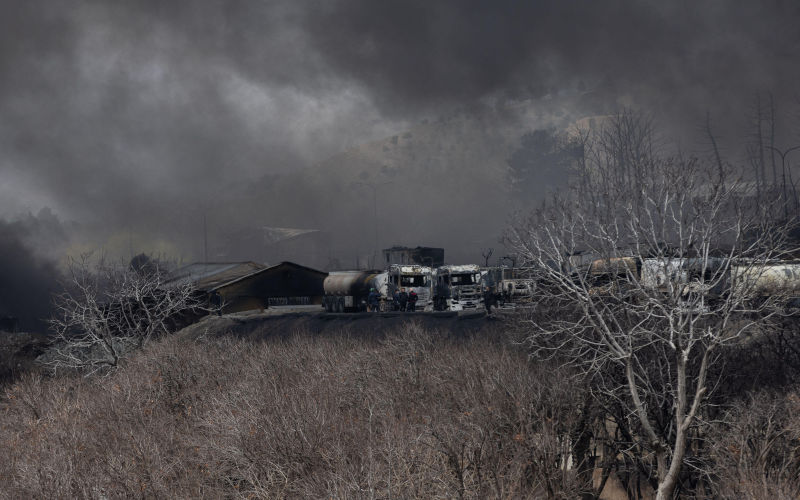
Australia's reliance on imported oil and gas, coupled with now-diminished regional production, places it in a precarious position. The closure of oil production in the Gulf and the potential for a prolonged blockade of the Strait of Hormuz mean that Australian households and businesses are poised for higher energy costs. The resultant inflation coupled with increased interest rates could significantly impact the economy, reflecting the toll of global oil conflicts on everyday Australians.
The consequences of such crises extend beyond fuel prices. Disruptions to the supply of petrochemical feedstocks are vital for industries ranging from fertilizer production to tech manufacturing. This has significant implications for sectors that rely on fossil fuels, including the production of microchips and electric vehicle batteries.
Compounding these economic vulnerabilities is the reality of climate change. The relationship between fossil fuel dependency and climate instability creates a dangerous feedback loop. Not only does the burning of fossil fuels exacerbate climate change, but climate-driven catastrophes intensify competition for resources like food and water, leading to greater risks of conflict and insecurity. For instance, a 2010 wheat crisis triggered by simultaneous harvest failures in key regions led to a tripling of wheat prices and subsequent unrest across the Middle East, culminating in the Arab Spring.
“As global warming intensifies, competition for water, food and resources including oil will further increase the risks of insecurity and war. And the conflicts themselves add to climate change with increased military and reconstruction emissions,” the letter warns.
This interconnectedness between climate change and geopolitical instability signals a pressing challenge for Australia. The Office of National Intelligence (ONI) had previously warned the Albanese government about these vulnerabilities in its first climate and security risk assessment delivered in December 2022. However, the report remains classified, leaving the Australian Parliament and public largely unaware of these pivotal risks.
The Australian Security Leaders Climate Group has urged the government to proactively address these threats. Their recommendations include:
- Establishing a Climate Threat Intelligence Unit within the ONI to evaluate climate-related security risks.
- Producing an annual declassified climate security assessment for Parliament to enhance transparency and inform policy development.
- Creating an Abrupt Climate Change Early Warning System to monitor potential tipping points that could have major geopolitical consequences.
Despite these pressing warnings, successive Australian governments have often downplayed the urgency of addressing the nation's oil dependency. Political dynamics, particularly the positions of opposition parties like the Liberal National Party and One Nation, which have historically denied the realities of climate change, further complicate an already fraught political landscape. Meanwhile, the Albanese government faces accusations of promoting fossil fuel export expansion, undermining its stated commitment to climate leadership.
Ultimately, the letter from these security leaders serves as an urgent reminder that Australia must confront the dual challenges of energy security and climate change simultaneously. The stakes are high, and the call for action is clear: a transition to renewable energy is not only an environmental necessity but a fundamental requirement for national and economic security.
Korea's Shocking New Move: Are Startup M&As Crumbling Under $1 Billion Due Diligence Costs?
Are We Finally Close? Shocking Breakthroughs in Cancer Vaccine Trials Could Change Everything!

9 Shocking Traits of Entrepreneurs Over 50 That Younger Founders Can’t Match—Are You Missing Out?

NBA Legend Shatters Silence: What REALLY Happened Between Trump and Kobe in That Elevator Fight?
You Won’t Believe What Happened When This Request Went Awry—Is Your Data Safe?

You Won't Believe How Elmwood Farmers Are Teaming Up to Fight Parkinson’s—Shocking Results Inside!
You might also like: