
Is Your Family Breathing Poison? Shocking Rise in Air Quality Crisis Hits U.S. Cities!

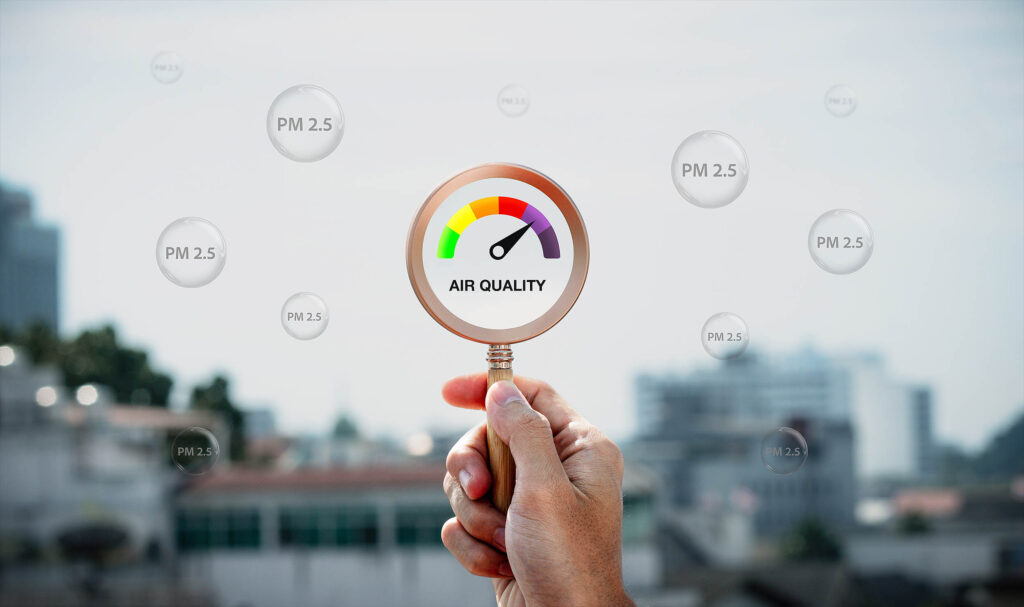
A new analysis has revealed alarming projections regarding air quality in the United States, indicating that by 2100, approximately 100 million Americans could face unhealthy air pollution levels during the summer months. This shift transforms what were once rare smog warnings into a nearly daily occurrence for many individuals already vulnerable to poor air quality.
Research led by Dr. Rebecca Saari, a professor of civil and environmental engineering and the Canada Research Chair in Global Change, Atmosphere, and Health at the University of Waterloo, showcases how climate change alone can significantly raise pollution levels, leading to widespread air quality alerts. The study notes that the number of individuals exposed to unhealthy air conditions is expected to increase roughly sevenfold compared to conditions around the year 2000.
Dr. Saari stated, “Climate change could cause days with poor air quality to shift from rare to commonplace.” This rapid escalation is concentrated in regions already susceptible to smog, highlighting patterns that will dictate the frequency and severity of air quality warnings.
📰 Table of Contents
Understanding Air Quality Alerts
Air quality alerts are derived from the Air Quality Index (AQI), a federal scale that provides health advice based on daily pollution levels. When AQI values exceed 100, the air is deemed unhealthy for sensitive groups, with further warnings issued to the general public as pollution levels rise. Tracking the average air quality over a season reveals that exceeding this threshold is becoming increasingly common.
Moreover, the study shows how climate change is leading to more days exceeding that critical threshold, pushing researchers to analyze the consistent factors contributing to these warnings rather than merely isolated pollution spikes.
Hotter summer temperatures contribute significantly to the buildup of summer smog, exacerbated by drought conditions and wildfire smoke, which introduce additional fine particulate matter into the atmosphere. The researchers controlled for human-made pollution in their scenarios, demonstrating that climate factors alone are sufficient to elevate air quality warnings.
The Two Main Pollutants
The primary source of alerts is ozone, a gas formed when sunlight interacts with other pollutants and irritates the respiratory system. However, the more severe health implications stem from PM2.5 particles, which are small enough to penetrate deep into the lungs and even enter the bloodstream. While ozone was responsible for 77% of alert days, PM2.5 particles accounted for a staggering 94% of the modeled economic burden of air pollution.
Dr. Saari emphasized the severity of this issue, stating that sensitive groups, including older adults and children with asthma, may face a “daily coin flip,” with nearly equal odds of receiving a pollution alert that could impact their health.
The research further highlighted that older adults are disproportionately affected by this issue—they make up only 12% of the population but account for 65% of the mortality burden associated with poor air quality. This raises concerns about the increasing number of alerts and the need for effective protective measures.
Indoor Safety Measures
When air quality alerts occur, individuals often retreat indoors, where walls and closed windows provide some protection. However, this indoor environment offers greater defense against ozone than PM2.5 particles, which can infiltrate homes more easily. The study indicates that even full compliance with alerts could mitigate only about 15% of the health risks stemming from climate-driven pollution increases.
To put this into perspective, earlier findings suggested that coping with worsening air quality alerts could require individuals to spend an additional 142 days indoors by the end of the century.
The Importance of Policy Adjustments
The research underscores the urgent need for more stringent climate policies to effectively address the air quality crisis. Implementing stronger regulations could reduce the number of air quality alerts by approximately 30% in high-pollution regions by 2100. Some areas, particularly in the eastern United States, could potentially avoid more than 30 additional alert days each year with tighter restrictions.
Dr. Saari hopes that this research will inform better-targeted guidance for communities and reinforce the necessity of pollution reduction and improved access to clean indoor spaces.
As the nation looks toward the future, the study paints a concerning picture: bad-air alerts, once reserved for rare occasions, may soon become part of everyday life for many Americans. Understanding the implications of these findings is crucial for effective policy-making and public health strategies as we grapple with the realities of climate change and its impact on air quality.
You Won't Believe How Michigan Fans Reacted to THAT Shocking Final Four Victory Over Arizona!

Former Chelsea Star Oscar Shockingly Retires at 31: What Heart Issue Could Change Soccer Forever?

GXO Logistics Just Hit New Heights—Are You Ready to Miss Out on This Explosive Growth?
Is Elevance Health's Shocking Q4 Surge Hiding a $100 Million Gamble? You Won't Believe What’s Next!

Shocking Trend: 1 in 5 Americans Now Rejecting Life-Saving Blood from Vaccinated Donors – What’s Behind This?

Rexford Industrial Realty Just Made a Shocking Move—Here’s What It Means for Your Investments!
You might also like: