
Is Your Dinner Contributing to Climate Catastrophe? Shocking Food Security Stats Inside!

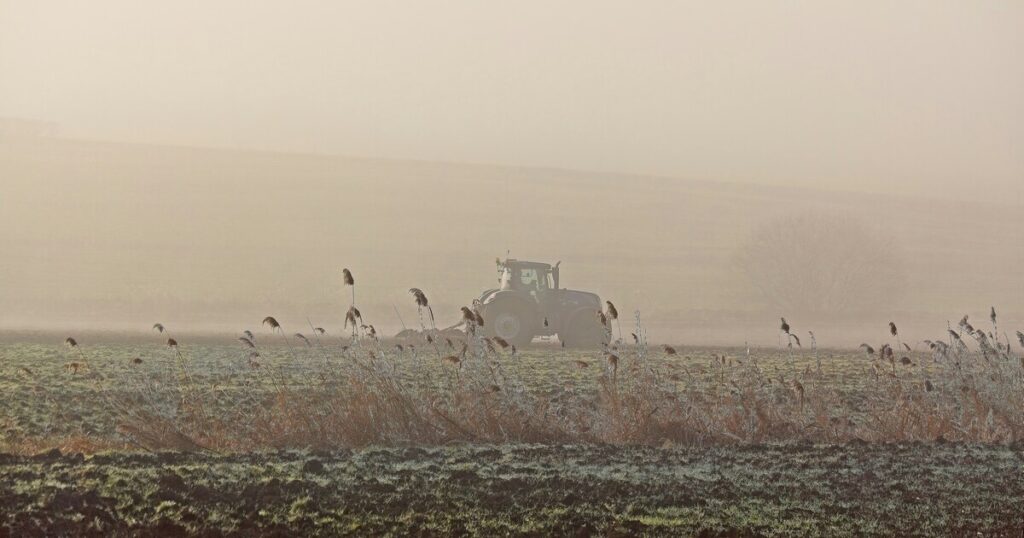
The impact of climate change is increasingly evident, but its effects are not felt equally across the globe. As the world grapples with escalating climate chaos, the divide between rich and poor widens, exacerbating food insecurity for those who are least responsible for greenhouse gas emissions. Colin Chappell, an arable farmer from Lincolnshire, UK, expressed the harsh reality of his experience with flooding, stating, “I was farming water. I wasn't farming soil. My dad got flooded once in 1981, but since 2000, I've lost count of the amount of times that I've been flooded." His words resonate deeply amid the concerning statistics presented at the recent National Emergency Briefing on climate change and food security, highlighting a pressing issue that affects millions globally.
According to a recent report, the fallout from climate change—encompassing drought, floods, fires, and disease—will threaten food production in every region. The report reveals that currently, eight countries are critically food insecure, a number that could rise to 24 in a world that is two degrees warmer. Alarmingly, food insecurity is set to worsen by 3% in high-income nations, and by a staggering 22% in low-income countries.
This disparity underscores a broader issue of climate injustice. The harshest consequences of climate change impact the most vulnerable populations—those already grappling with inequality, exploitation, and conflict. As the climate crisis escalates, the chasm between the affluent and the impoverished deepens. In this chasm, homes, health, livelihoods, and lives are lost, often without notice or acknowledgment. Yet, it is crucial to recognize that it doesn’t have to remain this way.
Addressing Climate Justice
The Quaker community exemplifies a proactive approach to climate justice, guided by the principle of love articulated in “Advices & Queries” number 28: “Attend to what love requires of you.” This call to action not only urges individual reflection but also collective responsibility. The Quaker foundation asserts that spiritual experience and social action are intertwined, reinforcing the notion that our responses to climate change must stem from a place of compassion.
As Quakers strive for justice, they acknowledge the intrinsic value of each individual, recognizing that every person embodies a “seed of God.” This perspective fosters a commitment to social responsibility. As scholar Cornel West states, “Justice is what love looks like in public.” This understanding of climate justice extends beyond mere acknowledgment of suffering; it demands action.
The Quaker testimonies of equality, simplicity, sustainability, and peace guide their efforts in combating climate change. Judith Butler’s assertion that “we are not yet speaking about equality if we have not yet spoken about equal grievability” resonates deeply. Every life lost to climate harm, every family torn apart, and every beloved place devastated calls for our grief and action. Hence, the call for a future where all can live sustainably and joyfully on Earth aligns with the Quaker goal of fostering a more equitable world.
So, what can individuals do to combat climate injustice? The answer lies in a multifaceted approach that encompasses education, action, and advocacy. Communities can begin with personal changes, such as adopting plant-rich diets and embracing local food production, which not only reduce emissions but also support local economies and promote resilience among the most vulnerable populations.
Further, it is essential to counter misinformation surrounding climate change. Reliable resources, such as the Carbon Brief, provide evidence-based information on climate-related topics, helping to equip individuals with the tools necessary to engage in informed discussions. Engaging with literature, like Words for a Dying World, edited by Hannah Malcolm, invites readers to understand and empathize with those most affected by climate chaos.
Moreover, individuals can leverage their voices to advocate for systemic change. Climate justice is not merely a moral imperative; it is also a practical necessity. By addressing the interconnected issues of reducing emissions, facilitating adaptation, repairing loss and damage, and amplifying unheeded voices, we can work toward a shared future that is livable for all.
While the perfect response may be elusive, the pursuit of justice and love remains achievable. As the world faces unprecedented challenges, it is never too late to take meaningful action in the name of justice and compassion.
You Won’t Believe What DEKA and Lycan Fitness Just Unveiled in Their Shocking Two-Year Partnership!
You Won't Believe What Happened When This Influencer Tried to Access Her Own Account!

You Won't Believe What Happened When We Ordered Gwyneth Paltrow's $500 Delivery Menu!

Tonight’s NBA Showdown: Jayson Tatum’s Shocking Prop Bet You Can’t Ignore! Will It Make or Break Your Wallet?

Unlock the Secret: 7 Louisiana Startups Ready to Explode—Don’t Miss Out on This Goldmine!
Why Are Social Media Meetups Exploding into Violence? Shocking Stats That Will Keep You Up at Night!
You might also like: